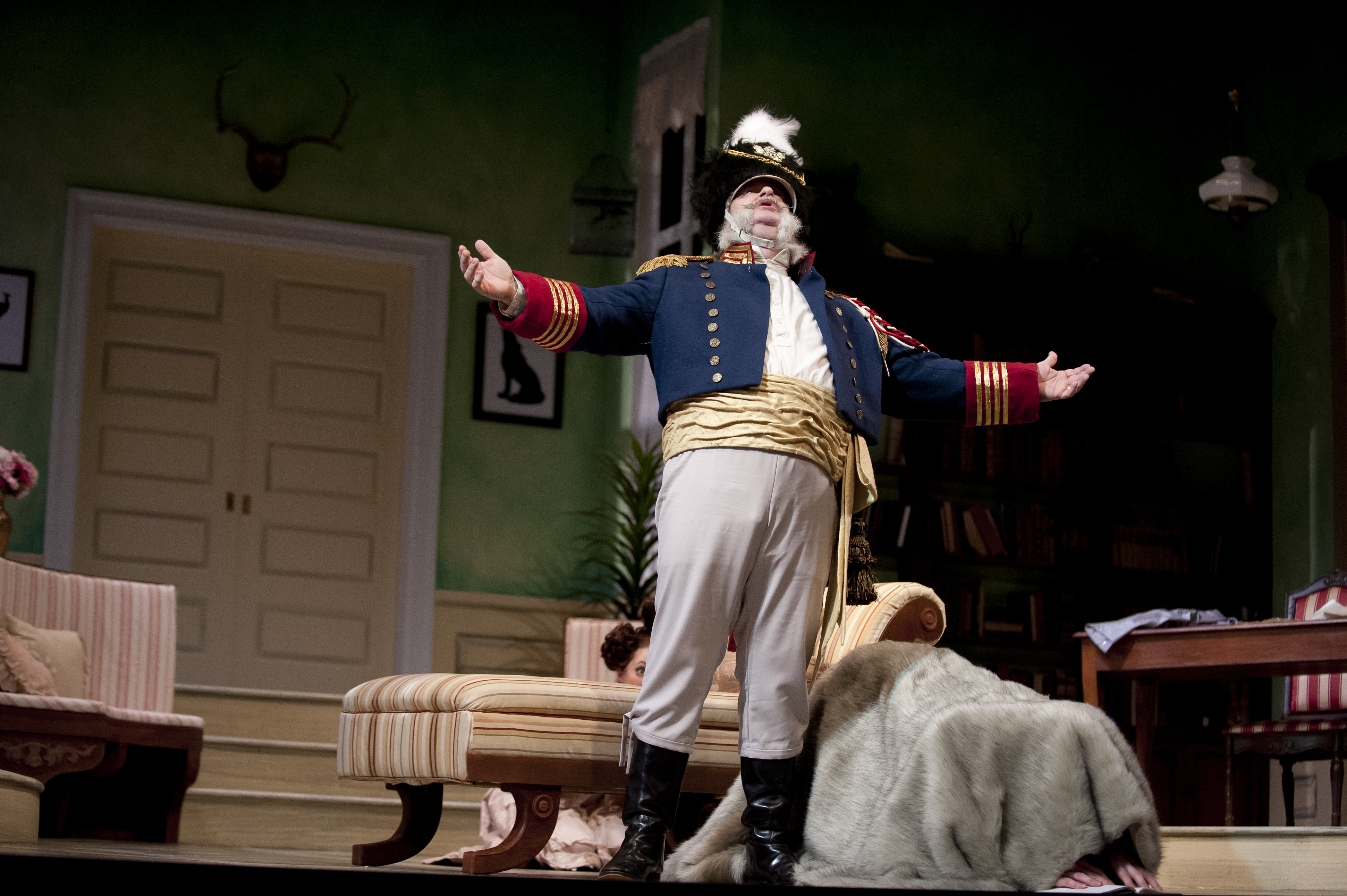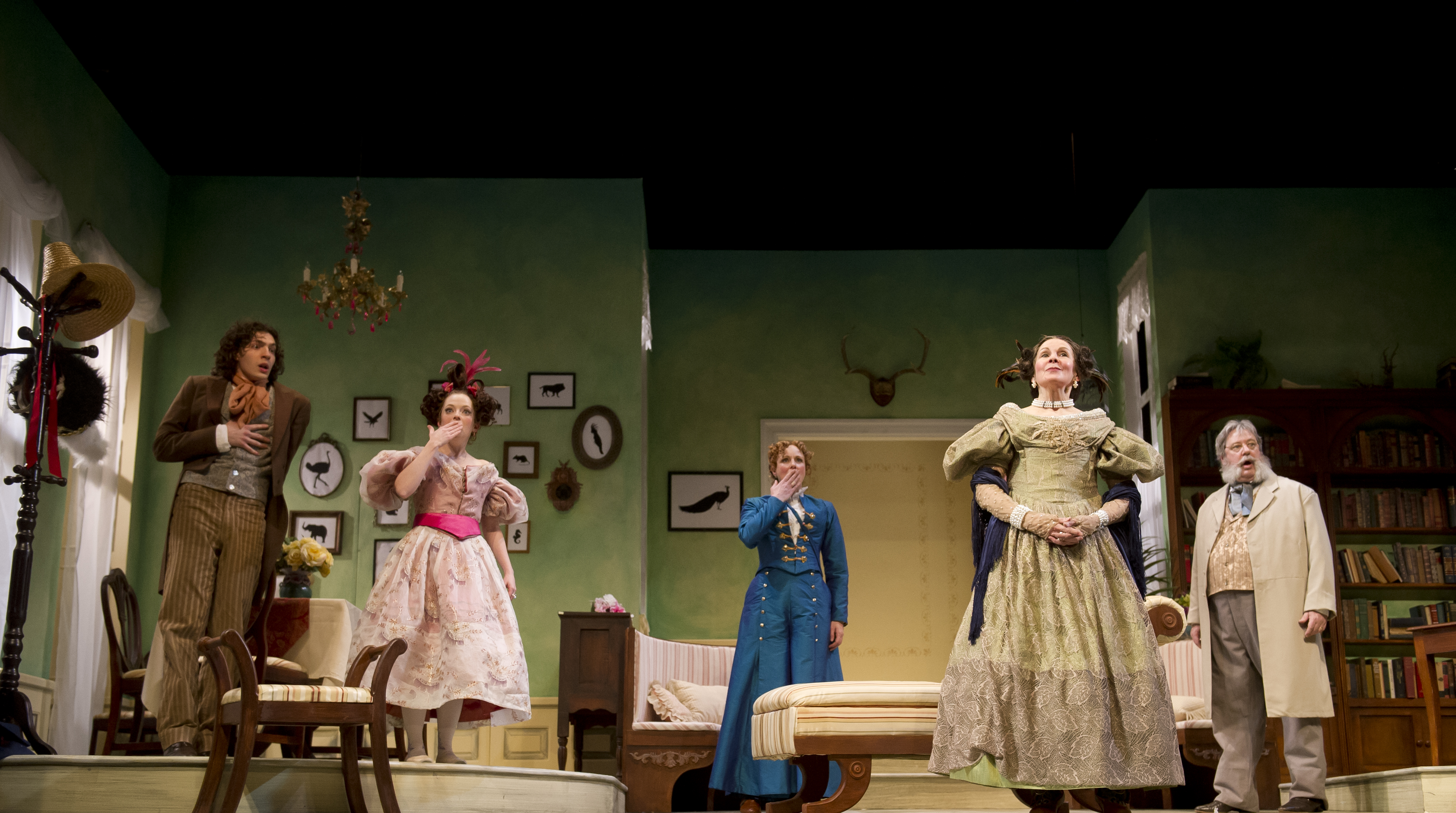

Review: BOEING BOEING, Pittsburgh CLO

“A first class flight that never loses altitude” says Lonnie The Theatre Lady of Pittsburgh CLO’s latest production BOEING BOEING, playing through April 26th at the CLO Cabaret. Catch the review here, PLUS – scorpions on a plane! Continue reading “Review: BOEING BOEING, Pittsburgh CLO”

Featured
Featured
Review: BOEING BOEING, Pittsburgh CLO
Loading
/

Black Lives Matter in FOR THE TREE TO DROP

Mike Buzzellipodcast logo
Review by Mike “Buzz” Buzzelli, ‘Burgh Vivant.


Set Sophocles’ “Antigone” to the tune of Billie Holiday’s “Strange Fruit,” and you get Lissa Brennan’s “For the Tree to Drop,” a dark, haunting microcosm of murder and injustice in the Deep South.

A slave, Henry (Justin Lonesome) attempts to escape his bonds and run away. Unfortunately, there is no escape for the doomed slave. He is brought down by a pack of dogs. Edgar (David Whalen) is compelled to set an example of Henry and hangs him from a tall tree yards away from the main house of his vast plantation.

Henry’s sister, Estella (Siovhan Christensen) stands vigil over the rotting corpse dangling from the tree. She forgoes her duties as a laundress in the main house and digs into the earth with her fingers, insisting on a proper burial for her brother’s body.

Another house slave, Theenie (Linda Haston), realizes that Estella’s defiance will have horrifying consequences for the other slaves at the plantation and seeks to dissuade the young girl from her course of action. Edgar is enraged by Estella’s disobedience, but cannot deter her from her mission. He is reluctant to inflict punishment on the girl. Suffice to say, he has his reasons.

From the window of the main house, Clarinda (Karen Baum), Edgar’s wife, is repulsed by Henry’s hanging body on her front lawn and wishes to aid Estella in burying him, even though it will incense her husband.

Aside from “Antigone” and Abel Meeropol’s poem (the original composition of Holiday’s song), “Strangefruit,” Brennan’s play reverberates with echoes of literary giants. It is peppered with Shakespearean references and allusions, and there is a familiar conceit from Thornton Wilder’s “Our Town.”

The play is a brisk 65 minute opus, with no intermission. The dialogue smolders with intensity. It’s an important piece of work. Not only because reflects on the horrors of the Antebellum era, but it pulsates with commentary on contemporary society.

Best of all, it is a play written by a local playwright performed by local actors, and it is triumphant. Proving that Pittsburgh isn’t just for sports enthusiasts anymore. There is a plethora of local talent and director Alan Stanford mines that eponymous talent expertly.

Christensen is able to go toe-to-toe with Whalen. It’s no easy feat, but she accomplishes the Herculean task with aplomb. Her performance is heart-wrenching.

Ironically, I first encountered Lonesome in a local production of “Antigone” last season at the Pittsburgh Playhouse. He is charismatic and charming as the ill-fated slave.

Haston depicts Theenie with style and grace. At first, Theenie seems to be the comic relief, but Brennan (with Haston’s help) takes the character to darker and more mysterious places.

It should go without saying, but Whalen and Baum are treasures in Pittsburgh’s burgeoning theater scene. Praising them has become redundant. Whalen is frightening as the vengeful plantation owner, and Baum is luminescent as Clarinda. It would be gauche to say that Clarinda is equally trapped by her circumstances, but there is a deep sadness behind the bored belle’s eyes. Baum executes the unspoken anguish flawlessly.

The setting is sparse, picture Cosmo Kramer’s perfect apartment (it’s all about levels). The set, however, is enhanced by Jessi Sedon-Essad’s multi-media projection design, as well as the gorgeously crafted costumes from Joan Markert.

While Twitter and Facebook buzz with trendy aphorisms like “Black Lives Matter,” Brennan is pulling back the veil and remembering a time when black lives mattered even less, and the result is a powerful, thought-provoking play. “For the Tree to Drop” reminds us that we will someday transcend our cruelty and barbarism as we inch up the evolutionary ladder. There will always be heroes and heroines who strive for a more just and egalitarian society. Someone must make the first, painful step upward.

(“For the Tree to Drop” runs through February 28 at PICT’s new downtown location, inside the Trust Arts Education Center, 805-807 Liberty Avenue, Pittsburgh)


-MB.



Review: DOG IN THE MANGER, University of Pittsburgh Stages

Nancy’s back on ‘Burgh Vivant with her thoughts on DOG IN THE MANGER at University of Pittsburgh Stages, playing through February 22nd, www.play.pitt.edu. Just what is a “skookum” production? Find out here! Continue reading “Review: DOG IN THE MANGER, University of Pittsburgh Stages”

Featured
Featured
Review: DOG IN THE MANGER, University of Pittsburgh Stages
Loading
/

Review: A CHASTE MAID IN CHEAPSIDE, Duquesne Red Masquers

How many times can we say “hilarious?”  Nancy unravels the plot of Duquesne Red Masquers’ A CHASTE MAID IN CHEAPSIDE, by Thomas Middleton, directed by John Lane, playing through February 14, www.duqredmasquers.com.  A hilarious review with hilarious outtakes (and poor Kate Hepburn!). Continue reading “Review: A CHASTE MAID IN CHEAPSIDE, Duquesne Red Masquers”

Featured
Featured
Review: A CHASTE MAID IN CHEAPSIDE, Duquesne Red Masquers
Loading
/

Historical Fiction becomes Hysterical Fiction with PRUSSIA: 1866

Mike Buzzellipodcast logo
Review by Mike “Buzz” Buzzelli, ‘Burgh Vivant.


Playwright Gab Cody takes a healthy portion of Oscar Wilde, a soupçon of Noel Coward, and throws in a dash of the Moliere for good measure in her world premiere play, “Prussia: 1866.” It’s a comedy of manners, wherein all of the characters behave without manners.

Drew Palajsa plays Friedrich “Fritz” Nietzsche (yes, that Nietzsche). Fritz is desperately in love with his tutor’s wife, Mariska (Laura Lee Brautigam). His mutton-chopped tutor, Heinrich Von Klump (Philip Winters) is oblivious. Meanwhile, Heinrich’s secretary (secret co-writer), Rosemary (Gab Cody) is in love with Heinrich, even though she is being pursued by a handsome American Delegate (Sam Turich). The maid, Karoline (Hayley Neilsen), literally swoons over Fritz. If that wasn’t complicated enough, Griselda Eberstark (Mary Rawson) has her own giant monkey wrench to throw into the plot.


Prussia-Media-2
Prussia: 1866 | Philip Winters | Photo: Jeff Swensen, 2015

Though Nietzsche was a real person, the rest of this historical fiction, very, very fictional historical fiction. The only truth of the play is that Friedrich Nietzsche was 22 in 1866 and living in Prussia. The rest rides in on the trolley from Make Believe (Note: The playwright has written segments for “Daniel Tiger’s Neighborhood”). Nietzsche probably wouldn’t have minded the revisionist take on his life. He believed that history was always being rewritten. Although, he would probably take umbrage for being portrayed as a Dionysian character, ruled by disorder, intoxication, emotion and ecstasy. But what lovely Dionysian chaos “Prussia: 1866” stirs up.

Cody throws in philosophy, sexual politics, religion and suffrage. Don’t assume this is an overly-intellectual play that drones on about man’s (and woman’s) place in the world. It’s a zany comedy with allusions of intellectual grandeur, and it’s delightful.

Comedy works best when the actors take it seriously. The characters must believe they will live or die from their actions and decisions in the absurd world they live in. Cody’s Fritz believes he will die without Mariska’s love. Palajsa nails it. He is immersed in Fritz’s madcap machinations. He is also fearless, playing a chunk of the first act naked.

Mary Rawson’s Griselda Eberstark channels Maggie Smith, playing the character with all the imperiousness of Lady Bracknell (“The Importance of Being Earnest”), Violet Crawley, the Dowager Countess (“Downton Abbey) and Aunt Charlotte (“Room with a View”). Eberstark is haughty and over-bearing, but, unlike the aforementioned dowagers and spinster aunt, she is a libertine. Rawson plays her both sly and supercilious. The incongruity is hilarious.

Sam Turich’s American Delegate is a delight. His befuddlement as he bounces off the language barrier was laugh-out-loud funny. Cody compounds the comedy with a delightful bit of purposeful misinterpreted interpretation.

Director Kim Martin does a fantastic job, especially when the actors are zipping around in and out of doors and passageways or falling out of windows. There is a kinetic ballet in the second act that is executed flawlessly thanks to Martin’s direction.

High praise must be lauded on Hayley Neilsen’s Karoline. She is uproariously funny as the protestant maid. It is a small part played large by the young actor. Nietzsche and the Von Klamp’s summoned the maid with a bell. Whenever the bell sounded, it produced Pavlovian tittering. The audience expected hilarity with every ring, and they received it in kind. For some inexplicable reason, the Prussian protestant speaks with a cockney accent, but, like the plot, it doesn’t really matter.

Prussia-Media-6
Prussia: 1866 | From left: Drew Palajsa, Laura Lee Brautigam, Gab Cody, Mary Rawson, Philip Winters | Photo: Jeff Swensen, 2015

“Prussia: 1866” is not only funny, but beautifully rendered by the cast and crew. There were excellent costumes by Cathleen Cocker-Perry. A special merit must be awarded for Brautigam’s Seussical hairstyle. The set is a sumptuous design in sea foam green by Stephanie Mayer-Staley. The lighting design by Andrew David Ostrowski was superb. The production team created an unusual technique for making fire using steam, wind and light. It was a clever effect.

Toward the end, the play collapses into silliness. If you’re willing to go along for the ride, you’re in for a treat. “Prussia: 1866” isn’t perfect, but it’s perfectly fun.

“Prussia: 1866” runs through February 22 at the Pittsburgh Playhouse.


GAB CODY – Theatre Artist, Filmmaker

Tonight: the gifts of Gab! Theatre Artist and Filmmaker Gab Cody visits ‘Burgh Vivant’s happy hour on the eve of the world premiere of her play PRUSSIA: 1866. Deep philosophies abound, the space between art and science is challenged – and all in the presence of an ominous seashell lamp! Listen to “The Full Martini” – the complete, unedited interview in audio podcast for more on what inspires Gab’s plays, the current state of American theatre, and where it may be in the next decade. See PRUSSIA: 1866 by Gab Cody at The REP through February 22, www.pittsburghplayhouse.com Continue reading “GAB CODY – Theatre Artist, Filmmaker”

Featured
Featured
GAB CODY - Theatre Artist, Filmmaker
Loading
/

Clarissa explains it all: Review – MR. JOY, City Theatre

Mike Buzzellipodcast logo
by Mike “Buzz” Buzzelli, ‘Burgh Vivant.


Clarissa is going to explain the situation as best she can. The precocious eleven-year-old, HIV-positive, shoe designer worships Mr. Joy, a Chinese immigrant who owns a shoe repair shop in Harlem. She is one of nine characters in Tangela Large’s metamorphic performance in “Mr. Joy.”

Nine pairs of shoes are set on a city street, each pair reflecting a character in the jigsaw puzzle of shop owner’s life. Playwright Daniel Beaty examines race, socio-economic statuses, and even gender roles through one finely-tuned instrument, the actor herself. The story unfolds as each character comes forward from Large’s body, men and women, young and old, rich and poor, black and white. Each character gets their moment in the sun, and it’s a star turn for Large who plays every single one of them.

Beaty covers a lot of ground, all of it in his neighborhood of Harlem. The issues of social injustice, race, poverty, hate and fear are still polarizing our country. The problems are systemic. It’s an important discussion, but there is a little bit of proselytizing in the play, and it’s preaching to the converted. Still, some of it is difficult to hear. The truth often is.

In every one-person show, where an actor takes on multiple roles, some characters are more interesting than others. DeShawn and Ashes are marvelously represented. They are powerful voices in the multitude and Large inhabits them with aplomb. DeShawn is a street poet whose path goes off the rails pretty quickly. Ashes is a transgendered man-to-woman who longs for a relationship with her republican father, Clifford, and his vapid blonde consort, Rebecca (each is represented as well). Ashes and DeShawn’s stories are riveting. However, Grandma Bessie is a bit of a caricature. She’s a gangster granny with a Kung Fu grip. Large channels Tyler Perry’s Madea for the role.

As the play ended, the audience leapt to their feet with a thunderous applause and Large deserves the lion’s share of the credit. She’s dazzling in the eighty-five minute performance. She’s responsible for every word, every gesture and it’s a helluva feat. However, there are some minor quibbles that rest mostly on the playwright’s shoulders. Beaty instills the play with an overwhelming amount of coincidence. Not only is every character connected to Mr. Joy, every character is connected to each other, and they can’t wait to tell you. Nothing is left to the imagination. At one point, a homeless man tells you how he knows each and everyone one of them. A minor rewrite could easily excise this petty annoyance. There are a few way-to-obvious jokes that should end up on the other side of the delete key.

If there’s a main character in show, other than the unseen Joy himself, it would be Clarissa. She is the emotional core of the story. Unfortunately, the plucky girl also plucks some nerves (Editor’s Note: This reviewer has a pet peeve: adults playing children).

It’s easy to imagine that Beaty set Large loose on the stage by herself and let her run wild, but credit must be attributed to director Lou Jacob. Though I, personally, wish Jacob would have toned down Bessie and Clarissa a bit more, he has a good grasp of the structure and timing of the play. It’s a kinetic and brisk 85 minutes.

Additional credit must be lauded on Artistic Director Tracy Brigden for choosing such a thought-provoking work. With a little more nuance, “Mr. Joy” could be a tremendous piece of theater. There’s enough right with “Mr. Joy” to put it on every theater-goer’s Must See List. The real problems lie in our society. Beaty is picking at a scab that may never heal, but it’s important we pull back the gauze and look at the wound.

“Mr. Joy” runs till February 15 at the City Theatre, 1300 Bingham Street, Pittsburgh (South Side).


-MB.


Review: MY FAIR LADY, Pittsburgh Public Theater

“My EXCELLENT Lady” – Our fair Theatre Lady, Lonnie Jantsch and Mike “Buzz” Buzzelli discuss Pittsburgh Public Theater’s MY FAIR LADY, directed by Ted Pappas, playing through February 22, 2015.

Continue reading “Review: MY FAIR LADY, Pittsburgh Public Theater”

Featured
Featured
Review: MY FAIR LADY, Pittsburgh Public Theater
Loading
/

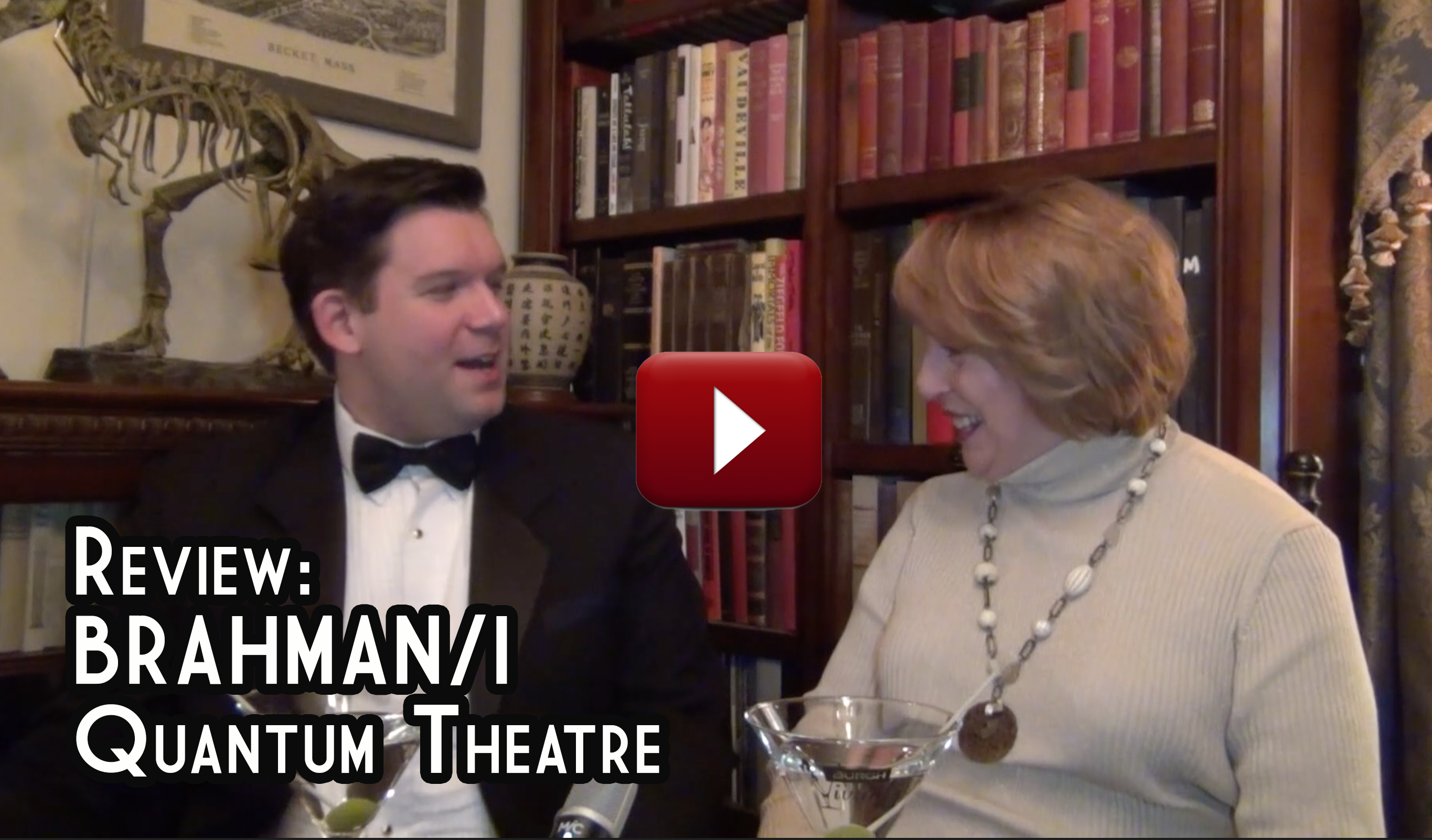
SHISHIR KURUP, Director & SANJIV JHAVERI, Actor – BRAHMAN/I, Quantum Theatre

Who is BRAHMAN/I? Catch a sneak peek into the minds behind the “one-hijra stand-up comedy show” as ‘Burgh Vivant enjoys cocktail hour at the “Temple of Comedy” bar with Director Shishir Kurup and Actor Sanjiv Jhaveri. Listen to “The Complete Martini” – the complete unedited interview in audio podcast for a schooling on the appeal of Peter Sellers and multiple professional figure skating references. See BRAHMAN/I, written by Aditi Brennan Kapil and produced by Quantum Theatre, January 30 through February 22. www.quantumtheatre.com Continue reading “SHISHIR KURUP, Director & SANJIV JHAVERI, Actor – BRAHMAN/I, Quantum Theatre”

Featured
Featured
SHISHIR KURUP, Director & SANJIV JHAVERI, Actor - BRAHMAN/I, Quantum Theatre
Loading
/
css.php