Original Comedy Debut Brings Laughter, Feelings to City Theater

“Feelings: A Magical Time Traveling Love Story” premieres on December 1, 2017 at the Hamburg Studio at City Theater. “Feelings” is a comedy with heart that examines how love and identity are shaped over time. Written and performed by real-life couple Brian Gray and Nicole Havranek, Feelings tells the story of their pasts, presents and futures with sketch, improv, audience games and emotions. Featuring pieces by local bearded drag performer Qarma Kazee and directed by Point Park alum Renee Rabenold.

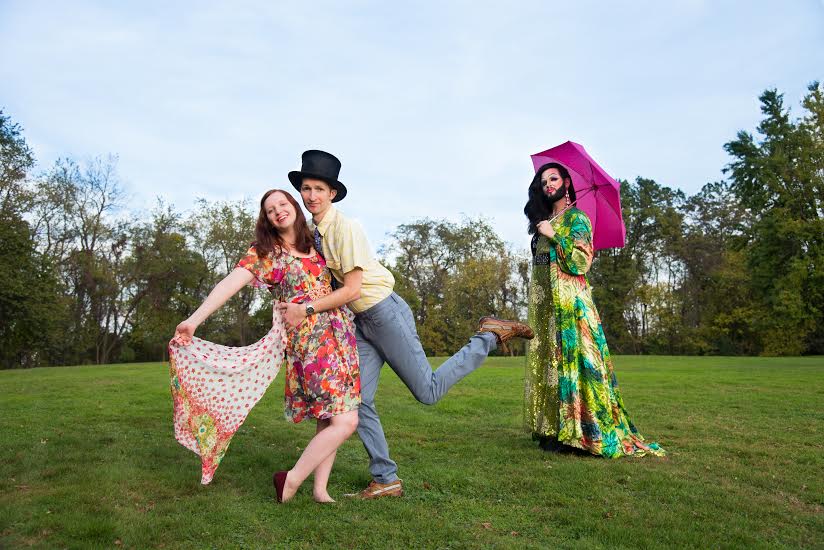
(Left to Right: Nicole Havranek, Brian Gray and Qarma Kazee. Photo by Renee Rabenold


Feelings is a live memoir in three acts about Nicole and Brian’s personal journeys from childhood through young adulthood and into an uncertain future. The audience is guided on this journey by their Fairy Drag Mother–the delightfully rude Qarma Kazee–who shares reflections on her own life along the way. The result is an experience full of genuinely relatable laughter, powerfully vulnerable moments, and reflective observations.
“I am thrilled to be bringing this show to life at City Theater,” says writer/performer Brian Gray. “’Feelings’ allowed Nicole and I to explore big topics in our lives: what shaped us growing up, what do we want our future to look like, how do we share meaningfully our experiences with depression and chronic pain? And we hope that by disarming you with laughter, we invite you to ask yourself these same big questions.”
“I am currently navigating the waters of my first long-term relationship,” explains Qarma Kazee’s alter ego, writer/performer Michael Quigley. “Working on a show that examines what makes two individuals work as a loving team within a relationship was exciting and inspirational.”
Qarma Kazee is a bearded lady drag performer based in Pittsburgh. Qarma is drawn to the anachronistic and can be found performing in the cabaret, vaudeville, burlesque, comedy and the general drag scene.
“Feelings” is directed by Renee Rabenold, a Point Park University BFA Acting graduate.
Immediately following the show is an After Party in City Theater’s Gordon Lounge where audience members can enjoy wine and beer, mingle with the cast, and laugh along with stand-ups from tCumi Ikeda and Ossia Dwyer.
“Feelings: A Magical Time Traveling Love Story” runs City Theatre,  1300 Bingham Street, Pittsburgh PA, 15203. For more information or tickets, click here.

Brain Candy – a review of “The Hard Problem”

By Michael “Buzz” Buzzelli, ‘Burgh Vivant

In Tom Stoppard’s cerebral play, “The Hard Problem” the playwright explores René Descartes famous philosophical proposition, “Cogito ergo sum,” or, more roughly translated, “I think therefore I am.”

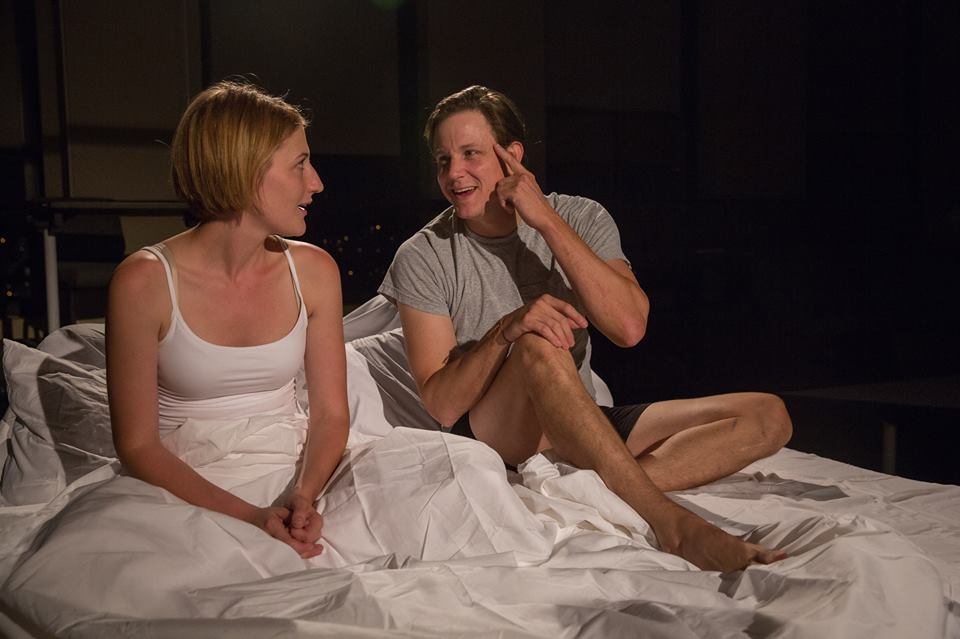
A young attractive researcher, Hilary (Alex Spieth), tackles a conundrum that has faced many scientists as she attempts to reconcile science with her faith. Her tutor-cum-paramour, Spike (Andrew William Smith), is an atheistic pragmatist, whereas Hilary clings to her religion. Their viewpoints are on opposite ends of the spectrum, and their post-coital conversation covers altruism, Darwinian evolution, probability, divine creation and, most importantly, altruism vs. egoism. Who doesn’t want to chat about non-overlapping magisteria after sex? The couple quarrels about art vs. science in their underwear, and it becomes a STEAMy affair.

Meanwhile, the researcher is up for a prestigious job at the Krohl Institute. Hilary undergoes a bizarre interview with Leo (Ken Bolden) where she has to compete for the gig against a mathematician, Amal (Vinny Anand). Because Leo is running late, the rivals coincidentally encounter Jerry (Randy Kovitz), the institute’s billionaire backer.

Time passes and Hilary is situated at her job. She has good friends at the institute; Julia (Fredi Bernstein), a Pilates instructor, and her lover, Ursula (Daine Michelle Griffith). She even gains an assistant, Bo (Claire Hsu).

When Cathy (Grace Vensel), the billionaire’s daughter, wanders into Hilary’s lab one day, a long-buried secret bubbles to the surface, and an unplanned rendezvous with Spike in Venice begins a new series of difficulties in her life. Hilary’s problems begin to pile up like a Fibonacci sequence, each mistake adding to the last, doubling in intensity.

Hilary (Alex Spieth) and Spike (Andrew William Smith) spar over their disparate philosophies.

In fiction, coincidences always mount up, sometimes straining the willing suspension of disbelief. Stoppard roasts the old chestnut by steeping the play in a deep conversation about probabilities. He cleverly weaves an argument about random chance into the fabric of the tale. Is there a benevolent force drawing people to certain events, or is it all just a series of random accidents?

Spieth’s Hilary is dazzling. She has a charismatic stage presence. It’s easy to see why so many characters in the play find her utterly irresistible.

Accolades must be given to Quantum mainstays such as Griffith, Bolden and Kovitz. Bernstein, a newcomer to the Quantum stage, is a delight, as is the youngest member of the cast, Vensel.

Bo is a multifaceted creation and Hsu performs it with aplomb but, because there are a lot of characters, Bo gets short shrift. Stoppard could have spent a little more time delving into the complexities of her personality.

Director Rachel M. Stevens keeps the actors in a tight, Spartan square. When the actors are not on stage, they look upon the action with a dispassionate gaze. It creates an eerie effect.

Scenic designer Stephanie Mayer-Staley’s set is saturated in a ghostly white, like a Clean Room – with props. Projection designer, Joe Spinogatti creates elaborate illusions that add an intricate layer to the production.

Warning: If you’re looking for an evening of light entertainment, seek your pleasures elsewhere. Some theater-goers may find “The Hard Problem” pretentious and languid.

There is an odd juxtaposition to “The Hard Problem.” While it revels in its intellectual gyrations, the adoption storyline is exaggeratedly simplistic – like a Scooby Doo mystery, there’s only one suspect.

“The Hard Problem” is, literally and figuratively, a consciousness-raising endeavor.

– MB

“The Hard Problem” runs through November 19 at the Energy Innovation Center, 1435 Bedford Avenue, Pittsburgh, PA 15222. For more information, click her

Quentin Crisp gets “The Last Word” – an interview with Phillip Ward

Michael “Buzz” Buzzelli, ‘Burg Vivant

On November 21, 2017, Quentin Crisp’s book, “The Last Word,” will go on sale, eighteen years after his death – to the day. Phillip Ward, author, poet, archivist and curator of the Crisperanto: The Quentin Crisp Archives, co-edited the very personal volume with Crisp and Laurence Watts.

Ward became aware of the bon vivant, raconteur and gay icon watching “The Naked Civil Servant” on television in 1975. Ward said, “While watching the film, never did I realize nor even imagine the significance or the importance Quentin Crisp would be in my life.”

Ward said, “It was February 1986 that I met Quentin Crisp, ‘live and in person.’ I was working as an editor in a production house when my secretary met him while standing in line at the East Village post office and engaged him in conversation. I encouraged her to set up a date for dinner. I would come along! Consequently, I was overwhelmed by his generosity of spirit and kindness—and with his honesty of heart. And despite his spoken adversity toward love and being loved, Quentin exuded unconditional love to those he believed in and trusted. Because of this, I enjoyed an intimate and close friendship with Quentin Crisp.” He added, “One which I cherish daily.”

Ward often escorted Crisp to galleries, movies and restaurants. He said, “We would meet up with fans that had invited him to dinner.”

Their relationship evolved, and Ward became Crisp’s assistant. He attended to many of his needs, especially as the author grew older.

In the early 1990s, Quentin lost the capacity to use his left hand because of illness. Ward said, “I was able to transcribe his voice as quickly as he spoke the words. I became his ‘Left-hand Man’ typing and readying his manuscripts.”

Ward was Quentin Crisp’s assistant, dresser, typist, editor and companion during the 1980s and until Crisp’s death in 1999. He is literary and estate executor of Crisp’s estate.

Ward reiterated, “His language and use of words were jewels for the ears to hear and the eyes to read. Quentin’s gentleness and kindness. He was his cheerleader and lived for himself and shared that self openly and willingly with me, the public and the whole world. Quentin’s love for life and sharing that happiness pulled me into appreciating and loving the person and the persona.”

Following Quentin’s passing, Ward created Crisperanto: The Quentin Crisp Archives from personal effects left to him in Crisp’s will. The archives mission  states, “To preserve and maintain the manuscripts, letters, recordings, artwork by and about, and various artifacts and ephemera related to the life and legend of Quentin Crisp, and to promote his philosophy of individuality, self-acceptance, and tolerance.”

Ward said, “Sharing his history is sharing Quentin to the world daily. His person may no longer walk among us, but his words and image continue to inform and enlighten us through the existence of the archives.”

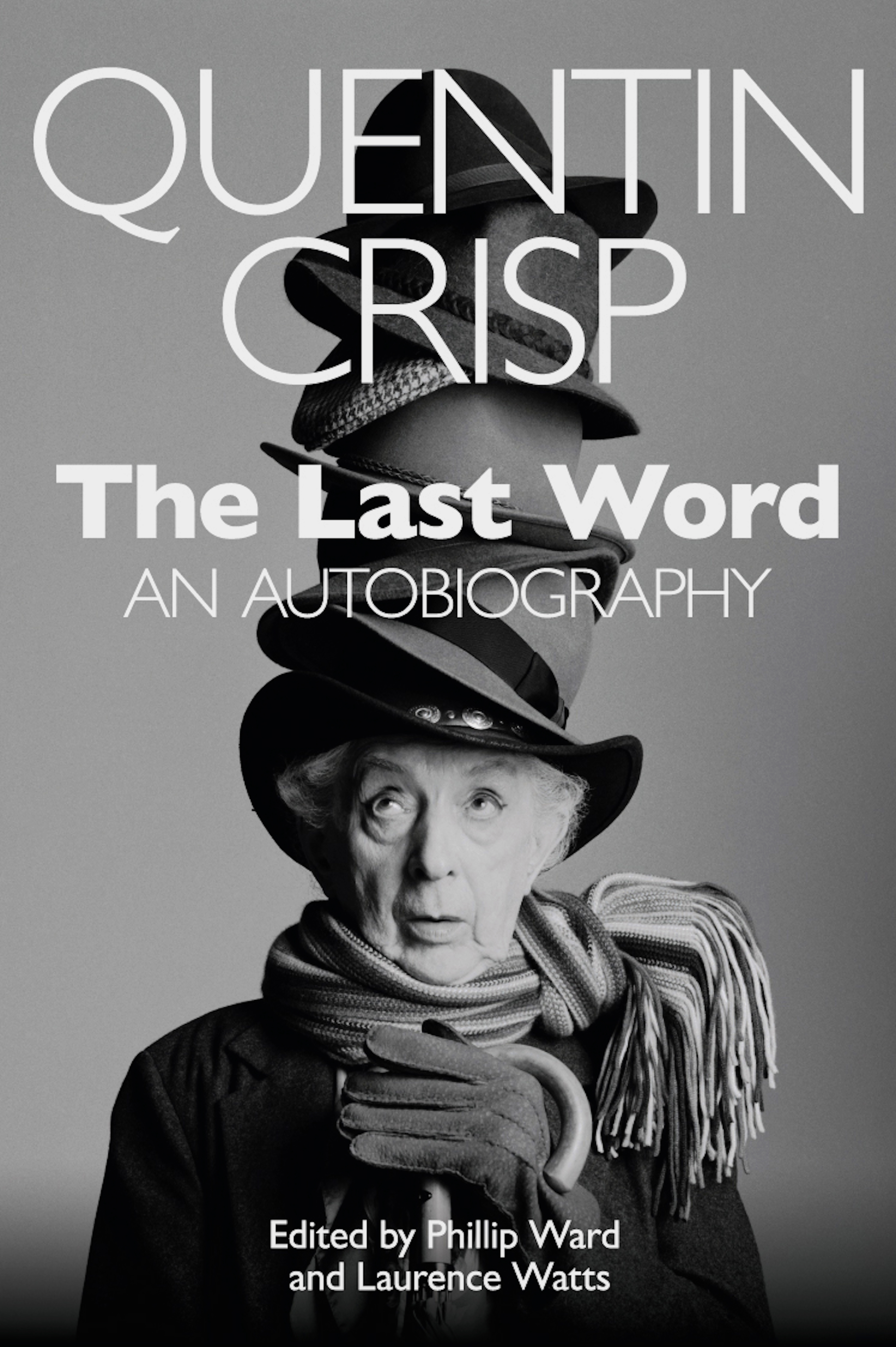
The cover to “The Last Word” by MB Books, LLC.

Ward went on to explain the theme of “The Last Word.” He said, “The book is Quentin’s valedictory. It is his deepest attempt to tell us what the lessons of his nearly ninety-one years on the planet have been. As usual, he approaches the ‘topics’ of his life—which include old age, sickness and his nearness to death—with unflinching honesty and openness. But in ‘The Last Word’ we get what Quentin almost never permitted himself to share about his life in any other public forum: we get his heart, his untrammeled feelings about what the gift of his life has meant to him. It is a view of Quentin Crisp not shared with the public in his lifetime. It is probably the most personal and most unusual book Quentin ever wrote, and this is what makes it an incalculable gift to the rest of us.”

Ward added, “His message is clear: Accept yourself for who and what you are and be the person you are destined to be without apology. What matters is that you obtain and maintain the courage to be yourself and to construct your individualism in a style that fits your life’s needs and desires. Pinpoint your daydream and pursue it with flare and determination. Understand your sexuality and do not let societal pressures ordain who and what you are on the inside even if you’re outside does not truly reflect your interior self, your true being. ‘Be yourself no matter what they say.’ Live your perpetual daydream as Quentin did. He proved that it does pay off!”

“The Last Word,” debuts on the anniversary of Crisp’s death. Ward said, “I am delighted to finally be able to share ‘The Last Word’ with all of Quentin’s fans throughout the world. Quentin was one of a kind. He was a philosopher, an observer of life, a survivor and a beacon of hope for many. In life, his primary mission was the immediate happiness of those around him. He leaves behind a legacy of great importance to the world’s gay and straight communities of which ‘The Last Word’ is his swansong, and I feel that releasing the book on the anniversary of his passing makes it doubly appropriate. Quentin Crisp’s legacy has reached and touched all and many under a multifaceted rainbow. There is no boundary to his cause, to his action of being one’s ‘self’ at all times and without apology or any gain. Just ‘Be!’  That is what Quentin was and expressed daily: Being himself wholly. I encourage everyone to read Quentin Crisp’s works and hear him on recordings. His philosophy will have some impact on you, whether you invite it or not.”

Ward said, “He was a mentor and a friend, I listened to his wisdom and feel I am a better human for having known him. I miss the whole being of Quentin Crisp.”

Phillip Ward toasting Quentin Crisp with a glass of absinthe at his apartment at 95 Christopher Street in New York City in the mid 90s. – Photograph by Quentin Crisp

“The Last Word” (co-edited by Phillip Ward and Laurence Watts), the third and final installment of Quentin Crisp’s autobiography is available on November 21, 2017. For more information about Quentin Crisp and “The Last Word” go here. In addition to “The Last Word” the Victoria Hollis Gallery is releasing a book of photographs by Martin Fishman titled “Quentin Crisp is Black and White.” It is a photography book with over 150 images of Quentin Crisp at home and in various scenarios. Ward wrote the introduction and selected quotes from Crisp’s book to embellish the pages. Both “The Last Word” and “Quentin Crisp in Black and White” will be released on November 21, 2017.


Pittsburgh Festival Opera honors First Place Winner Meghan Kasanders at 7th Mildred Miller Competition

PITTSBURGH, PA (October 24, 2017) — First Place Winner Meghan Kasanders, 26, led the field of nine finalists at Pittsburgh Festival Opera’s Seventh Annual Mildred Miller International Voice Competition with her performances of Dich, teure Halle from Wagner’s Tannhäuser and “Come scoglio” from Mozart’s Cosi fan tutte on Sunday, Oct. 22 at The Frick Art & Historical Center, Pittsburgh.

The New York-based soprano received a $6,000 prize supported by Pittsburgh Festival Opera Board Member Phyllis Sidwell.

The slate of winners also included:

Shannon Jennings, 29, soprano, Pittsburgh, PA – Second Prize of $5,000, made possible by anonymous donor.

Melinda Whittington, 33, soprano, Charlotte, NC – Rob Chafin Third Prize of $4,000, made possible by Jamini Davies.

Corrie Stallings, 29, mezzo soprano, Pittsburgh, PA – Mildred Miller Mezzo-Soprano Prize, supported by Mildred Miller Posvar who announced her endowment of this new $1,000 award on stage.

Errin Duane Brooks, 32, tenor, New York, NY – Audience Favorite Prize, a $1,000 award made possible by Pittsburgh Festival Opera Board President Dr. Eugene and Barbara Myers, and selected via a vote by audience members.

Jeff Byrnes, 28, baritone, Detroit, MI – Judges’ Commendation and contract offer, with all finalists receiving a special commendation made possible by an anonymous donor for their participation.

The finalists were joined on stage by Company founder, competition judge, and competition namesake Mildred Miller Posvar, Pittsburgh Festival Opera Artistic Director Jonathan Eaton, and host Jim Cunningham of WQED-FM who introduced the singers during the three-hour event in the Frick’s intimate theater.

In 2017, the panel of five judges included: Mildred Miller Posvar, founder of Pittsburgh Festival Opera and acclaimed Metropolitan Opera mezzo-soprano; Jonathan Eaton, Artistic Director of Pittsburgh Festival Opera and Professor of Music/Margot and Bill Winspear Chair in Opera

Studies, University of North Texas College of Music; Robert Chafin, tenor, Assistant Professor of Voice, West Virginia University School of Music; Timothy LeFebvre, baritone and Associate Professor of Singing, Oberlin College Conservatory; and Jane Eaglen, dramatic soprano, whose storied career includes leading roles in the operas of Wagner, Verdi, and Puccini among many others. Her international performance and teaching career has taken her to the leading opera houses and academic centers of the world.

Pianists for the competition were James Lesniak and Stephen Variames.

Explore the Pittsburgh Festival Opera Facebook page for the live videos and news on all the award winners.

ABOUT THE MILDRED MILLER COMPETITION WINNER

American soprano Meghan Kasanders is quickly gaining recognition as a promising young dramatic voice. Ms. Kasanders is currently working towards an Artist Diploma in Opera Studies (ADOS) at the Marcus Institute for Vocal Arts at The Juilliard School, New York City. After a recent tour of singing Berta in The Barber of Seville with Des Moines Metro Opera’s ‘Opera Iowa’, Ms. Kasanders sings her company debut with Opera Saratoga in Saratoga Springs, New York in June. As an Apprentice Artist there, she will cover Alice Ford in Verdi’s Falstaff, and sing the role of Sadie Pollock in Cradle Will Rock, directed by John Mauceri. Ms. Kasanders will make another company debut with Union Avenue Opera in St. Louis, Missouri, returning to a favorite role, Gertrude (Mutter) in Humperdinck’s Hänsel und Gretel.  Read more at: https://www.meghankasanders.com/

ABOUT PITTSBURGH FESTIVAL OPERA

Celebrating 41st Season in 2018

Pittsburgh Festival Opera was founded in 1978 by Mildred Miller Posvar, acclaimed Metropolitan Opera mezzo-soprano. In its 19th year under Artistic Director Jonathan Eaton, the Festival launches its 41st season of innovative and intimate opera and music events, June 29-July 22, 2018:

  • Rhinegold, the opening opera in the reprise of its “Pittsburgh Ring,” a multi-season run of Wagner’s four opera master work in Jonathan Dove’s acclaimed English version, first produced in Pittsburgh by the company in 2005-2006. Rhinegold opens the series with the three other operas following through 2021 when all four Ring Cycle operas will be staged.
  • La boheme, in a new 1960’s production inspired by the work of Pittsburgh-born artist Andy Warhol. Puccini’s tragic romance will be transported from Paris to the artist garrets and streets of mid-century America.
  • Arabella by Richard Strauss, in a continuing series of rare and ravishing Richard Strauss operas. Arabella is the fifth Strauss opera to be featured in recent summer seasons.

In addition, a workshop for the company’s 29th world premiere project, “Fight for the Right,” will be a featured part of the summer season.  “Fight for the Right” is a global commissioning competition for composers and librettists to propose new works based on themes of women’s and girls’ education. From the pool of submissions, four teams will be selected to present scenes from their work in Pittsburgh Festival Opera’s 2018 season. From that performance, one work will be chosen to be developed into a full-length opera for the 2019 season, continuing the company’s “Music That Matters” series—presenting new works on issues relevant to modern audiences.

Other programming includes a Saturday morning family opera (Goldie B. Locks) and recitals featuring members of the Young Professional Artists Program.

Pittsburgh Festival Opera’s Mainstage is the 360-seat Falk Auditorium, Winchester Thurston School in Pittsburgh’s thriving East End. Events are also held in community venues during the season and throughout the year. Details and schedules at: PittsburghFestivalOpera.org


Little Lake announces sizable cast for Arthur Miller’s THE CRUCIBLE

CANONSBURG, PA – Little Lake Theatre Company announces The Crucible, a play by Arthur Miller.  Salem, Massachusetts is ablaze with accusations of witchcraft after a group of young girls are found dancing in the woods. The line between reality and fable blurs as long-held grudges and humiliating secrets are put on trial in order to root out the evil plaguing the town. Revenge replaces reason and soon no one is safe. Still astoundingly relevant today, The Crucible is both a gripping historical play and a timely parable of our contemporary society. 

The Crucible runs from November 2-4, 9-11 & 16-18 at 8 pm. $18 – $20, $12 for children. For tickets and information: www.littlelake.org or (724)745-6300.

The Crucible is directed by Jena Oberg, with choreography by Melissa Tyler.

Cast
(in alphabetical order)

Reverend John Hale………. Josh Antoon
Giles Corey……………………. Warren Ashburn
Abigail Williams……….……. Elizabeth Bennett
Rebecca Nurse………….……. Ina Block
Hopkins……………………..…. Dylan Blussick
Judge Hathorne………….…. Bracken Burns
Mercy Lewis……………….…. Amanda DeConciliis- Weber
Ruth………………………….…. Heather Dressel
Alice……………………….……. Isabella Englesberg
Susanna Walcott………..…. Sophia Englesberg
Margaret…………………….… Moriah Hathaway
Francis Nurse………….……. Jeff Johnson
John Proctor……………..…. Eric Leslie
Thomas Putnam………..…. Joe Macerelli
Martha……………………..…. Martha McElligott
Sarah Good……………….…. Pam Pasternak
Mary Warren…………….…. Kayleigh Peternel
John Willard……………..…. Jared Pfennigwerth
Mrs. Ann Putnam…….…… Kathleen Regan
Deputy-Governor Danforth………. John Reilly
Tituba…………………………. Fatu Sheriff
Elizabeth Proctor…………. Jennifer Sinatra
Betty Parris…………………. Lindy Spear
Ezekiel Cheever……………. Stephen Toth
Reverend Samuel Parris……… Terry Westwood


Duquesne Red Masquers Performs THE BUSY BODY as the Second Show of the 105th Masterpiece Season

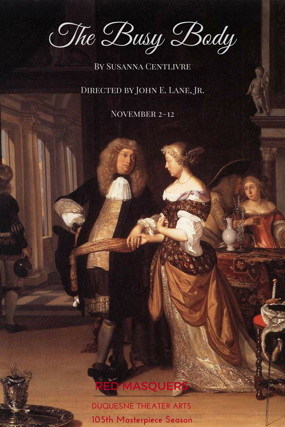
PITTSBURGH, PA – The Busy Body, staged at Duquesne University, will be offered as a part of The National Conference of 18th Century Women Writers. The Busy Body by Susanna Centlivre is directed by John E. Lane, Jr., who directed Death of a Salesman (starring: Mark Yochum, Nancy Bach Love, Jay Keenan, and Curt Wootton – The Pittsburgh Dad) during the Red Masquers’ inaugural performance at the Genesius Theater.

The Busy Body (starring: Jay Keenan and Nancy Bach Love) is a fast-paced, witty comedy. A laugh-out-loud, one-of-a-kind, social satire about people who can’t mind their own business from one of the great female playwrights of the 18th century.

The production runs November 2 through November 12. Thursday through Saturday performances begin at 8 PM. Sunday matinees are at 2pm. All shows will be performed at the Genesius Theater at Duquesne University, adjacent to the Mary Pappert School of Music. Ticket prices are $16.50 for general admission, $11.50 for senior citizens, and $6.50 for students. Group rates are also available. Tickets can be purchased at the door or online at www.duqredmasquers.com

Star-Crossed – a review of “Romeo & Juliet

By Michael “Buzz” Buzzelli, ‘Burgh Vivant

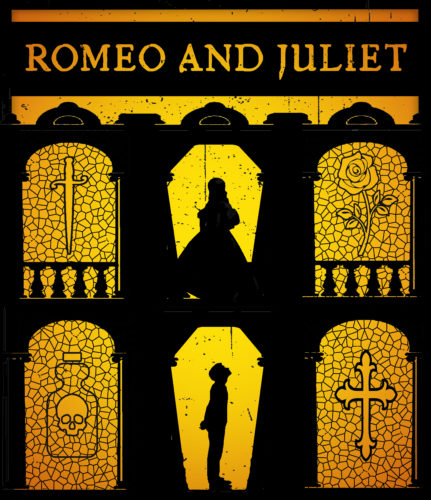
When two young lovers defy their warring households, both alike in dignity, they set out on a perilous journey that can only lead toward their inevitable, undeniable deaths in William Shakespeare’s iconic masterpiece, “Romeo & Juliet.”

We lay our scene in the Neapolitan village of Little Italy, subbing for fair Verona (and briefly, Mantua). The time is 1930, on a moon-drenched Mulberry Street. The gangs of New York, in this case, are the Montague’s and the Capulet’s. The longstanding blood feud between the two families has made civil hands unclean.

When Romeo Montague (Dylan Marquis Meyers) crashes a masquerade ball at the Capulet manse, he has a faithful encounter with Juliet (Adrianne Knapp). After clever word play on the maiden’s balcony, they kiss, and, from that moment on, parting becomes sweet sorrow.

The two are secretly wed by Friar Lawrence (James FitzGerald), and things get chaotic quickly. Juliet’s parents, Lord (Martin Giles) and Lady (Shammen McCune) Capulet have promised their daughter to Paris (Jonathan Visser). Meanwhile, Romeo is embroiled in a battle between the families. When a knife fight escalates, Romeo’s friend, Mercutio (Alec Silverblatt), is slain. In retaliation, Romeo kills Juliet’s cousin Tybalt (Daniel Pivovar).

The situation is dire and Romeo is banished from his home town, just as Juliet is set to wed Paris. Friar Lawrence cooks up a cockamamie plan involving a potion that simulates death. His plans gang agley, as the best laid plans often do.

The story is a sad but familiar one.

Side note: Since the play’s first folio was published in 1623 (and performed nearly a century before that), the spoiler shields are not engaged. Matter of fact, the first stanza, gleefully orated by the director, Alan Stanford, states, matter-of-factly, “A pair of star-cross’d lovers take their life.” It’s not about the destination. It’s about the journey.

The play is perfectly executed, performed by some of the city’s most notable actors, alphabetically from Cheston to Visser.

Meyers is a quixotic Romeo, filled with flights of fancy. He brought a lighthearted mirth to the tragic teen. He is buoyant, ebullient and effervescent.

Knapp is a luminescent as Romeo’s brief bride. She is, indeed, a bright angel.

Lamar K. Cheston’s Benvolio is excellently cast. He is the lone voice of reason on the Montague side. Cheston has a commanding stage presence.

Silberblatt is a mercurial Mercutio, strutting about the stage with loutish swagger, chewing the sparse scenery, preening with puerile bawdiness, relishing his part (literally and figuratively) with gusto. It is performed for the groundlings as originally intended by the author – in other words, it’s a bit PG 13 (and might not sit well with the Sunday matinee crowd).

McCune’s performance as Lady Capulet is compelling. She owns the stage every time she appears. She is perfectly matched with Giles as her husband (another impressive performer).

Special mentions to smaller roles: PICT favorites, FitzGerald and Karen Baum are brilliant as the friar and the nurse. It’s hard to come up with new compliments for these old favorites.

Johnmichael Bohach’s set is stunning, bedazzled by the backdrop of twinkling lights on sheer black curtains in the Fred Rogers Studio. The lighting by Keith Truax sets the mood; deep indigo hues are illuminated by an almost ever-present moon.

There might never have been a story of more woe; than this of Juliet and her Romeo, but it’s a damn good time and you should go.

“Romeo and Juliet” runs until November 4 at the Fred Rogers Studio, WQED, 4802 Fifth Avenue, Pittsburgh, PA 15213. For more information, click here.

Pittsburgh Festival Opera’s Mildred Miller International Voice Competition heats up this weekend

By Dave Zuchowski, ‘Burgh Vivant

Pittsburgh Festival Opera announces Semi-Finalists for the Mildred Miller International Voice Competition. Emerging vocal artists between the ages of 18 and 35 who are accomplished but not yet able to sustain themselves in their profession, will compete for cash prizes as well as be given a chance to be cast in solo roles for the company’s 41st season.

The competition is named for the company’s founder, opera diva Mildred Miller, who firmly believes in supporting young singers. This year’s Seventh Mildred Miller International Voice Competition is scheduled for October 21 (the Semi-Final Round) and October 22 (the Final Round). According to Joel Goodloe, associate artistic director, 250 singers applied for the competition from 18 countries.
Eight singers, selected by the judges from Saturday’s Semi-Final Round pool of 20 candidates, will present arias during the Final Round. From these eight finalists, three will be selected as winners and a fourth will be chosen as “Audience Favorite.” Winners receive cash prizes ranging from $4,000 to $6,000 as well as offers for resident artist contracts in Pittsburgh Festival Opera’s 2018 summer season.
Besides Ms. Miller the other judges on the panel include Robert Chafin, Assistant Professor of Voice, West Virginia University School of Music Jonathan Eaton, Artistic Director of Pittsburgh Festival Opera and Professor of Music/Margot and Bill Winspear Chair in Opera Studies, University of North Texas Timothy LeFebvre, Associate Professor of Singing, Oberlin College Conservatory Jane Eaglen, Professor of Voice, New England Conservatory, Internationally acclaimed Wagnerian soprano.
Candidates for the Semi-Finals are featured in this mosaic.
In addition to being a member of the judging panel, Rob Chafin also serves as the Young Artist Program Director for Pittsburgh Festival Opera. He took time out of his busy schedule to answer a few questions about the competition:
Q: Rob, I understand that each of the contestants get to pick five vocal selections for their audition and start off with one of these as their first choice. After listening to the first selection, the judges then confer and pick a second selection from their list.
A: Each contestant is given roughly ten to 15 minuets before the panel of judges and accompaniment is provided by Pittsburgh Festival Opera via James Lesniak, associate coach at Pittsburgh Opera and Stephen Varianes, head coach for Pittsburgh Festival Opera. At the end of Day One, the judges pick 8 of the 20 singers who go on to the finals the following day. One Day Two, they will again perform two songs from their pre-selected list. Cash prizes of $6,000, $5,000 and $4,000 are awarded the first, second and third place winners, with another $1,000 going to the winner of an Audience Favorite Award. On day two, the singers again select their first piece, then the judges will ask for another selection. Sometimes, the panel might chose to request a third piece, or a part of an aria or song, depending on time, to help with evaluating the singers. The judges try to ask for contrasting selections to help narrow down the field in the semi-finals and to award the prizes at the finals. Cash prizes for first, second and third are awarded to the winners during the competition, with an extra $3,000 given to those winners who come to Pittsburgh Festival Opera and sing a role with the company. The Audience Favorite Award is determined at the conclusion of the final round by the people in attendance and is then given at the Award’s Ceremony following deliberation by the judges. Sometimes the Audience Favorite and the judges’ decision are not the same, and that is what makes a competition so exciting. In order to assure fairness and clarity, the judges use a point system, listening to the singers and then ranking them based on many factors . We want to select complete musicians that would be ready to accept a leading role in a company, looking at such things as vocal color and beauty of tone, language skills, musical and artistic expression, dramatic energy and engagement to the text.
Q: As a judge, what do you look for in a singer and how does the panel finally manage to arrive at their final decisions?
A: Of course, a beautiful voice, produced in a healthy way, and the ability to sing with musicality is important, but I look for that singer who can make me put down my pencil or pen and just listen to their story. A chance to just sit back and relax and experience the talent they bring to the competition.
Q: In the same vein, how do you judge 20 singers, all of whom have great voices and are different performers, different genders, different voice types? What are some qualities a successful singer should have? What is the “it” factor?
A: As a competitor in these situations, it is often difficult to relax and be spontaneous, but that is something that makes a difference between winning and doing well. And, these days, singing is getting better and better, and the competition is fiercer. So my suggestion to emerging artists is to find YOUR voice and sing without pressure, because it is that unique talent and sound that will help you move forward in your career path. A successful singer needs a solid technique, nerves of steel and the ability to act without being over-the-top. In other words, be so prepared that you can forget all of that when you go out and announce your first piece and just show what you can do. Mesmerize us – make us laugh – make us cry – but, make concrete choices that will show us where you are. I think the thing that younger singers need to realize is that the judges are there and WANT you to do your best.
 Q: How does Pittsburgh Festival Opera connect rising singers with professional opportunities through the competition and to its season through training, roles and more?
A: During the summer, we try and connect the young artists with the directors, conductors, pianists and singers through coaching and different sessions. But, the networking happens all summer. As we come together at the first “death-by-aria” meeting, when all young artists arrive, we listen to each other, and the teaching and directorial staff have a chance to get acquainted to the singers again. Then, we make decisions on what the singers need and who would work better with the different young artists.
The Semifinal Round is scheduled from 11 a.m. and 1 p.m. and from 3 p.m. to 6 p.m. on October 21 at the Kresge Theater on the campus of Carnegie Mellon University, and the public is invited to attend free of charge although advance reservations are strongly recommended.
The Final Round is from 2 to 5 p.m. on October 22 at the Frick Art and Historical Center, 7227 Reynolds Avenue in Pittsburgh’s Point Breeze neighborhood. WQED-FM’s Jim Cunningham will  host the Final Round.
For more information about the Pittsburgh Festival Opera, click here.

Set sail with the “Belfast Girls”

Over 4,000 Irish “orphan” girls were shipped to Australia under the pretense of a better life during the Irish Famine.  Lord Earl Grey the Protectorate of Ireland during the 1840’s arranged to ship young orphans as potential brides to the wilds of Australia.  However, many of these orphan girls were not who they seemed to be.  The story is one that resonates even now 150 years later. A story of misogyny, human trafficking and abuse of women’s rights.

Ghostlight Theatre Troupe will present the Pittsburgh premiere of award-winning playwright, Jaki McCarrick’s “Belfast Girls,” with Cassidy Adkins, Elizabeth Glyptis, Jenny Malarkey, Sara Williams and Val Williams. Directed by Rich Kenzie and co-directed by Samantha A. Camp.

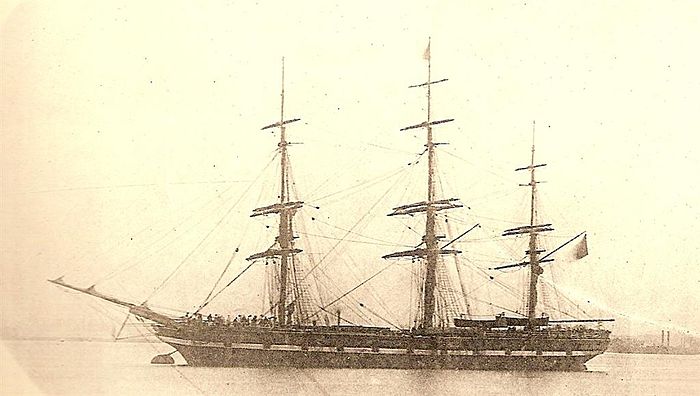
Escaping the Irish Famine in 1850, five young women seek passage on a ship to Australia.  For many of the “orphan girls” on board, the voyage offers a fresh start.  But some girls find they cannot escape the memory of the lives they have left behind – and the closer they come to Australia the more powerful the past becomes.

“We are thrilled that we were able to obtain the rights to this wonderful production” stated Rich Kenzie, Founder and Artistic Director of Ghostlight Theatre.  “This is a true story that has been lost to history, and the themes still ring true today.  It is an important story to tell and hopefully learn moving forward.”

“Belfast Girls” runs from October 25 through Sunday October 29 at the Carnegie Stage, 25 W. Main Street, Carnegie, PA. For more information, click here.

Extinction event – a review of “Dodo”

By Michael “Buzz” Buzzelli, ‘Burgh Vivant

When you sign up to partake in an immersive theatrical event with Bricolage, you must expect the unexpected. “Dodo,” co-created by the uber-imaginative team of Jeffrey Carpenter, Gab Cody, Tami Dixon and Sam Turich, is a feast for five senses.

It is far easier to explain what “Dodo” is not – – than what it is. It is not a typical evening at the theater. You can’t just sit back and watch actors do their thing. Participation is key. Wear sensible shoes. You will be meandering through the vast expanse of the Carnegie Museum of Art and Natural History.

In this particular piece of immersive theater, ‘donors’ tour the museum in the dark. Any kid who has read E.L. Konigsburg’s “From the Mixed-Up Files of Mrs. Basil E. Frankweiler” will tell you that walking around the museum at night is both thrilling and terrifying.


Yukon Ho!

On the tour, you’ll meet a variety of unusual individuals, such as the Explorer (Michael McBurney). McBurney’s Explorer is reminiscent of a crazed Colonel Crittenden (Bernard Fox from TV’s “Hogan’s Heroes”). He’ll show you polar bear, some Eskimo’s and a herd of muskox. He’s delightfully loony.

Flowers in the Attic

You may meet Marvin (Tyler Ray Kendrick) and Maeve (Kelsey Robinson) in the labyrinthine attic above the museum. They will regale you with song and tempt you to stay with them. Robinson’s Maeve will strum the ukulele and sing softy. It’s a beautiful moment, but not everyone who attends “Dodo” will get to experience it. There are several different pathways in “Dodo,” but it’s about the journey and not the destination.

“This Parrot is no more!”

You may get to watch a museum employee, Hannah, remove the brain of a local bird, who, she claims, smacked into the glass window of a building in downtown Pittsburgh. You may also get to see the museum’s vast collection of dead birds neatly stacked in shelves in, what appears to be, an avian mausoleum.

Random Factoid acquired on the tour: An albatross can have a wingspan up to 11 feet. The birds are gigantic.

Spoilers, sweetie, spoilers!

The tour culminates in a rather bizarre sequence that has been redacted from this review. In the end, you’ll find yourself standing among gems and minerals mined from all over the Earth, sipping hot tea.

Bizarre observation: A deposit of stibnite found in Upper Mongolia looks a lot like a silvery version of Superman’s Fortress of Solitude. All the colors of the Earth can be found in the earth.

If you’ve guessed that the experience is more Dadaist than “Dodo,” you should win a prize; perhaps said prize can be a preserved butterfly under glass, a fossilized egg or smooth, white pelvic bone from a long dead animal.

“Dodo” is an intriguing, mystifying evening that frees your inner child (especially if you have a little Claudia or Jamie Kincaid in there).

There is some excellent sound and lighting design work from District 5 Sound and Clear Story.

Warning: “Dodo” isn’t for everyone. If you’re afraid of the dark, or don’t like roller coasters (seriously), you might want to skip the show.

If you’ve never been to an immersive theatrical event; “the time has come.” The Bricolage name typifies their vision: making artful use from what’s at hand. This production makes artful use of art and natural history. It’s a magnificent experience.

“Dodo” runs until November 19 at the Carnegie Museums of Art and Natural History, 4400 Forbes Avenue, Pittsburgh, PA 15213. For more information, click here.


css.php