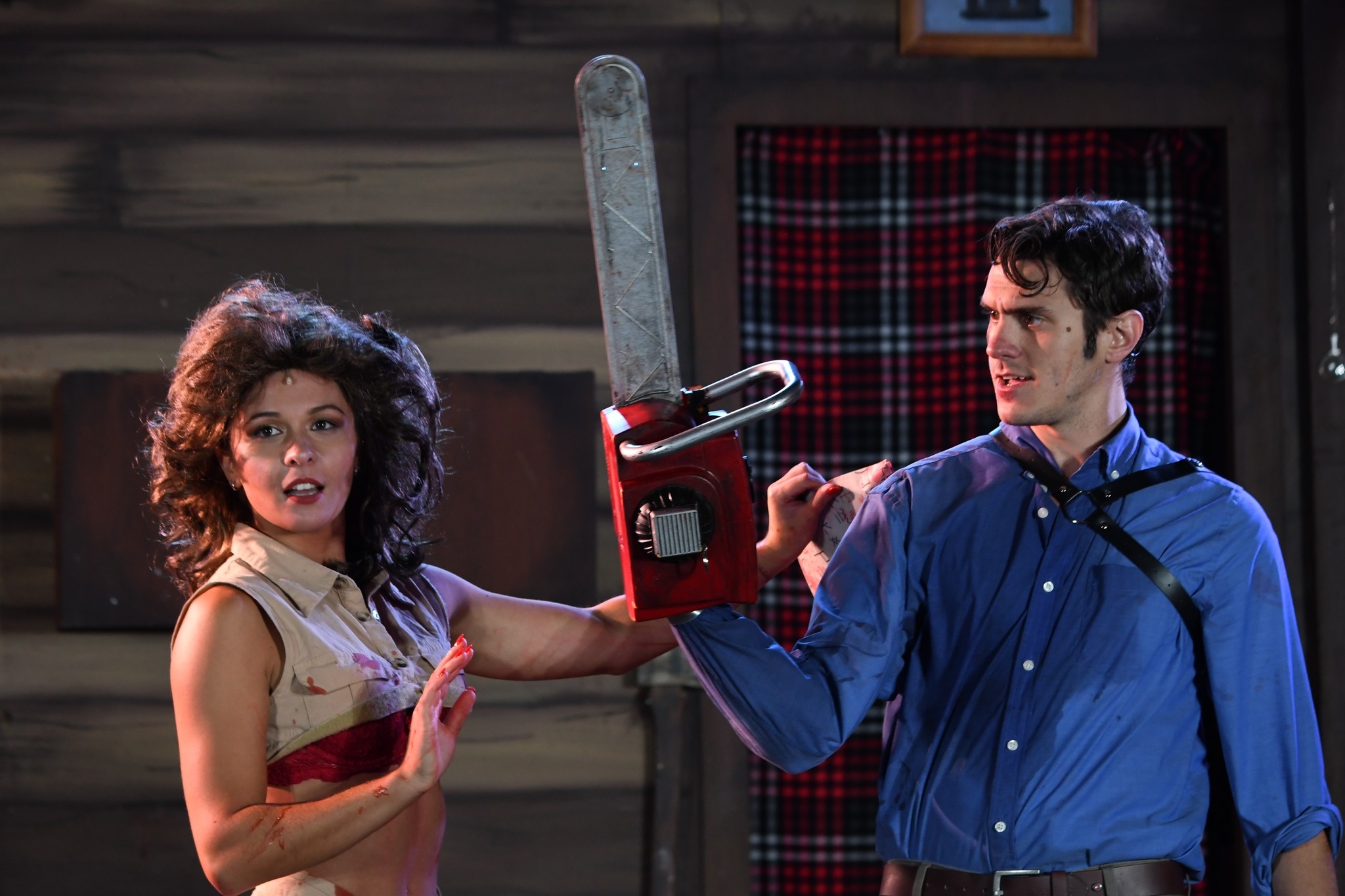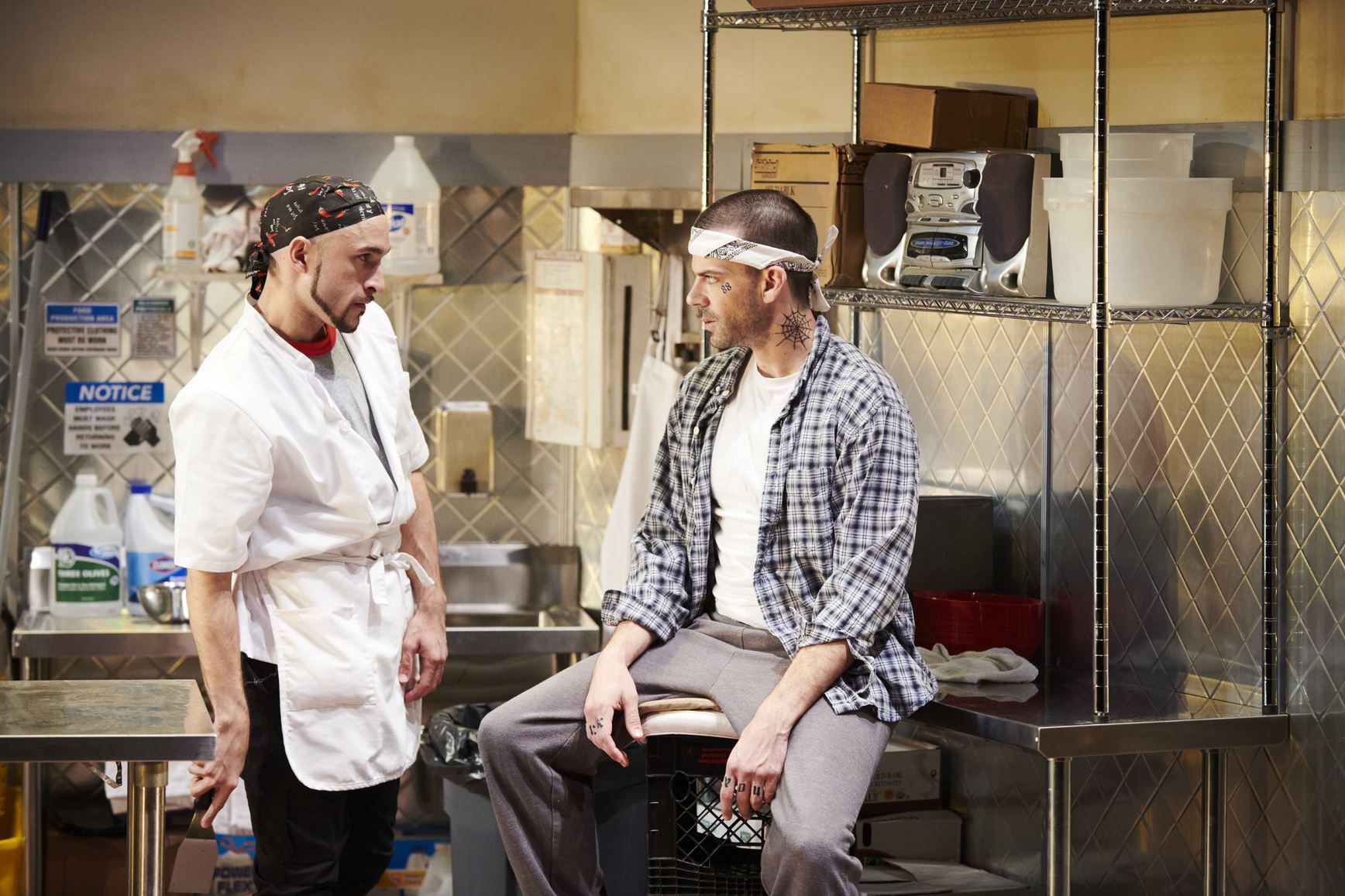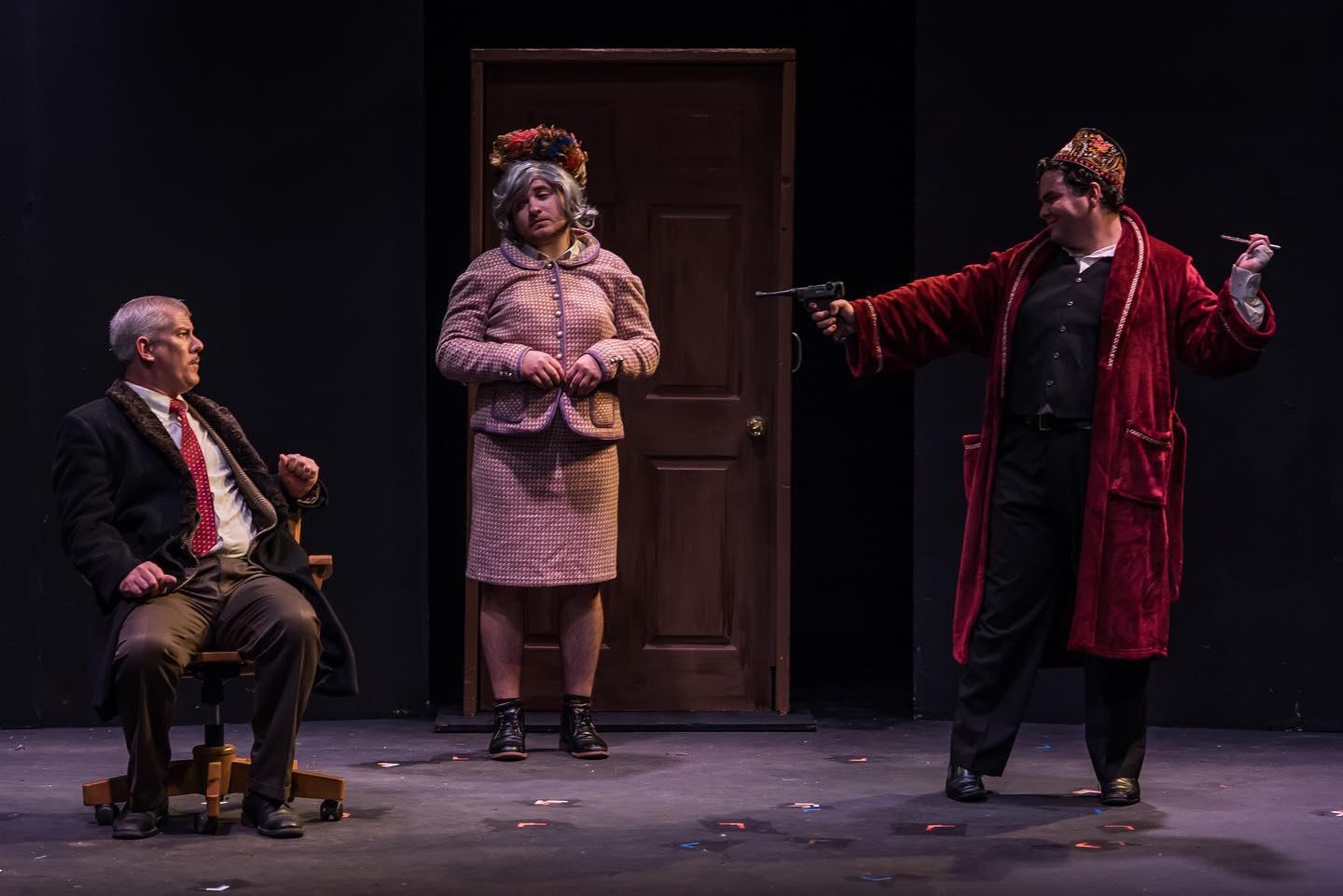

Taking a shot at Broadway – a review of “Spamilton: An American Parody”

Mike Buzzelli

By Mike “Buzz” Buzzelli, ‘Burgh Vivant

Gerard Alessandrini, the comedic genius behind “Forbidden Broadway,” is up to his old tricks. He’s planting his tongue firmly in his cheek, and sending up the blockbuster rap opera, “Hamilton,” in the musical spoof, “Spamilton: An American Parody.”

In 1982, Gerard Alessandrini created “Forbidden Broadway” where he skewered Broadway musicals, constantly updating the show parodying almost every show on the Great White Way ever since. When you consider the sheer enormity and popularity of “Hamilton,” it was only a matter of time before Alessandrini satirized the history-making musical (about American history).

In the show, Lin-Manuel/Alexander Hamilton (T.J. Newton) is joined on stage by Hamilton’s political rival and nemesis, Aaron Burr (Tru Verret-Fleming), a pianist (Nick Stamatakis), and the rest of the “Hamilton” cast (Justin Lonesome, Erin Ramirez, LaTrea Rembert) to discuss the musical phenomenon that launched a thousand careers.

Not only is “Hamilton” lambasted, but the characters needle every possible musical that’s passed through the sacred spaces in midtown Manhattan. No show is safe. Every show is lampooned in “Hamilton” style, nearly forty songs poking fun at “Willy Wonka and the Charlie Factory,” “Wicked,” “The Lion King,” “The King and I,” “Miss Saigon,” “Cats,” and many, many more.

There’s also a running gag with some of Broadway’s biggest divas.

Everybody gets into the act, literally and figuratively. At one point, the pianist (Stamatakis) dons a cape and crown and becomes King George, and belts out a tune.

Eliza (Ramirez) encapsulates the plot at the end with a topsy-turvy version of “Who Lives, Who Dies, Who Tells Your Story.”

From left to right; Justin Lonesome, Tru Verret-Fleming, T.J. Newton, Erin Ramirez and LaTrea Rembert in “Spamilton: An American Parody.”

Director Gerry McIntyre cast the show superbly. The actors sing and dance with enthusiasm and verve. While they’re in on the joke, they play it as seriously as the can, which makes it even funnier. Many of the actors are playing dual roles.

Newton’s resemblance to Lin-Manuel Miranda is uncanny. From far away, you might be fooled. He is also a fantastic singer.

Verret-Fleming is an extremely talented Burr (or Burr wannabe), and Lonesome is terrific in various roles.

Ramirez puts the ham in the spam. She gets some of the best lines, and she knows how to use them. Her impersonations are spot on. She’s hilarious. Her Mary Poppins is amazing.

Rembert’s dancing is flawless, every move was sharp and crisp. It’s hard to take your eyes off of him when he’s moving (looking fierce in a supersized afro). The only problem is he is out-dancing the rest of the cast. It’s hard for the others to match his ability. Don’t let this deter you from going to see this fun-filled extravaganza.

Stamatakis plays the piano beautifully. He also gets to sing one of the funniest songs in the show. He camps it up in a big, broad way (broad way not Broadway) and it’s delightful.

Dustin Cross’s costumes are spectacular, and the cast has to get in and out of them so swiftly.

“Spamilton” is full of silly fun. If you’re a Hamilfan (Hamiltonian?), the jokes will be even funnier; but you haven’t paid the small fortune to see the original – you can still enjoy this spoof.

Side note (for locals only): In the Southwestern corner of heaven, Don Brockett and Barbara Russell are looking down on the Greer Cabaret Theater and laughing there ethereal asses off.

There is simply not a more convenient spot for laughing up a lung than here at “Spamilton.”

-MB

“Spamilton” runs through the summer at the Greer Cabaret Theater, 655 Penn Avenue, Pittsburgh, PA 15222. For more information, click here.


Broadly Speaking – A review of “Top Girls”

By Claire DeMarco, ‘Burgh Vivant

A stimulating dinner with guests requires guests who are stimulating. And to ensure a successful dinner party, Marlene (Kauleen Cloutier) creates a get-together with a fantasy group of diverse females in Caryl Churchill’s “Top Girls.” This make-believe meeting celebrates Marlene’s promotion as the Director of Top Girls, an employment agency, after winning the job over a male co-worker.

The women attending this meeting of the minds are a combination of real and fictional women from the past. Isabella Bird (Leah Hillgrove) is an explorer, a naturalist, a writer and photographer. Lady Nijo (Jillian Lesaca), a Japanese concubine who ultimately became a Buddhist nun. Dull Gret (Rebecca Herron) is a fictional character painted by Brueghel who led an army of women intent on attacking Hell. Legendary Pope Joan (Jennifer Sinatra) disguised as a male, gains the ultimate position in the Catholic Church. Highlighted in several pieces of literature, Patient Griselda (Carley Adams) is the epitome of the obedient (some may say subservient) wife.

On the menu is the history of all these characters as they converse about their backgrounds, husbands and children, how they coped in a male-dominated world.

Note: The Waitress (Erika Krenn) moves quietly and efficiently among the guests, serving several courses of real food and drink throughout the dinner.

After the fantasy dinner we transition to the present (actually 1982) in the Top Girls’ office where a series of interviews occurs with female clients looking for employment (where the actors play multiple roles). There’s a lot of dry comedy but also some matter-of-fact interview questions that today would make any prospective employee shiver. “How old are you?” “You’re interested in computers – you’ll be competing with males.”

(Shudder!!)

Marlene decided long ago that she wants a career in the corporate world and her path has been sequential – just a career, no multi-tasking with a marriage or children. Her determination to succeed carries over in her interviews with the female clients. Any one daring to indicate that they need a job in order to pay for a wedding is chastised. If that’s their goal, they need to downplay it. After all, Marlene’s success depends on her female interviewees actually securing positions.

From this point on we go back and forth between the Top Girls Agency to the English countryside where Marlene grew up, which is still the home of her sister, Joyce (Jena Oberg), and Joyce’s daughter, Angie (Sadie Crow). Angie is anxious to leave and stay with her Auntie Marlene. She confesses her plans to her young friend, Kit (Amanda DeConciliis Weber).

Angie makes it to London and to the Top Girls Agency much to the surprise of Auntie Marlene, and, of course, things spiral from there.

Rebecca S. Herron’s Dul Gret threatens the other dinner guests in “Top Girls” at the table (Jillian Lesaca, Leah Hillgrove, Jen Sinatra and Carley Adams).

Another Note: Many of the actors play dual roles that require an English accent and they are flawless.

Excellent performances from this talented cast!

Cloutier easily transitions from the career woman in command of her life and goals into the working-class vulnerable girl when she’s back in her old neighborhood.

Sinatra is powerful as Pope Joan, her eyes conveying much of her emotion.

Hillgrove tackles Isabelle Bird with confidence and is saucy as Win.

Lesaca brings a gentleness to Lady Nijo. Often interrupted during the dinner, she’s softly able to make her point.

Adams’ Griselda is perfect as the ever-obeying wife.

Throughout most of the fantasy dinner, Herron as Dull Gret rarely speaks, stuffing bread in her mouth, drinking wine out of a bottle. Most of her emotions are conveyed with eye movements and double-takes. She perfectly creates the rough, folkloric war leader.

Jena Oberg is superb as the downtrodden sister clashing with Marlene over her unhappy life. She and Cloutier are riveting in their sibling showdown.

Crow’s fantastic as the solemn, lost but unknowingly funny niece. Her comedy skills are spot on.

Deconciliis Weber as Kit and Shona brings humor to both roles with her cadence and facial gestures and physical movements.

This play portrays the many nuances and underlying circumstances that have affected women all through the ages. The employment agency interviews subtly shine light on those prejudices evident at the time this play was produced. It is no longer acceptable to ask personal questions at an interview. It is still possible (and highly probable) that you may still hear an occasional personal question, after an interviewee leaves – questions such as, “So, how old do you think she is?”

The process is improving for women, but we’re not there yet!

-CED

“Top Girls” is a production of Little Lake Theatre Company, 500 Lakeside Drive, Canonsburg, PA 15317. It runs from May 16th to June 1st. For more information, click here.


On the Sunny Side of the Mountain – a review of “Bright Star”

Mike Buzzelli

Michael “Buzz” Buzzelli, ‘Burgh Vivant

Like two trains running on the same track, Alice Murphy (Erin Lindsey Krom) and Billy Kane’s (Miller Jay Kraps) lives crash into each other in bizarre and unexplained ways in Steve Martin and Edie Brickell’s bluegrass musical, “Bright Star.”

The story is set in North Carolina, in two separate time periods (1923 – 1924 and 1945 – 1946)

Alice, editor and chief of the Asheville Southern Journal, has a story to tell – and it’s a doozy.

When she was a young girl (in 1926), she was smitten by the mayor’s son, Jimmy Ray Dobbs (Jerreme Rodriguez). Mayor Dobbs (Darrel R. Whitney), however, had bigger plans for his son.

After a romantic night by the lake, Alice discovers she’s pregnant. Jimmy Ray is ecstatic about Alice’s news, but his father is not. Mayor Dobbs and his assistant Stanford (David Ieong) send Alice off to a remote cabin in the woods for nine months to have the child in secret.

On the day of his birth, Alice is overjoyed at the sight of her baby boy, but Mayor Dobbs and her own father (Daniel Pivovar) conspire to rip the child from her arms and give it up for adoption. The brightest day turns to darkest night.

Meanwhile (in 1945), Billy returns home from World War II. While he was a soldier in the war, he spent some of his time writing for Stars and Stripes Magazine – sending clippings home to his beloved parents. While his homecoming with his father (Scott Patrick Calhoon) is joyous, it turns sour rather quickly when he learns his mother passed while he was overseas.

After morning his mother with a touching tribute (with the song “She’s Gone”), Billy meets up with his friend Margo (Marnie Quick) who convinces him to sell his stories to the very prestigious Asheville Southern Journal where he meets Alice Murphy, and the two storylines converge.

The play is “inspired” from true events of  life of William Moses Gould Helms and the 1902 folk song, “The Ballad of the Iron Mountain Baby” written about him.  Martin and Brickell shred the Iron Mountain tale into tiny pieces. It’s a very loose adaptation, but it’s expertly done.

While some members of the audience may unravel the central mystery of the plot quicker than others, “Bright Star” is about the journey not the destination.

Erin Lindsey Krom as Alice Murphy in “Bright Star.” photo by Deana Muro of Deana Muro Photography

Almost everyone in “Bright Star” is a star, the cast is loaded with talent. But Krom is a supernova, exploding with intensity. She wows the audience with the opening number, “If you knew my story,” and never lets them go.

Rodriguez plays Dobbs with swagger, oozing with charisma.

Kraps plays Billy as an earnest and enthusiastic young man with oodles of homespun charm. He’s sort of a more intelligent version of the Steve Martin character Navin R. Johnson from “The Jerk.”

Whitney’s Mayor Dobbs has a powerful and commanding voice. He is the central villain (and his actions are vile), but Whitney finds a way to humanize him in a short final scene with the character.

The Asheville Southern Journal has two additional employees, Daryl (Nicholas Kochanov) and Lucy (Alysa Finnegan). Kochanov and Finnegan are a delight together.

Finnegan also performs with Kraps and the ensemble in a fantastic musical moment singing “Another Round.” It’s a bouncy and bright tune.

The bluegrass music is frothy and fun. Douglas Levine and his orchestra do a magnificent job.

The set has a rustic charm thanks to set designer Johnmichael Bohach (Front Porch Theatricals aptly lives up to its name with a very active front porch in this production).

Director (and ‘Burgh Vivant contributor) Nick Mitchell does a stellar job with the show. His staging of the end of the first act – utilizes the New Hazlett space in a unique way – enhancing the catastrophic actions of a despicable character. It’s a gasp-inducing moment.

The first act break is incredibly dark and dire, but the show is effervescent and exuberant. “Bright Star” is a truly dazzling sight.

-MB

“Bright Star” plays through May 26 at the New Hazlett Theater, 6 Allegheny Square East, Pittsburgh, PA 15212. For more information, click here

The Wheel has come full circle – a review of “King Lear”

Mike Buzzelli

By Michael “Buzz” Buzzelli, ‘Burgh Vivant

A powerful king (Jeffrey Carpenter) gradually descends into madness when he realizes he’s sold off his kingdom to two of his ungrateful daughters, and rejected the only child who ever loved him in William Shakespeare’s “King Lear.”

King Lear’s entrance is full of pomp and circumstance. It’s a moment of pageantry and celebration. The king wishes to divide his kingdom into three equal parts, a section for each of his three daughters, Goneril (Lissa Brennan), Regan (Dana Hardy) and Cordelia (Catherine Gowl). Goneril assails her father with pithy praises. Regan tries to outdo her older sister. The youngest daughter,  Cordelia, sees no reason to lavish her father with pretty words. She believes her actions speak for her. Alas, they do not. Lear flies into a rage and cuts Cordelia out of the will.

Only an unhinged leader needs to hear constant praise.

When the Earl of Kent (Monteze Freeland) tries to defend Cordelia, he, too, is banished.

Lear presents Cordelia to her two suitors, the Duke of Burgundy (Jessie Wray Goodman) and the King of France (Tami Dixon). Burgundy rejects her when he learns that she is no longer an heiress, but France’s king embraces her for her honesty.

Meanwhile, Edmund (Joseph McGranaghan) conspires against his brother, Edgar (Connor McCanlus) and his father, the Earl of Gloucester (Ken Bolden), because he is illegitimate and unable to ascend to a higher status.

All of the political backstabbing takes its toll. All of the ne’er do wells conspire against each other. Things do not end well.

King Lear (Jeffrey Capenter) surveys his kingdom from the parapet of his castle (Carrie Blast Furnace).

All of the action takes place under the rusty spires of the dilapidated and decaying Carrie Blast Furnace.

Every element of the show is perfect, the cast, the props, the costumes, even the natural elements of wind, rain and bracing cold seemed perfect for this production. Lear rails against the weather (Act III, Scene II) in his famous speech wherein he commands the winds to blow and the thunderbolts to singe his head.

Director Risher Reddick manages to get some beautiful performances from some of Pittsburgh’s best actors.

Carpenter is magnificent as Lear. From his extravagant entrance to the final tragic lines, he embodies the unhinged king with maximum gravitas.

Dixon plays several parts, but none are more memorable than the role of Lear’s fool. There’s actually a lot of humor in this tragedy, and Dixon is responsible for the lion’s share.

There are some darkly comic moments with Bolden and McCanlus. The blind Duke of Gloucester is being led around by his son Edgar – but the young man has disguised his voice to sound like the village idiot.

Brennan’s Goneril is perfectly vicious as is Hardy’s Regan.

McGranaghan’s Edmund is a likable rogue. It’s easy to see why the two hateful sisters fall for his wit and charm.

Gowl is a fierce Cordelia, beautiful and powerful – the woman who should be Queen.

Freeland’s Kent is the lone voice of reason throughout the play. He does a magnificent job.

Scenic Designer Tony Ferrieri creates odd beauty among the rusted hulks of metal.

Susan Tsu’s costumes astonish, especially Lear’s majestic cape.

There’s also some terrific fight choreography by Randy Kovitz with assistance from Michael Petyak.

“King Lear” has never been more majestic.

“King Lear” can be found at the Carrie Blast Furnaces National Historic Landmark, Carrie Furnace Blvd, Swissvale PA 15218. For more information, click here.


He fades upon his dreary brier – a review of “André”

Mike Buzzelli

By Michael “Buzz” Buzzelli, ‘Burgh Vivant

Bland (Arjun Kumar) is torn between his loyalty to his friend and his loyalty to his country when he discovers Major John André (Harry J. Hawkins, IV) is to hang for his crimes against the nation in William Dunlap’s “André”

Bland pleads for the major’s life. First to M’Donald (Brett Sullivan Santry) and then all the way up the chain of command to the General (Michael Barnett).

Side note: Though he’s never called by name in the play, Dunlap’s General is General George Washington – one of three real people in this fictionalized version of the historical events.

Later, Bland learns from his mother, Mrs. Bland (France Chao), that the British are holding his father and plan to execute him in retaliation for the murder of Major John André.

André is ready to accept his fate until the love of his life, Honora (Marisa Postava), comes to the Colonies to say goodbye.

The play was first performed on March 30, 1798. Only a few years after the real Major John André, a British officer, was hanged as a spy during the American Revolutionary War for assisting Benedict Arnold’s attempted surrender of the fort at West Point to the British.

The playwright, William Dunlap attempted to mimic William Shakespeare with lyrical verses, but Dunlap is no Shakespeare. The language here is flat and the story is melodramatic. A character actually proclaims, “Curses!” and raises her fist skyward. While that may have been a common lament in 1798, it appears laughable in 2019.

“André” falls into a trap. Seward (Elena Falgione) tells the audience at the very beginning of the play the events, and they unfold exactly as she says they will. Holy Haley Joel Osmet! Just like Cole Sear told Dr. Malcolm Crowe in “The Sixth Sense,” “You need to put some twists in it.” We need a plot twist or two to remain engaged and we never get one.

There are some fine performances by Sullivan Santry and Barnett, but they are saddled with some clunky dialogue.

Postava’s Honora doesn’t show up until the second act, but she shines when appears on stage. She and Hawkins, IV do a great job conveying the most emotionally intense scene in the play.

Costume Designer Alex Righetti does a great job with the colonial costumes.

Throughline Theatre’s tenth season is themed “Staging the Nation,” and Artistic Director Sarah McPartland starts it off with a play about the blood shed forging our nation. If you’re a history buff, you’ll want to make the trek to Upper Lawrenceville to see this rarely-performed classic. Everyone else who wants to see an great play about early America, may want to wait until “Hamilton”comes back to town.

You can find “André” at Aftershock Theatre, 115 57th Street, Pittsburgh, PA 15201. For more information, click here.


Life’s just a fantasy – a review of “World Builders”

Mike Buzzelli

By Michael “Buzz” Buzzelli, ‘Burgh Vivant

Max (Alec Silverblatt) and Whitney (Erika Cuenca) are lost deep in their own imaginary worlds. They are both “volunteering” in a clinical trial experimenting with a new drug that will allegedly cure them of their schizophrenic illusions in Johnna Adams’ “World Builders.”

Walt Disney once said, “Fantasy and reality often overlap.” Maybe he had schizophrenic dreams. He was certainly a first class world builder. He created elaborate stories about imaginary people, not unlike Whitney. She’s created a fantasy world that would make J. R. R. Tolkien and George R. R. Martin proud.

Side note: Why do the most famous fantasy writers have double R initials? Is that a thing?

Whitney’s world(s) is a mash up between “Star Wars,” “Lord of the Rings” and “The Little Mermaid.” If you’re wondering why she didn’t  just write it all down and become the next J.K. Rowling, it’s because her mother destroyed reams of paper, notes, maps and other ephemera describing her fantasy world.

The pills take effect, and their fantasies fade. But Whitney wants to preserve her imaginary stories. So she strikes up a conversation with Max. She believes if she tells someone the story of her imaginary worlds, they won’t fade away into oblivion. Eventually, they both share information about their worlds.P.S. Max is in a much darker place.

Eventually, the friendship grows into love, but what happens when the trial ends?

Max (Alec Sliberblatt) tries to listen to Whitney (Erika Cuenca) discuss her worlds in “World Builders.”

Adams explores some deep themes here. Is love an illusion? What is real and what isn’t? Don’t we all live in our own fantasy worlds to some extent or another?

The most shocking thing is that “World Builders” is a comedy. It’s laugh out loud funny.

Cuenca is adorable as Whitney. She bubbles with enthusiasm explaining the characters in her elaborate fictitious worlds. Cuenca’s Whitney is fun, but fragile, like a glass rose.

Silberblatt astonishes here. His Max is the more obvious of the two schizophrenics. He has facial tics, odd quirks and herky-jerky movements. Max is the kind of person you don’t want to sit next to on a bus.

Director Linda Haston does a good job letting her actors deeply explore their characters.

Adrienne Fischer’s set is a work of art. The actors are surrounded by stark white walls with splashes of Crayola colors.

In “World Builders,” you’re not really laughing at people with deep psychotic issues, you’re laughing with them. It will get under your skin, in a deep, dark way, but you’ll be laughing as you go.

-MB

“World Builders” runs through May 18 at the Carnegie Stage, 25 W. Main Street, Carnegie, PA 15106. For more information, click here.


Vinyl Obsession – A review of “The Drowsy Chaperone”

By Claire DeMarco, ‘Burgh Vivant

Man in Chair (Greg Caridi) greets us offstage in a large chair that’s been incorporated into the audience seats. He chit chats with the patrons about his life and basically that he’s sad, a little blue and anxious. He does, however, have a love affair with an LP Album of the musical, “The Drowsy Chaperone.” The fictional musical was written in the Jazz Age in the late 20s and he begins to tell the audience in depth how wonderful this album is.

As soon as Man in Chair begins playing “The Drowsy Chaperone,” the characters appear in his living room.

This play within a play begins and we meet the characters through the first musical number, “Fancy Dress.” Janet Van De Graaff (Mairead A. Roddy) and Robert Martin (Colin Burns) are to be married. In attendance are Mrs. Tottendale (Patricia Cena Fuchel), an older hostess; Underling (Warren Ashburn) Mrs. Tottendale’s loyal employee; George (Andy Folmer), Martin’s best man and The Drowsy Chaperone (Meighan Lloyd Harding).

There are several wedding guests who have less-than-honorable intentions. Kitty (Carina Iannarelli) wants to take Van De Graaff’s place in the Feldzieg’s Follies since Van De Graaff will retire now that she is getting married. Feldzieg (Johnny Traficante), a Broadway producer, counts Van De Graaff as his big moneymaker and wants to stop the wedding. Aldolpho (Dewayne Curry) is hired to seduce Van De Graaff and destroy any chances of a wedding.

Side Note: Man in Chair weaves in and out of the production, highlighting important points about what is happening. He inserts himself when he thinks clarification is needed or when one of his favorite parts is coming.

Aldolpho seduces the wrong person. Van De Graaff thinks she’s caught Martin in an indiscretion and the wedding could be in trouble! Two gangsters masquerading as pastry chefs (Andy Coleman and Jeremy Ernstoff) confront Feldzieg to stop the wedding because their boss has a financial interest in the Follies.

Another Side Note: At one point in the musical, the lights go out in Man in Chair’s apartment. He is distressed. He thinks the show is ruined. The Superintendent (Christian Jones) arrives, fixes the problem and the musical continues.


The high-flying cast of “The Drowsy Chaperone”

Caridi does a great job as Man in Chair. He’s on stage all the time and easily transitions from an insecure, shy person to a bubbly enthusiast of “his” musical.

Lloyd Harding is fabulous with her double takes. She is a powerful presence on stage and a powerful voice to match.

Curry’s exaggerated accent and physical movements are particularly effective in combination with his costume props (a red-lined cape and walking cane).

Lloyd Harding and Curry’s musical duet, “Aldolpho” is one of the highlights of this production.

Roddy shows off her wonderful voice in the “Show Off” number.

Music and Lyrics by Lisa Lambert and Greg Morrison. Book by Bob Martin and Don McKellar.

This production should be silly, funny and ridiculous. And it is! If there is any serious underlying theme in “The Drowsy Chaperone” it’s expressed through Man in Chair. His life seems to revolve around this imaginary musical and he is totally animated and happy when he’s in this dream world he created.

-CED

“The Drowsy Chaperone” is a production of Little Lake Theatre Company, 500 Lakeside Drive, Canonsburg, PA 15317. It runs from April 25 to May 11, 2019. For more information, click here.

Feel the rain – a review of “Indecent”

Mike Buzzelli

By Michael “Buzz” Buzzelli, ‘Burgh Vivant

A troupe of Yiddish actors in gray overcoats march on to the stage, followed by a lively Klezmer band (Erikka Walsh, Janice Coppola and Spiff Wiegand). One bedraggled player steps downstage. Lemml AKA Lou (Maury Ginsberg) introduces himself and says, “We have a story we want to tell you about a play — a play that changed my life.”

Then, the actors tell the story of a play that changed Lemml’s life and many others, Sholem Asch’s “God of Vengeance.” The play within a play in Paula Vogel’s “Indecent.”

In Warsaw, Sholem (Robert Tendy) has written his first play in Yiddish. His wife (Emily Daly) thinks its brilliant, but his colleagues think it’s an aberration (Robert Zukerman and Ricardo Vila-Roger). The work is about a Jewish brothel owner and his daughter who is entangled in a lesbian romance right before her arranged marriage.

With a healthy amount of chutzpah, Asch and Lemml take the manuscript to Berlin, where it attracts the attention of Rudolph Schildkraut (Zukerman), a famous actor. Meanwhile, the two female stars of the play, Ruth (Daly) and Dine (Meg Pryor) begin a romance off-stage.

The play becomes a success and tours all over the world. Finally, it gets a chance on Broadway where the producers make dramatic cuts to minimize the lesbian love story. When the curtain falls at the end of the Broadway premiere, the entire cast is arrested for indecency.

Late in his life, his wife Madje (Laurie Klatscher) invites a young man to their home (Tendy) to speak to Sholem (now Zukerman) about his reviving his infamous play in a new English translation, but Sholem can only think of the havoc the play has wrought and is reminded of the advice of his mentor, I.L. Peretz, “You should burn it.”

Everyone has a different idea of what art is. A play can be seen as filthy and immoral. Others can see it as beautiful and poetic. Bob Marley once said, “Some people feel the rain. Others just get wet.”

“Indecent” is all about the rain.

From left to right: Robert Tendy, Robert Zukerman, Maury Ginsberg and Ricardo Vila-Roger perform a kick line in “Indecent.”

Director Risa Brainin masterfully commands over this powerful and provocative work.

The cast is stupendous. All of them.

Ginsberg is charismatic. His Lemml grabs a hold of an idea and never lets it go. He is an unwavering force of nature.

Pryor does an outstanding job. She captures this rare emotional moment when her character is overcome by love and sadness simultaneously. It’s beautifully done.

Tendy has some fine moments in his various roles. There is one brief yet brilliant moment when he portrays Eugene O’Neill. Tendy’s range is on full display when he goes from the tentative Asch to the boisterous and confident O’Neill.

Daly plays several important characters. She does a terrific job, but her final scene with Pryor is elegant and moving.

Kudos to Dialect Coach John McManus. The accents are an important part of the show, and they are never cloying or grating.There’s some lovely sound and projection design by Zach Moore. The title cards are artfully done.

The Klezmer band is outstanding, particularly when the ladies of the show sing “Bei Mir Bist Du Schon” as the Bagelman (AKA Barry) Sisters.

Every member of the cast plays multiple roles and it gets a little confusing at times, but it is a stunning piece of work that should not be missed. There is an actual show-stopping ending that will not be spoiled here. It is beautiful, poignant, tragic and poetic.

“Indecent” is a must see.

– MB

“Indecent” runs through May 19 at the O’Reilly Theater, 621 Penn Avenue, Pittsburgh, PA 15222. For more information, click here.


Double Your Pleasure – a review of “A Comedy of Errors”

By Claire DeMarco, ‘Burgh Vivant

Nothing gums up the works like a family in turmoil. Egeon of Syracuse (Harry Thornton) is on trial and under a potential death threat from Solinus, Duke of Ephesus (Antonio Jeffries). Residents of Syracuse are not allowed to travel to Ephesus. Egeon has traveled to Ephesus to search for one of his son’s and his wife, both separated from him and his other son following a shipwreck. Once grown the son that grew up with Egeon, Antipholus of Syracuse (Scott Kennedy) ventures on a journey with his slave, Dromio of Syracuse (Jasjit Williams-Singh) to attempt to find his missing identical twin.

Antipholus of Syracuse is not aware that his brother, Antipholus of Ephesus has been living in Ephesus for some time, along with his slave, Dromio of Ephesus (Sam O’Byrne).

Side Note: Both Dromios are also identical twins.

Imagine what happens when Antipholus of Syracuse and Dromio of Syracuse traverse through this new city. People approach them thinking they are Antipholus of Ephesus and Dromio of Ephesus. Antipholus of Ephesus’s wife, Adriana (Lily Ganser) also makes that mistake, cajoling Antipholus of Syracuse into her home, advising her servants to make sure the door is locked.

Another Side Note: The locked door becomes a humorous prop as the real Antipholus of Ephesus tries unsuccessfully to undo several locks that never fail to stop his entrance into his own home.

Adriana’s unmarried sister, Luciana (Roma Scarano) gets caught up in the intrigue when Antipholus of Syracuse asks Luciana to marry him. Luciana is appalled because, God forbid, that’s her brother-in-law (or so she thinks).

The intrigues and misunderstandings among the characters are eventually resolved.

And when we finally meet the Abbess (Carmen Flood) her true identify surprises them all.

This is not a deep, thought-provoking play (even though one of the characters is sentenced to death). It is a play that relies on mistaken identities, miscues, misunderstandings and miscalculations as comedic devices. But it’s also a play that has the underlying theme of the importance of family.

The Comedy of Errors set by scenic designer Sasha Schwartz.

As one of William Shakespeare’s earliest works, “A Comedy of Errors” has been around for over 400 years and probably produced hundreds of times but each production brings its own flavor to this play.

Director Don Wadsworth does a superb job with a superb cast.

Williams-Singh and O’Byrne are a dynamic duo as the Dromeo twins. Their gymnastics and slapstick compliment their vocal performances.

Kennedy and Harrison as the Antipholus brothers are both serious and humorous.

Ganser is spot-on and her physical gyrations are especially effective considering she has to maneuver in a full-skirted dress.

Scarano brings her character to life with subtle facial expressions and double takes.

This production relies heavily on Movement Coach Ralph Hall.

The cast benefits from the costume designs of Stefan Romero.

– CED

“A Comedy of Errors” is a production of Carnegie Mellon University’s School of Drama. It runs from April 18 – 27, 2019 at the Philip Chosky Theater, 5000 Forbes Avenue, Pittsburgh, PA 15213.For more information, click here.

Anti-Social Media – a review of “The Burdens”

Mike Buzzelli

by Michael “Buzz” Buzzelli, ‘Burgh Vivant

Two siblings connect, correct and cajole each other through social media in the premiere of Matt Schatz’s “The Burdens.”

Jane (Catherine LeFrere) is living in New Jersey with her husband and children, and her brother Mordy (Ben Rosenblatt) is a struggling musician/pharmacy clerk living in Los Angeles. Financially, she’s doing well – he is not. Both of them are screwed up and neurotic.

Jane is having an affair with her boss. Mordy can’t get over a girl he went out with a few times.

He’s a schlub. She’s a klafte (a Yiddish word not used in polite company). They are not very likable people. Apparently, it’s genetic. They have a hateful one-hundred-year old grandfather who spews horrible things at their mother, who both adult children call Mommy. The grandfather is draining their mother’s resources and she has to move into a studio apartment in a derelict section of New Jersey. Then, Jane decides that everyone’s lives would improve if they offed their grandfather.

Of course, things spiral out of control from there.

Mordy (Ben Rosenblatt) plays video games while texting his sister, Jane (Catherine LeFrere) in the background.

Some of the jokes and the beginning of the show land with a heavy thud, but the humor toward the end is dialed up to eleven. It’s laugh out loud funny in the final few moments. It just takes a while to get there. The end is also poignant.

LeFrere’s character starts out as a stereotype, but the actor adds layers of depth. She has a tough, commanding presence, but, later in the play, LeFrere gets to show Jane’s more vulnerable side.

Rosenblatt’s Mordy is comical. While he’s a fine actor, his character doesn’t seem to grow as much, and he doesn’t get to explore as much of a range as she gets to do. He does have the funniest lines in the play and he delivers them flawlessly.

Britton Mauk’s geometric stage is very clever, very modern (perfect for this production). Director Marc Masterson does a fine job blocking the actors in the unusual space.

There is some fun sound work by David Remedios and moody lighting from Andrew David Ostrowski.

One of the greatest things about watching live theater is seeing the characters interact with one another. Unfortunately, “The Burdens” is a series of text messages spoken aloud. While that format brings many humorous and dramatic moments, it also puts up a barrier. That barrier is the playwright’s social commentary on society, but it works almost too well. It takes a long time to get to know the characters and, therefore, care about them. The last twenty minutes of “The Burdens,” however, is hilarious. If you have the patience, you will be handsomely rewarded. It it pays off wonderfully.

It’s also no surprise that those last twenty minutes have Jane and Mordy connecting in different ways.

It’s a premiere and Schatz has a chance to tweak it or tinker with it a bit – before it heads any bigger venues.

Side note for prudish patrons: If certain words in the English language bother you, you might want to avoid “The Burdens.” The show opens with a particularly offensive word (rhymes with runt) and uses it throughout the show.

The play is a brisk seventy-five minutes with no intermission.

-MB

“The Burdens” runs until May 12 at the City Theatre, 1300 Bingham Street, Pittsburgh, PA 15203. For more information, click here.


css.php