


Suicide is painless – a review of “‘night Mother”

Tiffany Raymond, ‘Burgh Vivant

Marsha Norman’s 1978 Pulitzer Prize winning play, “‘night Mother,” recently crested its 40th birthday, and while some details are inevitably dated, the play’s themes are still relevant today. It’s a dark family drama centered on a middle-aged daughter, Jessie (Briauna Brownfield), a divorcee living with her aging mother, Thelma (Samantha A. Camp).

At the start, Jessie announces she is going to commit suicide, and the play unfolds real-time, making the 90-minute show the same duration as the play’s action. Norman’s writing is incredibly tight, creating an intense hour and half for actresses and audience alike.

“‘night Mother” is a character-driven, dialogue-heavy play, and the emotionally weighty subject of suicide requires exceptional acting. Unfortunately, Throughline thoroughly misses in casting Brownfield as Jessie. Jessie is middle-aged in the play, but Brownfield is closer in age to Jessie’s young adult son.

Age aside, Brownfield gives a steadily one-dimensional, monotone performance. Her relentlessly flat affect is tedious, leaving one to wonder if director Sarah McPartland ever attended a rehearsal. The theater is small, and the close proximity visibly betrays Brownfield is often simply trying to remember her lines, which removes the potential for emotional nuance. Jessie’s compiled a list of personal questions to ask (“Did you love Daddy?”) and perfunctory information to share (the dryer repair number is taped to the side of the machine). Both the banal and the secret are unified under the same void expression, which prohibits the play from reaching its emotional valence. Brownfield’s only nod to tension is to touch and straighten her glasses, which may just be a nervous tic.

Jessie (Briauna Brownfield) comforts her mother, Thelma (Samantha A. Camp), after shocking her with a disturbing announcement.

Age-wise, Camp would be better suited to play Jessie. Brownfield’s phone-in performance definitely helps Camp shine as the stronger of the two actresses. Thelma’s character limps and uses a cane, which Camp observes with flagrant degrees of inconsistency, another missed opportunity for director Sarah McPartland. Camp does exhibit emotional range in her parade of reactions to Jessie’s suicide pronouncement that includes everything from total dismissiveness to downright panic to blame and self-pity. At one point, Thelma angrily knocks her crochet basket off of the coffee table, and it’s a moment of palpable tension where the fourth wall feels compromised as the basket comes hurtling towards the audience. Thelma loves candy, and in a thoughtful detail from McPartland, a hidden sweets stash comes flying out from beneath the yarn.

Tucker Topel’s set design is a praiseworthy bright spot. Visually, the set is rife with details that thoughtfully coalesce and immediately express this is a lower-middle class home, including a poor man’s cabinet door of a curtain on a slightly sagging string beneath the kitchen sink. The most resounding detail is partially exposed lath and plaster walls showing the inner layers of the home in a way that beautifully parallels the characters peeling back their own layers and exposing their truths over the course of the night.

A costume designer is conspicuously absent from the crew list. Both actresses appear to have been left to their own devices without directorial guidance from McPartland to visually unify them. To Camp’s credit, her Thelma is on point. She shuffles about in gray house slippers with faded black socks. She’s appropriately fashion-forgettable in her coral top as the hemline of her polyester skirt flirts with the top of her socks. The skirt’s floral pattern is trying to emerge from an unappealing chocolate brown background, mirroring Thelma’s own quagmire.

Jessie never leaves the house, and the play notes her getting house slippers for holidays, a woman old before her time. Yet, Brownfield’s sneakers read more hipster than house shoes, and she’s sporting an anklet that may fit her personal life but should be shuttered for the show. She’s supposed to be wearing her son’s clothes, suggesting the degree to which she decries caring about her appearance, but Brownfield’s form-fitting denim overalls are decidedly on-trend and feminine. The play takes place on a Saturday night, which is when Jessie does Thelma’s manicure. While the dialogue explicitly refers to Thelma’s chipped nails, her manicure look salon-fresh. The small, intimate venue makes visible these cumulative cracks that compound and diminish impact.

Despite the fact there are only two actresses in the show, the program’s cast list has their names reversed. It’s symptomatic of the show’s collective lack of attention to detail. The production feels premature, as if we’re seeing a rehearsal, so it may come together more tightly as the production run progresses. Norman’s writing is worth experiencing. She doesn’t shy away from the intricacies of how families hurt each other, even if the intent is good, and her exploration of a woman contemplating suicide is even more relevant today as suicide numbers reach all-time highs.

-TR

“‘night Mother” plays through July 27 at the Aftershock Theater, 115 57th Street, Pittsburgh, PA 15201 (on a seasonal note, fans are abundant, but the theater is not air conditioned). For more information, click here.



Take a chance on me – a review of “Mamma Mia”

Mike Buzzelli

By Michael “Buzz” Buzzelli, ‘Burgh Vivant

Sophie Sheridan (Alysia Vastardis) is getting hitched on a small, Greek isle. She wants her father to walk her down the aisle when she gets married. The problem is – Sophie doesn’t know who sired her. Her mother Donna (Stephanie Ottey) had three suitors twenty years ago; any one of them could have been Sophie’s dad. So, the bride invites all three possible biological fathers to her wedding in “Mamma Mia.”

Meanwhile Donna’s best friends – and backup singers from her heyday singing as “Donna and the Dynamos” – Tanya (Sara Barbisch) and Rosie (Missy Moreno) rush to the aid of the mother of the bride to prep for the big day.

Then, Sam Carmichael (George Heigel), Bill Austin (Nick Mitchell) and Harry Bright (Chris Martin) all show up on the island for Sophie’s impending nuptials. While the men are purportedly intelligent, none of them figure out why they were invited to the wedding (it takes the entire first act for them to work it out). Any one of them might be Sophie’s dad.

P.S. the bride did not tell her mother than she planned to bring the men to the island.

Chaos – and a lot of ABBA music – ensues.

The cast of “Mamma Mia” poses for a wedding photo at the end of the show.

The plot of “Mamma Mia” is flimsily framed around the songs of Benny Anderson and Bjorn Ulvaeus (Benny and Bjorn are the two middle B’s in ABBA). If you have a favorite ABBA song, playwright Catherine Johnson has wedged it in somehow – sometimes – with a sledgehammer.

No one has ever gone to any musical for the plot, especially “Mama Mia.” It’s all about the singing and dancing, and “Mamma Mia” has oodles of singing and dancing. It’s infectious, effervescent and joyous.

There’s a lot of talent in this cheery, little production. Kudos to co-directors Stephen Santa and Drew Praskovich for mounting such an energetic show. It’s perfectly cast. They bring a lot of spectacle to it on a shoestring budget.

Vastardis belts out quite a few of the songs beautifully.

Donna transforms from downtrodden taverna owner to disco diva in a few pithy tunes, but Ottey makes it work. She’s a star. Her version of ‘The Winner Takes it all” is a showstopper.

Heigel matches her in intensity with “Knowing Me, Knowing You.” Heigel has been in many Stage 62 productions, but he finally gets a bit of the spotlight here, and he deserves every minute of it. He shines bright here.

Martin is always fun to watch. His character HB is supposed to be British, but the accent sort of comes and goes (maybe he’s just peppering his conversation with British words). He does, however, have impeccable comic timing.

Mitchell does a fine job as the intrepid explorer. His reactions to Moreno’s “Take a Chance on me” are so unbelievably stoic (he deserves an award for being nonplussed through the whole, sordid song).

Moreno is a comedic force of nature. Even the grumpiest of theater goers will guffaw at her antics. Major LOL’s resounded from almost every audience member.

Clayton Edwards and Ivan Bracy Jr. bring a lot of charm and personality to Pepper and Eddie, respectively.

There is kinetic choreography from Emily Christ and peppy tunes from the orchestra.

Shout out to the set designer Rob James for a stunning Aegean backdrop and gorgeous costumes by Jessica Kavanagh.

Take a chance…Take a chance…Take a chance…on “Mamma Mia.”

-MB

“Mama Mia” runs until July 28 at the Andrew Carnegie Free Library and Music Hall, 300 Beechwood Avenue, Carnegie, PA 15106. For more information, click here.


Struggle with Rage and Love – A review of “American Idiot”

By Claire DeMarco, ‘Burgh Vivant

Three young men in suburbia Johnny (Jeff Way), Tunny (Jacob Krupitzer) and Will (Jordan Schreiber) are restless, bored and generally discontent with their lives. They feel trapped and want to escape, and move on to a more exciting place where they make their own rules and “find themselves.”

Will wanted to leave with his buddies but stays back in suburbia when his girlfriend Heather (Karli Sutton) discovers she is pregnant.

Johnny and Tunny head for the “big city” but after a time both find that city life isn’t exactly what they expected. Both men face the same restraints and traps they encountered in suburbia.

Heavy into drugs, Johnny stays in the city and finds Whatshername* (Chelsea Bartel).

*Note: Yep, that’s right. The poor girl doesn’t even have a name!

Johnny slowly entices his nameless girlfriend into his drug world. His alter-ego and figment of his imagination St. Jimmy (Allison Burns) is not a saint as she goads Johnny into more inappropriate behavior.

Tunny leaves the city, joins the military and is seriously injured in the war. While in the Middle East he falls in love with Extraordinary Girl** (Lydia Halkias).

**Note: And another nameless female!

Will, still in suburbia, lives his life vicariously through television, watching other people pursue active existences. He is bored and boring.

Johnny and Tunny eventually come back home to suburbia and reconnect with Will. Did they leave their rage behind? Did love prevail?

Jacob Krupitzer (as Tunny) plays the guitar while the cast of “American Idiot” looks on.

The seed for the musical opera “American Idiot” grew from the album of the same name produced in 2004 by the band, Green Day. Music was written by Billie Joe Armstrong. Book by Billie Joe Armstrong

Note: The time frame of the original musical reflected the early 2000s. This production is definitely indicative of 2019 as evidenced by the quick projected television images of the current President.

Way’s interpretation of Johnny as the angry, self-centered wise ass is spot on as is his rendition of “Boulevard of Broken Dreams.”

Schreiber is believable as Will as his movements and facial expressions indicate his much slower-paced life and indifference.

Bartel’s rendition of “Letterbomb” is powerful.

Burns’ portrayal as the psychotic, evil St. Jimmy is riveting.

Krupitzer successfully conveys the deeper feelings of Tunny as he grows from a restless youth to a gentler soul.

Set design is eclectic, simplistic, but striking. Sections of plywood (with the occasional stream of green bubble wrap) surround the stage. The plywood slabs are used throughout the musical to catch images of current events or silent symbols associated with the characters on stage. Hats off to Set Designer, John E. Lane, Jr.

Choreography by Assistant Director/Choreographer Nora Nee and Assistant Choreographer Mikayla Gilmer and the entire cast made the energetic, frenetic movements on stage appear seamless.

The Live Band is the delicious icing on the cake.

This production directed by Justin Sines.

Please note that this show contains adult content and strong language that may not be suitable for all viewers.

-CED

“America Idiot” runs from July 11 – 28 at the Genesius Theater, Duquesne University, 1225 Seitz Street, Pittsburgh, PA 15219 (adjacent to the Mary Pappert School of Music). For more information, click here.

Journey into Mystery – a review of Mark Toland’s “Mind Reader”

Mike Buzzelli

By Michael “Buzz” Buzzelli, ‘Burgh Vivant

Let’s get this straight – Mark Toland does not possess supernatural skills, but, sometimes, it’s hard to tell. His show, “Mind Reader” seems very convincing, but Toland will be the first to admit that he is merely fooling you with tricks and not actually reading minds. The tricks are unfathomable (and I promised not to divulge any of them).

Mentalism is a performing art and it’s not to be confused with numerology, psychometry, Tarot card reading or speaking to the dead. It seems like he knows your birthday, your profession and where you want to go on vacation – he really doesn’t use telepathy or ask your deceased relatives. It’s a trick. And a darn good one.

Toland is an award-winning mentalist, winning rave reviews for his talents and tricks throughout the world. He won a five-star review at the Edmonton International Fringe Festival. The Chicago-based mentalist’s 2017 “Mystery Tour” earned him praise from coast-to-coast.

Magic is 10% tricks and 90% presentation. Toland not only astounds, he puts on a delightful show with witty banter and clever crowd work. He is also 100% charming.Mark Toland asks an audience member to participate in the show at Liberty Magic.

When you go to the show, expect the unexpected. You can expect gasps and shouts of glee with an occasional mutterings such as “How did he do that?” and “What the heck?” Don’t try to understand it. Just go with the flow. The audience is very involved. Toland picks people at random by making them throw around a miniature stuffed version of himself (a Tolie bear?). Because the mind reader is choosing different audience members each night – the show is different every evening. Toland uses a lot of improvisational skills with his magic tricks, and it’s really fun watching him work with the audience.

Liberty Magic is the perfect venue for Toland’s show. Nearly everyone gets a chance to participate in the show at the intimate little cabaret setting of Liberty Magic (be sure to catch some pre-show entertainment with Mark Tierno performing sleight-of-hand card tricks).

“Mind Reader” runs until August 4 at Liberty Magic, 811 Liberty Avenue, Pittsburgh, PA 15222. For more information, click here.

 

Review: ELECTRA, Little Lake Theatre Company

by Brian Edward, ‘Burgh Vivant


In the current climate of theatre in America, the staging of ancient Greek and Roman plays has become a tricky business among the trends of 90-minute shows and economic casts of three to four actors.  They have at times been dodged by producers and audiences alike, presumably due to the fear of the pieces lacking appeal.  Shakespeare suffers a similar treatment to some degree, though it seems he’s been spared the level of avoidance that has befallen the ancients of Greece and Rome.  The dilemma is almost inconceivable when considering that these works were the original blockbusters: immensely popular in their time and influencing all drama and comedy to follow for hundreds of years.  To argue that the premise or period of any such work is dull, boring, or uneventful is fruitless when considering the numerous serial dramas that have borrowed from them and found their way to millions of weekly watchers through HBO and Showtime, among other subscription networks who have peppered in just enough sex and violence to insure mass appeal.  So were then is the disconnect between the Acropolis of Athens and the modern stage?  I refuse to concede that the answer lies simply in the absence of blood and nudity.  Instead, I believe it to be in the translation.

When Sophocles wrote Electra circa 400 BC, the very concept of theatre as it is known today was in its infancy.  Storytelling had evolved to form a more dimensional means of presentation and thus, the actor was born.  Despite the razzle dazzle of movement, characters, and chorus, plays were still in the habit of telling a story rather than allowing one to unfold realistically before an audience.  Many plays of the era were mired in exposition, leaving it to an actor to monologue events that happened, were happening, or were going to happen, rather than producing them.  When accurately translated, these scripts don’t leave much room for compelling dialogue or interesting staging that most modern audiences might expect in a night out at the theatre.  Adaptations tend to be more palatable, but deny us the glimpse of how these stories were originally told.  It’s a classic “catch XXII.”

The production of Electra staged by Little Lake Theatre Company, as well as its translation by Robin Bond, can boast authenticity as one of its stronger points.  Bond’s text recalls Sophocles’ tragedy of Electra (Rachel Pfenningwerth) who with her brother Orestes (Brendan Karas) enacts vengeance upon her mother Clytemnestra (Ponny Conomos Jahn) for the murder of her father, King Agamemnon.  Director Jena Oberg makes good use of the theater-in-the-round and minimal set, keeping the tale focused and moving throughout one 90-minute act.

Bond’s accurate translation takes little liberty in the use of poetic language, and on top of Sophocles’ narrative approach to dialogue, stifles the enjoyment of the story.  When this equation manifests in performance, the line between drama and melodrama becomes a fine one that is straddled precariously throughout.  The cure for this comes by way of Ponny Conomos Jahn’s performance as Clytemnestra and Carly Adams’ performance as Electra’s sister Chrysothemis.  Both actors illuminate the text and the stage with irrepressible presence and a thorough mastery of their roles.  In their handling of the language, the inherent dust that can sit upon the delivery of ancient Greek drama quickly vanishes.  Even Jahn’s stillness while berated by Pfenningwerth’s Electra emanates great power.

When engaged beyond the role of set dressing, the Chorus, comprised of Mona Bapat, Kerry Benson, Ina Block, Lexi Feldman, Kathi Finch, Heather Friedman, and Gretchen VanHoorelbeke, presents itself as a strong ensemble and compliments the stage action well.


SEE IT FOR:  An authentic treatment of an ancient Greek tragedy.  The performances by Carley Adams and Ponny Conomos Jahn.


Electra continues at Little Lake Theatre through July 13.  For tickets and more information, visit www.littlelake.org


Snakes on a stage  – a review of “The Speckled Band”

Mike Buzzelli

By Mike “Buzz” Buzzelli, ‘Burgh Vivant

Just before Violet Stoner dies, she grabs her sister  Enid (Jessie Wray Goodman) and chokes out her two final words, “band” and “speckled,” in Sir Arthur Conan Doyle’s play, “The Speckled Band: An Adventure of Sherlock Holmes.”

The young lady died under mysterious circumstances just prior to her engagement to Scott Wilson (Ethan Saks).  An investigation of her death yields inconclusive results, though the town grocer, Mr. Armitage (Wali Jamal) suspects that she was murdered by the lord of the Stoke Manor, Dr. Grimesby Rylott (Sam Tsoutsouvas).

Though Rylott is a cruel man, Enid is hesitant to believe that her stepfather, Rylott, is capable of murder. She does, however, report to the Coroner (Martin Giles) that she heard strange music the night Violet died.

Two years later, Enid is now engaged and the strange music begins again. She believes she will suffer a similar fate. She calls upon her friend Dr. John Watson (James FitzGerald) for aid. Watson believes he can help her, because he, in turn, has a friend who might be able to get to the bottom of the mystery. Any mystery! A man named Sherlock Holmes (David Whalen).

Dunt dunt da!

Rylott seeks to keep Enid from marrying. He is aided by his valet, Ali (Arjun Kumar), his maid, Mrs. Staunton (Lisa Ann Goldsmith), and, unwittingly, his doddering butler Rodgers (David Crawford).

The killer’s identity is crystal clear by the end of the first act. We don’t need Sherlock to solve this mystery. Heck, Scooby Doo could have figured it out without the help of Shaggy, Velma, Daphne or Freddie. But “The Speckled Band” isn’t really a whodunit. It’s more of a “Will he do it again?”

Sherlock must outwit the villain to save Enid in time. It’s a nail-biter more than it’s a mystery. The game is afoot!

Dr. Rylott (Sam Tsoutsouvas) threatens his stepdaughter, Enid (Jessie Goodman) in “The Speckled Band: An Adventure of Sherlock Holmes” at Charity Randall Theatre.

Director Andrew Paul assembles an outstanding local cast, and brings back Pittsburgh’s favorite Sherlock, David Whalen (a former native now living in Murrells Inlet, South Carolina). Paul moves the actors around the stage organically. The actors move with purpose and intent.

Tsoutsouvas chews up Johnmichael Bohach’s stately scenery. He rails against Enid, bullies his butler and threatens Sherlock. It’s a grand performance.

Goodman is so charismatic as the girl in peril. Her accent equally charming thanks to dialect coach, Lisa Ann Goldsmith.

Whalen is Sherlock. He’s reprised the role so many times, it’s difficult to imagine anyone else under the deerstalker hat. He thrives, playing the iconic detective masterfully, with a bounty of brilliance and soupcon of arrogance, relishing every moment.  

FitzGerald is once again his foil, Watson. Watson would be the smartest man in the room, until Sherlock enters the scene.  It’s a joy to watch Watson get outwitted by his friend, every single time. Whalen and FitzGerald’s chemistry is delightful.

Crawford is hilarious as the bumbling butler.

Giles takes on two disparate parts, the Coroner and a Milverton, a slimy blackmailer. He is amazing in both roles. Giles is some sort of mad genius who is at his peak when he immerses himself into crazed characters.

Other standouts include Jamal’s Armitage, Goldsmith’s smug and imperious maid, and Sherlock’s new major domo, Billy (R. Daniel Murphy).

If you’re going for the sake of solving a perplexing, Sherlockian mystery, you will be a little disappointed. But if you’re going because you want to see a bunch of Pittsburgh’s best and brightest actors romping through a suspenseful tale of greed and murder, get a ticket right away!

-MB

“The Speckled Band: An Adventure of Sherlock Holmes” runs through June 30th at the Charity Randall Theater inside the Stephen Foster Memorial, 4301 Forbes Avenue, Pittsburgh, PA 15213. For more information, click here.


Monkeying around with magic – a review of “Bridging the Gap”

Mike Buzzelli

By Mike “Buzz” Buzzelli, ‘Burgh Vivant

Magician Billy Kidd is in Pittsburgh astonishing audiences in her new show, “Bridging the Gap” at Liberty Magic. The magician has been seen on several television shows, such as Discovery Channel’s “Breaking Magic,” SyFy’s “Wizard Wars,” and Penn & Teller’s “Fool Us.”

Kidd has a very theatrical flair. She opens the show with a bit of performance art, talking to a stuffed monkey who answers her back by clashing his cymbals at opportune times. There’s a bit of storytelling with her tricks. She weaves a delightful tale of her origins with magic, beginning as a street performer. Kidd’s story is told with a lot of humor.

Most of her magic is the standard sleight of hand type, making objects disappear and reappear with a sharp, quick gestures. Kidd is considered one of the preeminent sleight-of-hand and close up magicians. She does, however, perform one or two feats of magic that made the audience squirm (Kidd expels a bean from her eyeball).

Billy Kidd poses with one of her many, many deck of cards for her show “Bridging the Gap” at Liberty Magic.

There is a big show-stopping number where the aforementioned monkey plays a larger role (no spoilers).

Kidd’s show is full of fun, little surprises. She is exuberant and enthusiastic. There’s a sense of wonder in her eyes. She’s still a kid (pardon the pun) at heart. And “Bridging the Gap,” unlike many shows down on Liberty Avenue, is suitable for younger audiences. It’s also a short show, at seventy minutes (no intermission).

If you have an opportunity, splurge for the VIP tickets. You get a bit extra for your buck with a additional show in the back room of the venue. Kidd also lets her guard down and answers questions from the private audience.

Be warned: A lot of Kidd’s show is participatory. She called several audience members up on stage to get into the act. Some of the funniest lines came from the audience members who were either excited or frightened into participating.

Maybe you can get into the act at “Bridging the Gap.”

-MB

“Bridging the Gap” runs until June 23 at Liberty Magic, 811 Liberty Avenue, Pittsburgh, PA 15222. For more information, click here.
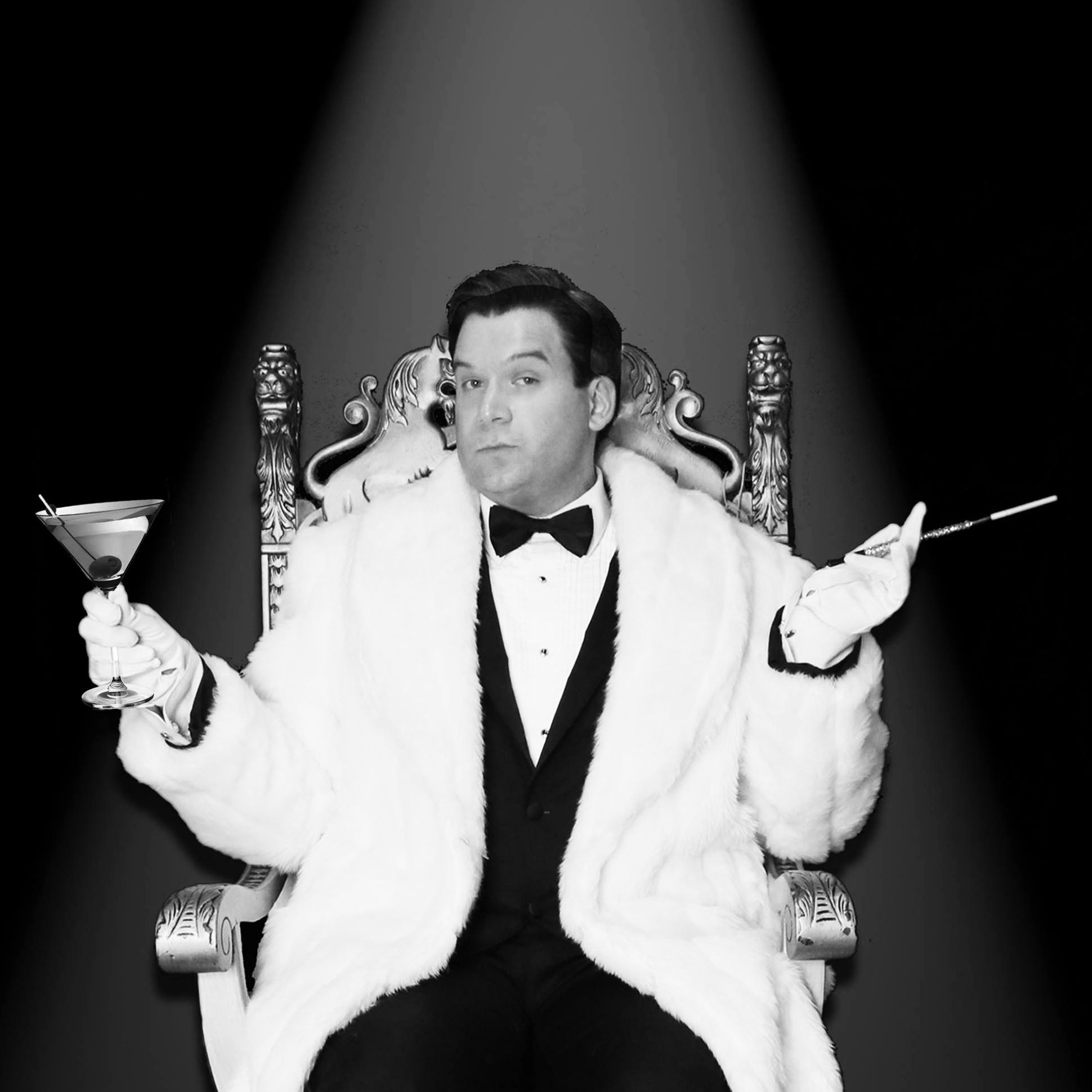
Taking a shot at Broadway – a review of “Spamilton: An American Parody”

Mike Buzzelli

By Mike “Buzz” Buzzelli, ‘Burgh Vivant

Gerard Alessandrini, the comedic genius behind “Forbidden Broadway,” is up to his old tricks. He’s planting his tongue firmly in his cheek, and sending up the blockbuster rap opera, “Hamilton,” in the musical spoof, “Spamilton: An American Parody.”

In 1982, Gerard Alessandrini created “Forbidden Broadway” where he skewered Broadway musicals, constantly updating the show parodying almost every show on the Great White Way ever since. When you consider the sheer enormity and popularity of “Hamilton,” it was only a matter of time before Alessandrini satirized the history-making musical (about American history).

In the show, Lin-Manuel/Alexander Hamilton (T.J. Newton) is joined on stage by Hamilton’s political rival and nemesis, Aaron Burr (Tru Verret-Fleming), a pianist (Nick Stamatakis), and the rest of the “Hamilton” cast (Justin Lonesome, Erin Ramirez, LaTrea Rembert) to discuss the musical phenomenon that launched a thousand careers.

Not only is “Hamilton” lambasted, but the characters needle every possible musical that’s passed through the sacred spaces in midtown Manhattan. No show is safe. Every show is lampooned in “Hamilton” style, nearly forty songs poking fun at “Willy Wonka and the Charlie Factory,” “Wicked,” “The Lion King,” “The King and I,” “Miss Saigon,” “Cats,” and many, many more.

There’s also a running gag with some of Broadway’s biggest divas.

Everybody gets into the act, literally and figuratively. At one point, the pianist (Stamatakis) dons a cape and crown and becomes King George, and belts out a tune.

Eliza (Ramirez) encapsulates the plot at the end with a topsy-turvy version of “Who Lives, Who Dies, Who Tells Your Story.”

From left to right; Justin Lonesome, Tru Verret-Fleming, T.J. Newton, Erin Ramirez and LaTrea Rembert in “Spamilton: An American Parody.”

Director Gerry McIntyre cast the show superbly. The actors sing and dance with enthusiasm and verve. While they’re in on the joke, they play it as seriously as the can, which makes it even funnier. Many of the actors are playing dual roles.

Newton’s resemblance to Lin-Manuel Miranda is uncanny. From far away, you might be fooled. He is also a fantastic singer.

Verret-Fleming is an extremely talented Burr (or Burr wannabe), and Lonesome is terrific in various roles.

Ramirez puts the ham in the spam. She gets some of the best lines, and she knows how to use them. Her impersonations are spot on. She’s hilarious. Her Mary Poppins is amazing.

Rembert’s dancing is flawless, every move was sharp and crisp. It’s hard to take your eyes off of him when he’s moving (looking fierce in a supersized afro). The only problem is he is out-dancing the rest of the cast. It’s hard for the others to match his ability. Don’t let this deter you from going to see this fun-filled extravaganza.

Stamatakis plays the piano beautifully. He also gets to sing one of the funniest songs in the show. He camps it up in a big, broad way (broad way not Broadway) and it’s delightful.

Dustin Cross’s costumes are spectacular, and the cast has to get in and out of them so swiftly.

“Spamilton” is full of silly fun. If you’re a Hamilfan (Hamiltonian?), the jokes will be even funnier; but you haven’t paid the small fortune to see the original – you can still enjoy this spoof.

Side note (for locals only): In the Southwestern corner of heaven, Don Brockett and Barbara Russell are looking down on the Greer Cabaret Theater and laughing there ethereal asses off.

There is simply not a more convenient spot for laughing up a lung than here at “Spamilton.”

-MB

“Spamilton” runs through the summer at the Greer Cabaret Theater, 655 Penn Avenue, Pittsburgh, PA 15222. For more information, click here.


Broadly Speaking – A review of “Top Girls”

By Claire DeMarco, ‘Burgh Vivant

A stimulating dinner with guests requires guests who are stimulating. And to ensure a successful dinner party, Marlene (Kauleen Cloutier) creates a get-together with a fantasy group of diverse females in Caryl Churchill’s “Top Girls.” This make-believe meeting celebrates Marlene’s promotion as the Director of Top Girls, an employment agency, after winning the job over a male co-worker.

The women attending this meeting of the minds are a combination of real and fictional women from the past. Isabella Bird (Leah Hillgrove) is an explorer, a naturalist, a writer and photographer. Lady Nijo (Jillian Lesaca), a Japanese concubine who ultimately became a Buddhist nun. Dull Gret (Rebecca Herron) is a fictional character painted by Brueghel who led an army of women intent on attacking Hell. Legendary Pope Joan (Jennifer Sinatra) disguised as a male, gains the ultimate position in the Catholic Church. Highlighted in several pieces of literature, Patient Griselda (Carley Adams) is the epitome of the obedient (some may say subservient) wife.

On the menu is the history of all these characters as they converse about their backgrounds, husbands and children, how they coped in a male-dominated world.

Note: The Waitress (Erika Krenn) moves quietly and efficiently among the guests, serving several courses of real food and drink throughout the dinner.

After the fantasy dinner we transition to the present (actually 1982) in the Top Girls’ office where a series of interviews occurs with female clients looking for employment (where the actors play multiple roles). There’s a lot of dry comedy but also some matter-of-fact interview questions that today would make any prospective employee shiver. “How old are you?” “You’re interested in computers – you’ll be competing with males.”

(Shudder!!)

Marlene decided long ago that she wants a career in the corporate world and her path has been sequential – just a career, no multi-tasking with a marriage or children. Her determination to succeed carries over in her interviews with the female clients. Any one daring to indicate that they need a job in order to pay for a wedding is chastised. If that’s their goal, they need to downplay it. After all, Marlene’s success depends on her female interviewees actually securing positions.

From this point on we go back and forth between the Top Girls Agency to the English countryside where Marlene grew up, which is still the home of her sister, Joyce (Jena Oberg), and Joyce’s daughter, Angie (Sadie Crow). Angie is anxious to leave and stay with her Auntie Marlene. She confesses her plans to her young friend, Kit (Amanda DeConciliis Weber).

Angie makes it to London and to the Top Girls Agency much to the surprise of Auntie Marlene, and, of course, things spiral from there.

Rebecca S. Herron’s Dul Gret threatens the other dinner guests in “Top Girls” at the table (Jillian Lesaca, Leah Hillgrove, Jen Sinatra and Carley Adams).

Another Note: Many of the actors play dual roles that require an English accent and they are flawless.

Excellent performances from this talented cast!

Cloutier easily transitions from the career woman in command of her life and goals into the working-class vulnerable girl when she’s back in her old neighborhood.

Sinatra is powerful as Pope Joan, her eyes conveying much of her emotion.

Hillgrove tackles Isabelle Bird with confidence and is saucy as Win.

Lesaca brings a gentleness to Lady Nijo. Often interrupted during the dinner, she’s softly able to make her point.

Adams’ Griselda is perfect as the ever-obeying wife.

Throughout most of the fantasy dinner, Herron as Dull Gret rarely speaks, stuffing bread in her mouth, drinking wine out of a bottle. Most of her emotions are conveyed with eye movements and double-takes. She perfectly creates the rough, folkloric war leader.

Jena Oberg is superb as the downtrodden sister clashing with Marlene over her unhappy life. She and Cloutier are riveting in their sibling showdown.

Crow’s fantastic as the solemn, lost but unknowingly funny niece. Her comedy skills are spot on.

Deconciliis Weber as Kit and Shona brings humor to both roles with her cadence and facial gestures and physical movements.

This play portrays the many nuances and underlying circumstances that have affected women all through the ages. The employment agency interviews subtly shine light on those prejudices evident at the time this play was produced. It is no longer acceptable to ask personal questions at an interview. It is still possible (and highly probable) that you may still hear an occasional personal question, after an interviewee leaves – questions such as, “So, how old do you think she is?”

The process is improving for women, but we’re not there yet!

-CED

“Top Girls” is a production of Little Lake Theatre Company, 500 Lakeside Drive, Canonsburg, PA 15317. It runs from May 16th to June 1st. For more information, click here.


On the Sunny Side of the Mountain – a review of “Bright Star”

Mike Buzzelli

Michael “Buzz” Buzzelli, ‘Burgh Vivant

Like two trains running on the same track, Alice Murphy (Erin Lindsey Krom) and Billy Kane’s (Miller Jay Kraps) lives crash into each other in bizarre and unexplained ways in Steve Martin and Edie Brickell’s bluegrass musical, “Bright Star.”

The story is set in North Carolina, in two separate time periods (1923 – 1924 and 1945 – 1946)

Alice, editor and chief of the Asheville Southern Journal, has a story to tell – and it’s a doozy.

When she was a young girl (in 1926), she was smitten by the mayor’s son, Jimmy Ray Dobbs (Jerreme Rodriguez). Mayor Dobbs (Darrel R. Whitney), however, had bigger plans for his son.

After a romantic night by the lake, Alice discovers she’s pregnant. Jimmy Ray is ecstatic about Alice’s news, but his father is not. Mayor Dobbs and his assistant Stanford (David Ieong) send Alice off to a remote cabin in the woods for nine months to have the child in secret.

On the day of his birth, Alice is overjoyed at the sight of her baby boy, but Mayor Dobbs and her own father (Daniel Pivovar) conspire to rip the child from her arms and give it up for adoption. The brightest day turns to darkest night.

Meanwhile (in 1945), Billy returns home from World War II. While he was a soldier in the war, he spent some of his time writing for Stars and Stripes Magazine – sending clippings home to his beloved parents. While his homecoming with his father (Scott Patrick Calhoon) is joyous, it turns sour rather quickly when he learns his mother passed while he was overseas.

After morning his mother with a touching tribute (with the song “She’s Gone”), Billy meets up with his friend Margo (Marnie Quick) who convinces him to sell his stories to the very prestigious Asheville Southern Journal where he meets Alice Murphy, and the two storylines converge.

The play is “inspired” from true events of  life of William Moses Gould Helms and the 1902 folk song, “The Ballad of the Iron Mountain Baby” written about him.  Martin and Brickell shred the Iron Mountain tale into tiny pieces. It’s a very loose adaptation, but it’s expertly done.

While some members of the audience may unravel the central mystery of the plot quicker than others, “Bright Star” is about the journey not the destination.

Erin Lindsey Krom as Alice Murphy in “Bright Star.” photo by Deana Muro of Deana Muro Photography

Almost everyone in “Bright Star” is a star, the cast is loaded with talent. But Krom is a supernova, exploding with intensity. She wows the audience with the opening number, “If you knew my story,” and never lets them go.

Rodriguez plays Dobbs with swagger, oozing with charisma.

Kraps plays Billy as an earnest and enthusiastic young man with oodles of homespun charm. He’s sort of a more intelligent version of the Steve Martin character Navin R. Johnson from “The Jerk.”

Whitney’s Mayor Dobbs has a powerful and commanding voice. He is the central villain (and his actions are vile), but Whitney finds a way to humanize him in a short final scene with the character.

The Asheville Southern Journal has two additional employees, Daryl (Nicholas Kochanov) and Lucy (Alysa Finnegan). Kochanov and Finnegan are a delight together.

Finnegan also performs with Kraps and the ensemble in a fantastic musical moment singing “Another Round.” It’s a bouncy and bright tune.

The bluegrass music is frothy and fun. Douglas Levine and his orchestra do a magnificent job.

The set has a rustic charm thanks to set designer Johnmichael Bohach (Front Porch Theatricals aptly lives up to its name with a very active front porch in this production).

Director (and ‘Burgh Vivant contributor) Nick Mitchell does a stellar job with the show. His staging of the end of the first act – utilizes the New Hazlett space in a unique way – enhancing the catastrophic actions of a despicable character. It’s a gasp-inducing moment.

The first act break is incredibly dark and dire, but the show is effervescent and exuberant. “Bright Star” is a truly dazzling sight.

-MB

“Bright Star” plays through May 26 at the New Hazlett Theater, 6 Allegheny Square East, Pittsburgh, PA 15212. For more information, click here. 

css.php