PITTSBURGH – Acclaimed playwright Matt Pelfrey’s adaptation of John Ball’s award-winning book In the Heat of the Night, which inspired the Oscar-winning film and the Emmy-winning television series, is still as pertinent and poignant as it was when the novel was written in 1965. In the Heat of the Night runs February 2 – March 11, 2018.
It’s 1962. A hot August night lies heavy over the small town of Argo, Alabama. A dead white man is discovered and the local police arrest a black stranger named Virgil Tibbs. The police learn that their prime suspect is in fact a homicide detective from California. As it happens, Tibbs becomes the racially-tense community’s single hope in solving a brutal murder that is turning up no witnesses, no motives, and no clues.
Monteze Freeland (named 2017 Performer of the Year by the Pittsburgh Post-Gazette) directs a cast that includes Kevin H. Moore, Tal Kroser, Jenny Malarkey, Arthur Peden, Daniel Pivovar, Adam Seligson, Brett Sullivan Santry, and Jonathan Visser.
Matt Pelfrey’s adaptation and PPTCO’s production promise to aid in the expansion of this classic by telling this story in a way many audiences have never seen, keeping the danger, mystery and suspense at the forefront of the drama, yet also mirroring an era of power and greed that still lingers in the thread of our country.
Performance times are 8 p.m. on Friday & Saturday; with matinees on Sunday at 3 p.m. and the last three Saturdays at 2p.m. at Pittsburgh Playwrights Theatre, 937 Liberty Avenue in the Cultural District, downtown.
Tickets are $27.50 in advance, with no ticketing surcharges. Prices at the door are $5 higher than online prices. Monday February 19th is “Pay What You Can Night,” at the door only. Tickets are available for purchase at www.pghplaywrights.org/in-the-heat.
A few drops of Earl Grey accidentally spilled on the Italian footwear of a querulous shipping magnate escalates into a frightful incident in John Pollono’s “Rules of Seconds.” Hint: There will be blood.
A meek and mollycoddled Nathaniel “Wings” Leeds (Connor McCanlus) is stricken with a disorder that – in modern parlance – would classify him as an obsessive compulsive. Fearing the touch of another, he refuses to shake the hands of Walter Brown (Cotter Smith) after sealing a business deal. Hot-tempered Brown cites the Code Duello, an Irish code of conduct that outlines the parameters for dueling.
Side note: While the play is fictitious, the actual Code Duello – with all of its odd rules – is completely real. Highlights from the original document – drawn up in 1777 – included the formal steps of an apology, proper dueling etiquette and the role of seconds.
Rule 14 (as narrated by Jack Erdie): “Seconds must be of equal rank in society with the principals they attend, insomuch as a second may choose or chance to become a principal, and equality is indispensable.”
Wings sidesteps protocol once more and reaches out to his estranged brother James (Patrick Jordan) and act as his second to negotiate with the disgruntled party. While the estrangement of the two brothers remains secret in the first act, all is revealed before the final curtain. Let’s just say, their mother, Martha (Robin Walsh) is less than thrilled to see the return of her prodigal son.
Hannah Leary (Nancy McNulty), Walter Brown’s maid, is also unhappy about her reunion with James.
Meanwhile, Wings and James try to dissuade Brown from dueling with pistols at dawn, but the combative Brown will not be charmed out of the fight. He introduces his second, Señor Jeronimo Sanchez de Carranza (Mickey Miller) and his doctor (Jack Erdie). The Leeds brothers find their own doctor in Albert Chang (Donald Chang), a man who has sparred with James in the very recent past.
Martha (Robin Walsh) pleads with Walter Brown (Cotter Smith) to spare her son…among other negotiations. photo credit: Andrew Ostrowski
Side note: The Latino Theatre Company and the Tremblors, a collective of seven Los Angeles- based playwrights produced the world premiere of Pollono’s “Rules of Seconds.” The original cast included Leandro Cano, an actor who has frequently trod the boards of the barebones stage.
While the subject matter of “Rules of Seconds” is very grim, it is a dark comedy, rife with humor. The play is laugh out loud funny.
There are snippets of dialogue that are jarring. At first, they seem like poorly placed anachronisms. One word, “redneck” seemed particularly out of place, but, on further research, it was discovered to have been used way back in 1873. The citation describes rednecks as “the poorer inhabitants of the rural districts…men who work in the field, as a matter of course, generally have their skin stained red and burnt by the sun, and [this] is especially true of the backs of their necks.” The etymology of the phrase “You’re dead to me” could not be verified.
Director Melissa Martin cast an amazing crew. The actors are superb, especially the distaff members of the cast. Walsh and McNulty are magnificent in their roles. Each of them raging against the inequities of their sex – a heavy burden of the mid-nineteenth century woman. Walsh’s Martha faces several indignities that caused the audience to collectively gasp.
While McCanlus and Jordan don’t look related at all, the brotherly chemistry between them is palpable. They are a joy to watch, especially when interacting with each other.
There is a scene with Dave Mansueto and Wali Jamal that has little to do with the rest of the play, but it is such a beautifully written sidebar that it can be forgiven for traipsing off in its own direction.
Erdie has a charismatic stage presence. He charms the audience even while reading the dry, archaic rules from the Code Duello. He shows up later in the second act in a role that won’t be spoiled here.
While Carranza is taciturn, Miller makes powerful use of each line.
Robert C. T. Steele’s costumes are exquisite – and extremely important to the plot. Remember: the play hinges on the beauty of a pair of leather boots, the infinitesimal stain and the grief it causes. The play has moody lighting from Andrew Ostrowski, excellent sound work from Dave Bjornson and authentic-looking props.
Tickets will go fast. It’s probable that Cotter Smith’s fan base will spark enthusiasm for the production. The actor has been seen in a myriad of television and film, including, most recently, David Fincher’s Netflix series, “Mindhunter.” While he may be a catalyst to get people off their couches and into the theater, he is not the primary reason to go. Go for the incredible performances of the entire ensemble. Go for the humor. Go for the message.
It’s a powerful play. Once you see it, you may go back for “Seconds.”
– MB
The “Rules of Seconds” runs until February 17 at the barebones black box theater, 1211 Braddock Avenue, Braddock, PA 15104. For more information, click here.
The critically acclaimed scantily-clad Indie-pop duo, the Skivvies, returned to Pittsburgh to prove that Christmas is best when it’s both naughty and nice in their holiday offering, “Sleigh My Name.”
Nick Cearley (Off-Broadway’s “Sex Tips Straight Women from a Gay Man”) and Lauren Molina (a member of the original cast of Broadway’s “Rock of Ages”) stripped down to their knickers once again for a festive occasion, and what charming underclothes they both have!
Side note: The musical duo once starred as Brad and Janet in “The Rocky Horror Show” at the Bucks County Playhouse. They’ve been disrobing in front of audiences ever since (with nary a Magenta or Columbia in sight).
Cearley and Molina are extremely talented and probably don’t need the gimmick, however, the nearly-naked derrieres gets people into the theater. Their butts get butts in the seats. At “Sleigh My Name,” the duo sang Christmas favorites – with their own decidedly different twist.
The Skivvies sing and play a variety of musical instruments, including the glockenspiel. Mostly, Cearley plays the ukulele and Molina plays the cello, but it’s their silly “Will & Grace” repartee that will charm you. Cearley and Molina were backed up by local drummer Jacob Beck – also appearing on stage in his briefs. Can I get an “Oh myyyy!”
Cearley and Molina are kind enough to share their stage with additional local talents, such as Hope Anthony, Ryan Patrick Kearney, Becki Toth, Daina Michelle Griffith, Jason Shavers (recently seen at the City Theatre in “Wild with Happy”), Michael McGurk and HGTV’s Paige Davis. There was even an appearance from Santa – local director Stephen Santa (appropriately attired as an elf).
Lauren Molina and Nick Cearley in festive Christmas-themed chapeaus – and very little else – comprise the Indie-Pop duo, The Skivvies.
Brava to Anthony who belted out a medley of dance hits, awarding the buxom chanteuse high diva points, setting an impossibly high standard for the entertainers who followed her. As luck would have it, her follow guest stars were up to the task.
Griffith strolled down memory lane with former high school classmate, Cearley. She had an under garment designed to commemorate the occasion – their prom picture plastered on a white t-shirt. Griffith then proceeded to sing, reminding the crowd how she earned her title as 2013’s Pittsburgh Post Gazette’s Performer of the Year
Toth was another highlight. She crushed it, giving the evening a slight operatic flair.
Kearney provided additional belly laughs. Kearney’s songs were built around him believing his father was St. Nick, weaving “I saw mommy kissing Santa Claus” into his medley.
The Skivvies served cheesecake and beefcake in equal measure, but Broadway performer and native Pittsburgher McGurk (“The Wedding Singer,” “The Music Man” etc.) was probably the most scantily-clad in an evening of scantily-clad individuals.
Before the Skivvies even took to the stage, musical improv duo babyGRAND (Connor McCanlus and Missy Moreno) came out and wowed the crowd, creating a short musical play on the spot based on audience suggestion. They were accompanied by James Andrzej Rushin on paino and Aaron Tarnow on bongos.
Ironically, the evening was punctuated with an Ugly Christmas Sweater Contest, proving it’s better to be wearing less than more, especially if it’s sweater depicting Jesus high-fiving Santa Claus or a Christmas-clad farm animal on your person.
While the Skivvies are singing for adults, they appeal to the child inside all of us. The next time they roll into town, the Skivvies need to be on your Christmas list (or your “Must See” list depending on the time of year).
You can find out more about them at the City Theatre website, by clicking here, or at their own website by clicking here.
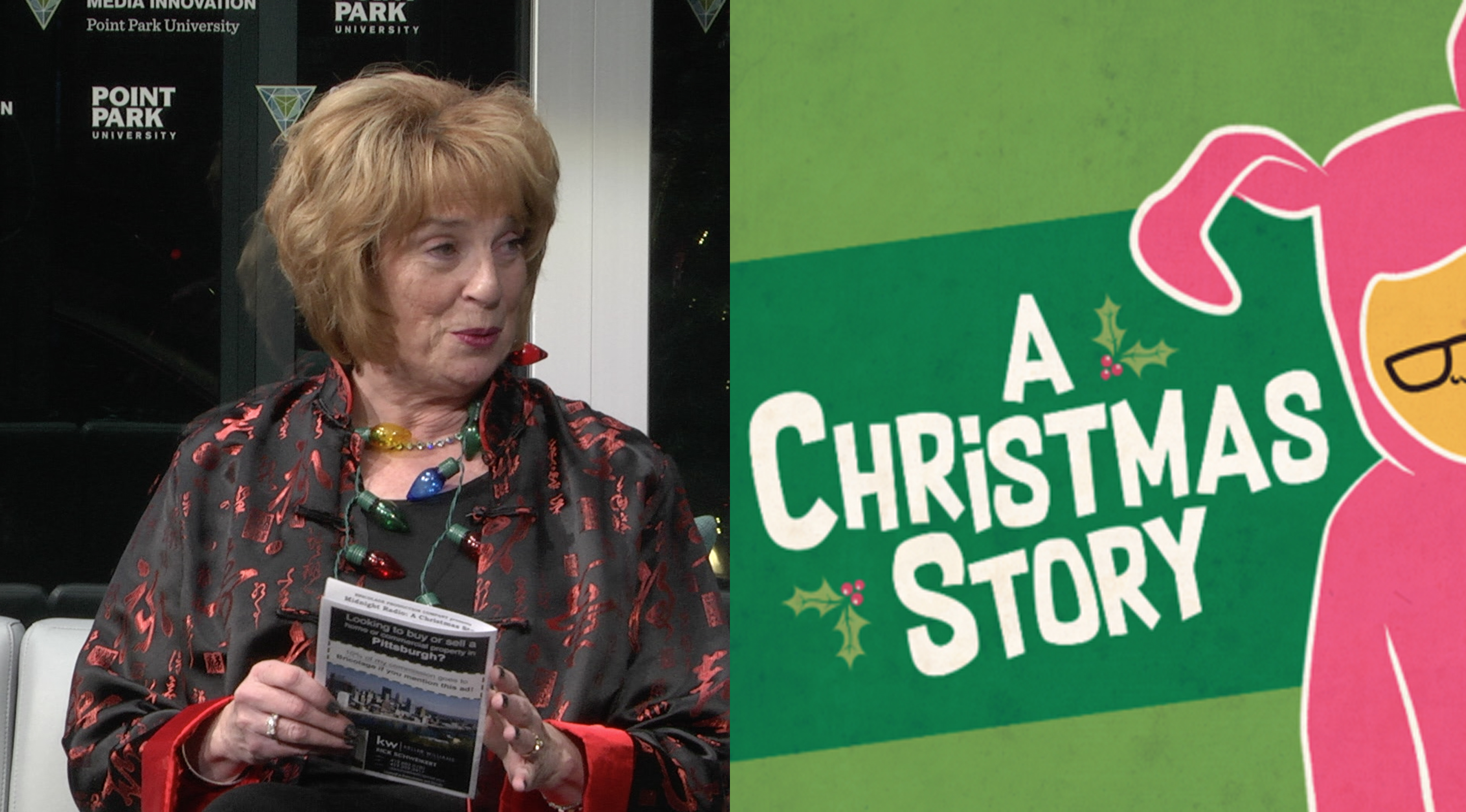
Cocktails, conversation, and Christmas – all over Bricolage’s Midnight Radio presentation of A CHRISTMAS STORY, written by Philip Grecian, directed by Jeffrey Carpenter, and playing at Bricolage, Downtown through December 23rd, 2017. For tickets and more information, visit www.bricolagepgh.org Continue reading “Review: A CHRISTMAS STORY, Bricolage”
Lonnie The Theatre Lady takes us back in time to Christmas 1944, as she revisits this latest holiday offering at Carnegie Stage. See THE CAROLS, directed by Robyne Parrish, at Carnegie Stage, through December 17th, 20017. For tickets and more information, visit www.carnegiestage.com. Continue reading “Review: THE CAROLS, Carnegie Stage”
It’s Christmas time in the early 1900’s on New York’s east side. Della (Becky Brown) and her husband, Jim (Joshua Mooiweer) are in their $8.00 a week flat discussing their dire financial situation in the opening moments of “The Gift of the Magi.”
Della and Jim have been married for 171 days (as Della has happily recorded in her journal). Jim’s salary as an accounts clerk has just been reduced. As Della helps Jim remove his shoes she sees that they are lined with newspaper to help keep out the cold.
Neither of the newlyweds has enough money to buy the other a Christmas gift. However, they both sacrificed something dear to ensure their partner has a happy holiday. Della sells her hair, and Jim sells his prized watch. But the gifts they purchased in exchange for their sacrifices are no longer appropriate (a platinum chain for a non-existent watch and two hair combs for lengthy hair no longer there).
What is wealth? Della and Jim realize that it’s not an abundance of physical possessions, but the abundance of the love that’s really important.
“The Gift of the Magi” was adapted by Jon Jory from the story by O. Henry.
Brown and Mooiweer were excellent in their portrayal of the young impoverished couple – a well-balanced team.
All other actors in “Magi” with the exception of Brown and Mooiweer played multiple parts. There were noteworthy performances by Davion Heron (as the Watch Clerk) and Blake Doyle (as Madame Vodskaya). Doyle’s comedic skills were on point.
Throughout the play the narrator (Somerset Young), and a chorus of carolers sing and dance providing informative narrative and musical interludes on a simple, yet effective set.
Love and sacrifice are themes that are as relevant today as they were yesterday. As the author O. Henry once wrote, “But in a last word to the wise of these days, let it be said that of all who give gifts, these two were the wisest.”
– CDM
“The Gift of the Magi” runs until December 17, 2017 at The Pittsburgh Playhouse – Conservatory Theatre Company, 222 Craft Avenue, Pittsburgh PA.15213. For more information, click here.
Lonnie The Theatre Lady brings some holiday sparkle, along with her cocktail hour thoughts on Kinetic Theatre’s production of Mike Bartlett’s LOVE LOVE LOVE, performing at Pittsburgh Playwrights Theater through December 17, 2017. For tickets and more information, visit www.kinetictheatre.org. Continue reading “Review: LOVE LOVE LOVE, Kinetic Theatre”
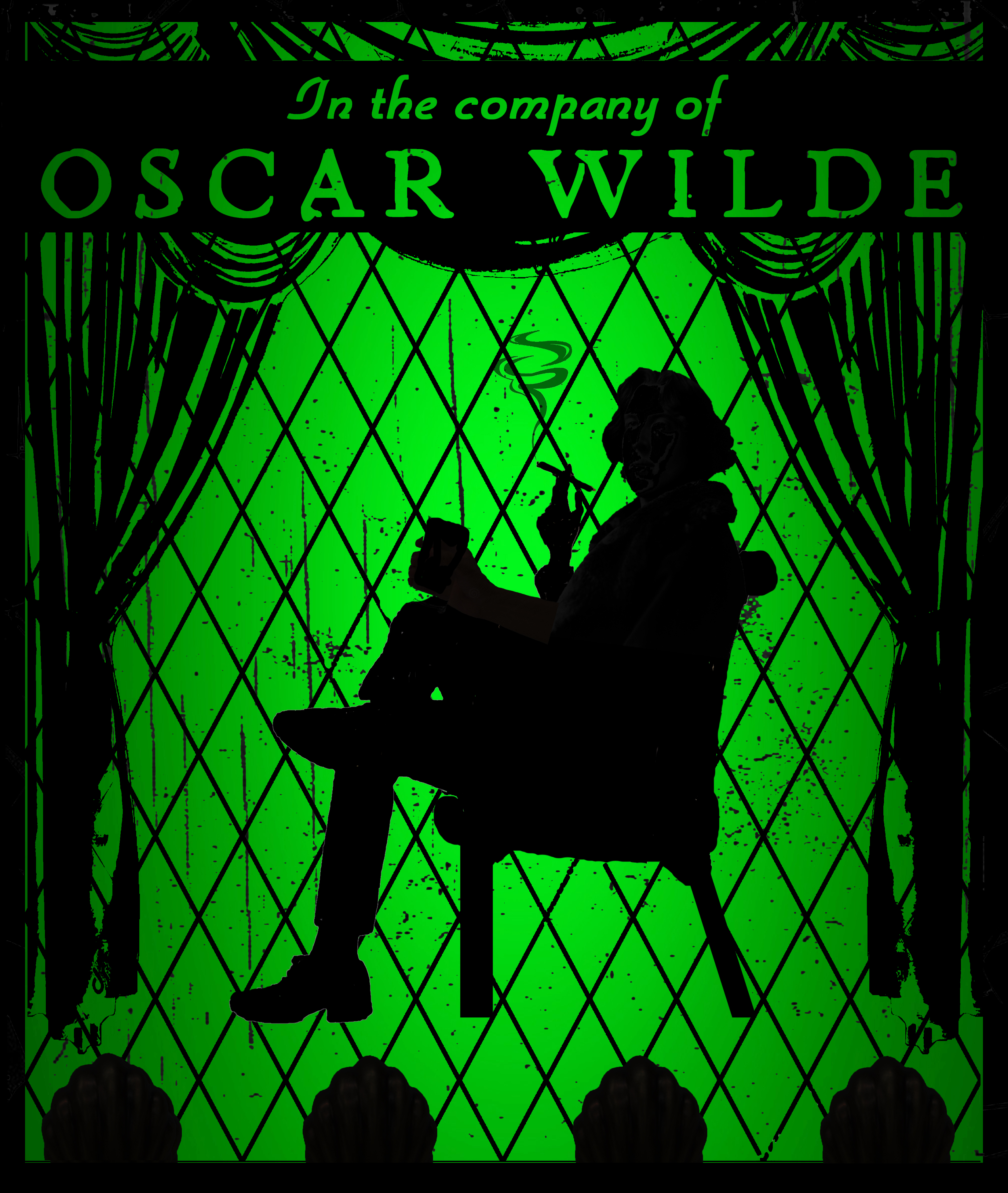
Bon mots flow like champagne in the venerable halls of the Frick Art Museum in the U.S. premiere of “In the Company of Oscar Wilde,” a summation of Wilde’s life in the author’s own words.
The presentation is part of a whole Wilde weekend, “Wilde at the Frick,” featuring readings of the author’s fairy tales and a presentation of Merlin Holland’s “The Trial of Oscar Wilde.”
“In the Company of Oscar Wilde,” director and narrator Alan Stanford leads some of Pittsburgh’s finest actors to join the merriment, including Marsha Mayhak, Karen Baum, Martin Giles, and James FitzGerald who fill various roles. There’s also a solid guest appearance from Ingrid Sonnichsen as Lady Bracknell.
Wilde – Oscar Fingal O’Flahertie Wills Wilde to be exact – is an Irish poet, playwright and author known for his acidic wit. “Company” offers up intriguing details of the playwright’s triumphs and tribulations. Stanford recounts important facts from the playwright’s history, from the opening of successful plays to his tawdry affair with Lord Alfred “Bosie” Douglas, son of the Marquess of Queensbury. There is even a detailed account of Wilde’s trial, a prelude to Holland’s opus presented later in the weekend.
Wilde’s story is delivered in linear fashion, from birth to death. Near the beginning of the evening, Stanford recites “Requiescat,” Wilde’s poetic tribute to his late sister, in a powerful, moving moment.
There are lengthy but brilliant excerpts of “The Importance of Being Earnest,” expertly performed. Sonnichsen’s Bracknell is a tour de force, delivering caustic observations with aplomb.
Her performance is so strong, this audience member yearned for a complete production of “The Importance of Being Earnest” on the spot.
That’s the real problem with the show. “In the Company of Oscar Wilde” is a dramatic presentation that teeters high above the no man’s land between seated reading and full-fledged theatrical production. It’s a reading with movement – very little movement.
The director and cast could have shaken things up. “Wilde at the Frick” runs concurrently with “Undressed, the history of fashion in underwear.” Stanford and company could have performed in their skivvies! Though, Michael Montgomery’s costumes were absolutely exquisite and a highlight of the evening.
Fantastic actors reading brilliant material in a gorgeous setting with lavish costumes should have placed this show squarely in the win column, but, since it was a linear depiction of the artist from birth to death, it came across as a bit monotonous.
Though the presentation ends well with a dramatic reading of “The Ballad of Reading Gaol,” Wilde’s poem about the hanging of Charles Thomas Woolridge, which took place in the prison where Wilde was serving his time for gross indecency. It’s another high point. It just takes a little bit too long to get there.
The author and playwright would never have been bothered by a slightly unfavorable review of his work. He would most likely shrug, puff on his cigarette and declare, “There is only one thing in the world worse than being talked about, and that is not being talked about.”
The good news is, more than a century later, everyone is still talking about Oscar Wilde.
– MB
“In the Company of Oscar Wilde” runs until December 10 at The Frick Art Museum, 7227 Reynolds Street, Pittsburgh, PA 15208. It runs concurrently with “Oscar Wilde: Fairy Tales” and the “The Trial of Oscar Wilde” as part of the Wilde at the Frick weekend. For more information, click here.
Scott Kaiser, playwright and director of “Love’s Labor’s Won”, envisioned a sequel to a comedic “Love’s Labor’s Lost” that picks up from its dark ending and sets it in a post-World War I environment. The play is written in verse which adds to its intensity.
The characters in this imagined sequel have all been changed because of the war and are trying to piece together lives with lovers/suitors that were interrupted or changed because of the conflict.
Ferdinand (Christoper Essex), Isabelle (Kennedy McMann), Dumaine (Chase Del Rey), Katherine (Myha’la Herrold), Berowne (Christian Strange), Rosaline (Aubyn Heglie), Longaville (Kyle Decker), Maria (Eleanor Pearson), Costard (Jordan Plutzer) and Jacquenetta (Rayquila Durham) are the couples impacted by the conflict and its ramifications for their country and their future. The war has changed them. But will they be able to rekindle the relationships they enjoyed previously and overcome the impact war has had on all of them?
Did William Shakespeare write “Love’s Labor’s Won” as a sequel to “Love’s Labor’s Lost”? No physical copy of the play exists, just the title. Some pundits think that perhaps the play was simply renamed and performed under another name, but it may be much ado about nothing.
The actors’ performances in :”Love’s Labor Won” are strong and well-balanced with Plutzer providing comedy relief. Durham touches our souls with her singing.
The set is stunning. Out of proportion-covered and partially covered portraits hang in the background above a central staircase, indicating that this grand home was also prepared for war. When actors seamlessly segued to two garden benches, two pillars and/or a statue (also protectively wrapped), the action occurs outdoors.
Kaiser’s erudite work moves us forward many centuries, bringing the characters introduced in Shakespeare’s “Love’s Labor’s Lost” into the 20th century, finishing a journey that ended long, long ago.
There’s much to love about “Love’s Labor’s Won.” It’s a winner!
– CDM
“Love’s Labor’s Won” runs from November 28 to December 2 at the Purnell Center for the Arts, Carnegie Mellon University School of Drama, 5000 Forbes Avenue, Pittsburgh PA 15213. For more information click here.