Inside dish on interviews, editorials, events listings, musings from the minds of BV’s contributors, viewer mail, and other bits of fabulousness — It all goes into The Shaker, ‘Burgh Vivant’s bacchanalian bulletin board. Saddle up to the bar, and get ready for another round of what’s shakin’!
Despite the weather, March roars in like a lion with the opening of “The Lion, The Witch and the Wardrobe.”
The Pevensie children, Peter (Jackson Conforti), Susan (Annabel Tew), Edmund (Eamonn McElfresh) and youngest Lucy (Molly Frontz) find a magic portal in a large, wooden wardrobe that leads to the realm of Narnia, an alternate reality of witches, dwarves and talking animals.
The book, published in 1950, by author C. S. Lewis, is probably the first recorded excursion into the multiverse (take that, Marvel, DC and Michelle Yeoh).
The kid’s journey has been prophesied. The four heroes are destined to join Aslan (Michael Barnett), and defeat Jadis, the White Witch (Rachel Pfenningwerth, channeling Cate Blanchette), the evil queen and usurper of Narnia.
The kids team up with Mr. & Mrs. Beaver (Anthony Luisi and Caitlin Young, respectively) on a journey to meet the Lion King.
“Nants ingonyama bagithi Baba Sithi uhm ingonyama!”
Not that Lion King.
Meanwhile, Edmund sneaks off to meet with the White Witch after having fallen under her spell, by ingesting enchanted candy, Turkish Delights.
However, when the witch tries to kill him, Edmund realizes that she’s pure evil. He is rescued, but the witch demands a life for a life by the old laws of Narnia, and Aslan sacrifices himself for Edmund’s transgressions.
As luck would have it, the lion is brought back to life and the Pevensie kids and their talking animal pals vanquish the queen in an epic battle.
Epic battle on a budget. We just see the highlights here.
The White Witch (Rachel Pfenningwerth) is the stranger offering candy to children, i.e. Edmund (Eamonn McElfresh). Photo Credit: Laura Slovesko
Like the book, the show is very Christian. The human children are called the “Sons of Adam and Daughters of Eve” and Aslan is an allegorical stand-in for Jesus Christ.
There’s a weird bit where Santa Claus (Isaac Miller as Father Christmas) shows up and gifts the children with weapons, a sword and shield for Peter, a bow and quiver of arrows for Susan and a dagger and healing potion for Lucy. I guess Edmund got coal because he was under the thrall of the evil queen at the time.
Note: C.S. Lewis had swords, arrows and healing potions before people were rolling 12-sided dice.
While preachy at times, the show never feels forced or condescending. It does get silly in parts, but the show is so well cast it’s forgivable due to the merits of the acting. The acting is superb.
The young actors even look like they came off the cover of the “Chronicles of Narnia” series.
As Lucy is the heroine of the book, Frontz is the star of the show. She’s terrific. Her lines are spoken with sincerity. It’s so cute she calls the fawn Tumnus (Andrew Lesnett) Mister Tumnus.
While Tew plays Susan with compassion, and Conforti plays Peter as the voice of reason, McElfresh gets to have an actual character arc, ping-ponging from good to evil and back again. He manages it with aplomb.
Barnett plays Aslan as a pious professor with a deafening roar. He towers over the cast, hidden under frizzy mane (thicker and more voluminous than 80’s hair band Twisted Sister) and leonine makeup by Laura R. Smith.
Pfenningwerth is delightfully evil as the White Witch. Her movements are slow, sharp and regal.
The White Witch’s evil hench dwarf (Matt Henderson) chewed the scenery and spit it back out with the verve of a Batman villain, grunting and gasping like Burgess Meredith’s Penguin.
There are a few deaths, Peter slays the wolf, Fenris Ulf (Trevor Buda), and a few more talking forest creatures bit the dust, but all-in-all “The Lion, the Witch and the Wardrobe” is a fun romp for the whole family.
– MB
“The Lion, The Witch and the Wardrobe” runs through March 12 at the New Hazlett Theatre, 6 Allegheny Square, Pittsburgh, PA 15212. For more information, click here.
The City of Pittsburgh has its fair share of famous natives, but when it comes to well-known artists from the area, one name tends to ‘pop’ into people’s heads—and that is, of course, Andy Warhol.
Born Andrew Warhola, Jr. on August 6, 1928, in Pittsburgh, Andy had a wildly successful art career in New York. From an early age, Warhol quickly carved out a path for himself in the commercial arts at Carnegie Mellon University, and eventually imprinted himself into the art world with his notable pop-art style silk screens of Campbell’s soup cans and other cultural icons, including Marilyn Monroe, Jackie Kennedy, Elizabeth Taylor, and most relevant recently, his works depicting the musician, Prince.
Andy Warhol’s famed “Self-Portrait.”
Following Warhol’s death on February 22, 1987, he returned to Pittsburgh for his final resting place at St. John the Baptist Byzantine Catholic Cemetery. Much of Warhol’s artwork also returned to Pittsburgh, in the form of donations by the Andy Warhol Foundation (“AWF”), a New York non-profit organization committed to the advancement of the visual arts and the preservation of Andy Warhol’s legacy, to The Andy Warhol Museum (“Museum”), one of four Carnegie Museums located in Pittsburgh. The Museum is a shrine to the artist’s legacy, touting the largest collection in the world of his work, including silk screen prints, drawings, paintings, and films.
On October 12, 2022, the Supreme Court heard oral argument in a case filed by the AWF (not the Museum) against the accomplished photographer and creative entrepreneur, Lynn Goldsmith.
The controversy before the Court arises form photographs of Prince that Goldsmith took in 1981. In 1984, Goldsmith’s photographs were licensed to Vanity Fair magazine to use as an artist reference, who commissioned Warhol to create an image of Prince for publication alongside an article about the musician and credited Goldsmith with the “source photograph.” Warhol ultimately created fifteen silk screens of the Prince pieces, which became known as the Prince Series. Ownership of the Prince Series belongs to the AWF, which donated four of the silk-screen prints to the Museum. The AWF also licenses the Prince Series for commercial, editorial and other museum use.
One of the Prince pieces in question.
Following Prince’s passing in 2016, the AWF once again licensed one of the Prince Series to Vanity Fair for publication in its Prince tribute issue. This time, Goldsmith received no credit as the source image. Therefore, Goldsmith notified the AWF of its alleged infringement of her copyrighted work, the AWF sued Goldsmith claiming that Warhol’s Prince Series was a “fair use” of her original photograph, while Goldsmith counter-sued the AWF for copyright infringement. After conflicting decisions from the federal district court in New York, which ruled in favor of the AWF, and the Second Circuit Court, which sided with Goldsmith, the case was brought before the Supreme Court to decide whether Warhol’s silk screen prints of Prince, infringed Goldsmith’s copyright by failing to satisfy the transformative use test under the law’s current fair use analysis. Stephanie Dangel, a Professor of Practice who currently teaches entertainment law at Pitt Law School, shared her impressions of the case. She noted, “Initially, when the Second Circuit decision came out, I think many Pittsburghers thought, ‘What does this mean for The Warhol Museum?’ because so much of his work is inspired by other artistic works and photographs.
Thankfully, Goldsmith did not challenge the original Prince Series of prints. Instead, she challenged the licensing rights related to those prints. However, the potential impact of the Supreme Court’s opinion on the work of Warhol and other appropriation artists is an open question.”
Prior to joining Pitt Law School, Professor Dangel was a law clerk for the late Supreme Justice Harry Blackmun and the former New York federal court judge, Judge Pierre Leval, who is famous for his “transformative” fair use test. Under Judge Leval’s test, an unauthorized use of copyrighted materials is more likely to be a “fair use” if it is “transformative,” or meaningfully different from the original work in terms of its message, meaning, function, or purpose.
Fair use, as Professor Dangel described, is an affirmative defense that in some circumstances allows for the unlicensed use of a copyrighted work. There are at least four factors codified in law that courts will consider in determining whether something meets the fair use threshold:
(1) purpose and character of the use, including whether the use is of a commercial nature or is for nonprofit educational purposes,
(2) nature of the copyrighted work,
(3) amount and substantiality of the portion used in relation to the copyrighted work as a whole, and
(4) effect of the use upon the potential market for or value of the copyrighted work.
Professor Dangel, who was also a filmmaker, learned first-hand from her filmmaking experiences that the AWF can be “very protective of Warhol’s works, and understandably so, since Warhol’s work is the forms the bulk of what they own.” In a documentary Professor Dangel produced about Pittsburgh, she said, “We talked about Andy Warhol and shot in The Warhol Museum. Even though we had permission to shoot in the Museum, and we interviewed the curator at the time, some of Warhol’s artwork was in the background. The Museum flagged the legal issue for us, saying, ‘We do not own all of the rights to this artwork. The Foundation owns some of these rights.’ In using the background images in the film, we ended up relying on a law firm’s fair use opinion and errors and omission insurance to protect ourselves, but I’m not sure that would have protected us from a lawsuit by the Foundation or the original photographer, if our film had been more successful.”
Professor Dangel also noted that the film included an interview with Andy Warhol’s nephew, who at the time worked in the Warhola family scrap business on Pittsburgh’s Northside. “The nephew was a good artist, including a tattoo he designed for himself based on his uncle’s Marilyn Monroe silk-screen print. But if the Supreme Court holds that the licensing of Andy’s work is not a “fair use” of Goldsmith’s photograph, could a photographer of Monroe or the Warhol Foundation sue Andy’s nephew over his Marylin tattoo? It seems ridiculous, but who knows?”
Andy Warhol’s “Marilyn Monroe.”
Given her filmmaking experience, Professor Dangel stated that now when she talks to her students about fair use, she emphasizes this an affirmative defense. She continued, “It’s a lot of money to litigate a copyright case, for those arguing in favor and against fair use. Lynn Goldsmith learned this the hard way, as her legal fees for the lower court cases were over $400,000. The Supreme Court case may have resulted in millions of dollars in legal fees, which led her to launch a GoFundMe campaign. Given these potential litigation expenses, I tell my students that, if you can afford to license the material, you should.”
Up until two years ago, the Supreme Court had not considered a similar fair use case since 1994—nearly 30 years ago—when it adopted Judge Leval’s transformative use test. Now there have been two fair use cases brought before the Supreme Court in the past two years. In April 2021, in Google v. Oracle, the Supreme Court ruled that Google’s use of source code owned by Oracle was protected by the fair use doctrine. However, the Google and Warhol cases may signal that changing technologies could require changes in the law.
Whether such changes in the law would benefit by from judges who are also trained in the arts remains to be seen. “Interestingly,” Professor Dangel pointed out, “[Judge Leval’s] wife, Susana Torruella Leval, served as curator and director of El Museo del Barrio throughout the 1990s. So, Judge Leval is very familiar with the art world. I believe that the transformative use test for him was quite a natural extension of both his legal opinions and his personal connection to the art world.” This insight led her to “wonder how Justices like Ginsburg and Scalia, who were very big fans of artistic works, particularly opera, might have tilted their decision on fair use in one way or another… whereas other Justices, who are not as familiar with the arts, might focus more on the commercial market for the works, rather than their transformative use. It will be interesting to see how much the personal backgrounds and interests of the Justices might play into how they approach this decision.”
Stephanie Dangel, J.D. photo credit: The University of Pittsburgh
Still, what makes this case so interesting to Professor Dangel and others in the legal and art communities is that there are artists on both sides of this case. The decision will “affect artists, both pro and con, depending on whether or not you’re the artist who created the ‘original’ work, or the artist who ‘appropriated’ the original work.” As Professor Dangel explained, “this will not be a pro- or anti-artist decision, because it depends on which artist you are representing.”
But for now, the art law world waits anxiously for the Supreme Court to speak on these issues. The Court’s opinion will likely be issued by July of this year. In the meantime, the oral argument is available here for further information and background on the Andy Warhol Foundation for the Visual Arts, Inc. v. Goldsmith case.
In the late 19th century few, if any, child labor laws existed in the States. If they did exist they were at the discretion of each state, often times totally ignored.
It was not uncommon to find young children working in extreme situations to make money in order to survive.
Note: “Newsies” is based on a true story that occurred in the late 1890’s in New York.
Jack Kelly (Ryan Jasaitis) is one of many young boys who sell the latest publications of New York’s major newspapers. They gather at a distribution location, pay for the papers they take and venture off to make a few cents on each copy sold.
When newspaper publishers like Joseph Pulitzer (Jacob Miller) decide to raise the cost of the papers Jack, Davey (Will Cobb), Crutchie (Sam Greene) and the other newsies decide to take action. They organize, declare themselves members of a union and strike!
What was seen as a minor interruption in the daily distribution of newspapers is further escalated through the reporting of aspiring journalist, Katherine Plumber (Marguerite Reed).
When profits continue to slide, Pulitzer and Kelly come face to face to determine a final resolution.
The cast of Newsies.
Jasaitis plays the tough guy with a tender side. He is multi-dimensional.
Greene shows his character’s vulnerability and pain through the song “Letter from the Refuge.”
Reed sings a great rendition of “Watch What Happens.”
Jordan Tidwell as Medda Larkin knocks it out of the park with her rendition of “That’s Rich.”
Cobb is effective as the “smart guy” in the newsies’ group, providing insight as well as support as their thoughts towards a union grow.
Miller is convincing as the autocrat he portrays.
Dancing and singing are central to this production and hats off to the entire cast!
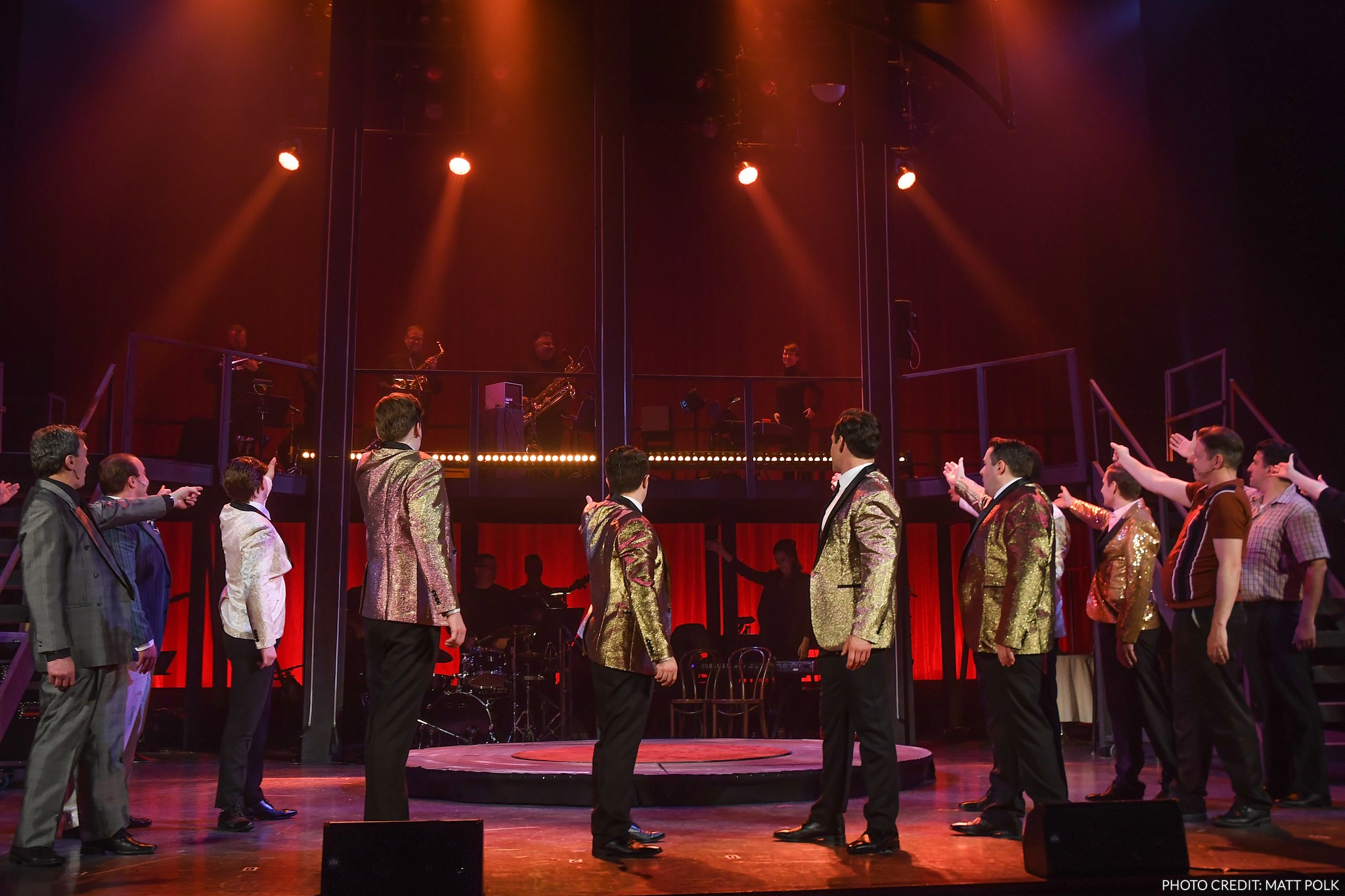
Dancing was strong, graceful, athletic, gymnastic and always on point and the singing was emotional, inspirational and sometimes saucy with excellent choreography by Rocker Verastique.
Wonderfully supporting the singing and dancing is the orchestra conducted by Camille Villapando Rolla.
Don’t miss this production of “Newsies.”
-CED
“Newsies” is a production of Pittsburgh Playhouse of Point Park University. It runs from February 22 through February 26. For more information, click here.

Lydia (Isabella Esler, making her professional theatrical debut) is mourning the loss of her mother, when her dad (Jesse Sharp) moves her into a big, creepy Victorian whose previous occupants aren’t really ready to leave in “Beetlejuice: the Musical.”
The recently deceased Maitlands, Adam (Will Burton) and Barbara (Britney Coleman), aren’t shuffling off their mortal coil so easily. They’re inhabiting their home despite being electrocuted. They’ve made a friend on the other side, Betelgeuse (Justin Collette), who pronounces it “Beetlejuice.” If he can get one of the Livings to say it three times he can wreak havoc, which is, clearly, his favorite thing to do.
Say it three times fast and Beetlejuice quickly goes from friend to fiend. He frightens, but in a fun way.
The play veers a bit far from the Tim Burton film, but Scott Brown and Anthony King, who wrote the book, keep the spirit (get it) of the original. Some of the changes are big:
Lydia crushes on Beetlejuice – for a hot second.
Delia (Kate Marilley) isn’t a Deetz, but she’s about to become one.
The Maitland’s get a character arc in the song, “Barbara 2.0.”
Key elements remain. Lydia must team up with the Maitlands to exorcise Beetlejuice after freeing him.
While Eddie Perfect creates all new music and lyrics, the Harry Belafonte Calypso music remains. It wouldn’t be “Beetlejuice” without a rousing rendition of “Day-O.”
Pictured (L-R): Isabella Esler (Lydia) and Justin Collette (Beetlejuice). Photo credit: Matthew Murphy
Betelgeuse is a big star, and so is Beetlejuice (Science humor). Collette rips up the gorgeous scenery and outshines the brightest lights (and there are some tremendously bright lights in this show). The part is made for a gregarious, overwhelming presence and Collette has charm and charisma with a capital C.
Beetlejuice is a big flirt. A scary one, but a flirt, nonetheless. He flirts with Lydia, her father, the Maitlands and the audience. There are some canned “ad-libs,” but they work because of Collette’s aforementioned charm.
Esler is equally amazing. The young woman recently graduated from high school in San Jose, California and is now with a national touring company. Her solos, and she has a few, prove that her voice is powerful and emotive.
Burton (Will not Tim) does a fine job as Adam, the lovable childless geek armed with quirky but stale dad jokes. His dancing is reminiscent of the “Family Matters” character Urkel, but, underneath the jarring, jerky movements, there is a sublime grace. It takes a trained dancer to strut around in such a hodgepodge manner.
Coleman is a delight. She exudes a radiant energy. She is another irresistible member of an electrifying cast. Electrifying (that one was unintentional).
Delia is a flake. She has always been a flake, but just like phyllo dough, Delia is flaky, light and delicious. Marillley embodies her pure essence – you could say she “possesses” the character, especially during her rendition of the “Banana Boat Song.” The actor gets to go to camp – high camp – as the batty, whimsical madwoman.
The entire ensemble is terrific.
Beautiful scenic design by David Korins, amazing puppet design by Michael Curry and incredible special effects by Jeremy Chernick. It’s a visual feast, a modern day circus act.
Is it good? Some of us were hit with a wave of nostalgia for the original, but if you can be in the moment, you will love it. Any SUCK-YESS-FUL Life Coach would tell you to “Live in the moment.”
You might wail like a banshee at some of the bad jokes (there are some guaranteed groaners). It’s definitely goofy, campy and all sorts of weird, but that’s what makes “Beetlejuice” a blast.
If someone said, “The music guaranteed to make you jump in the line and rock your body in time,” I would say, “Okay. I believe you!”
-MB
“Beetlejuice: The Musical. The Musical. The Musical” runs from February 21 – 26 at the Benedum as part of the PNC Broadway Series. For more information, click here.
“A Burlesque Show with Clothes” – a Review of Alora Chateaux’s “Burlesque on the Bluff”
The word burlesque has a plethora of meanings and definitions and a long history. Most people probably think of strip tease when they reflect on the word.
Note: The playbill for this production contains “A Short History of Burlesque” that provides a history of this ever-changing, fascinating entertainment, now seen as artform.
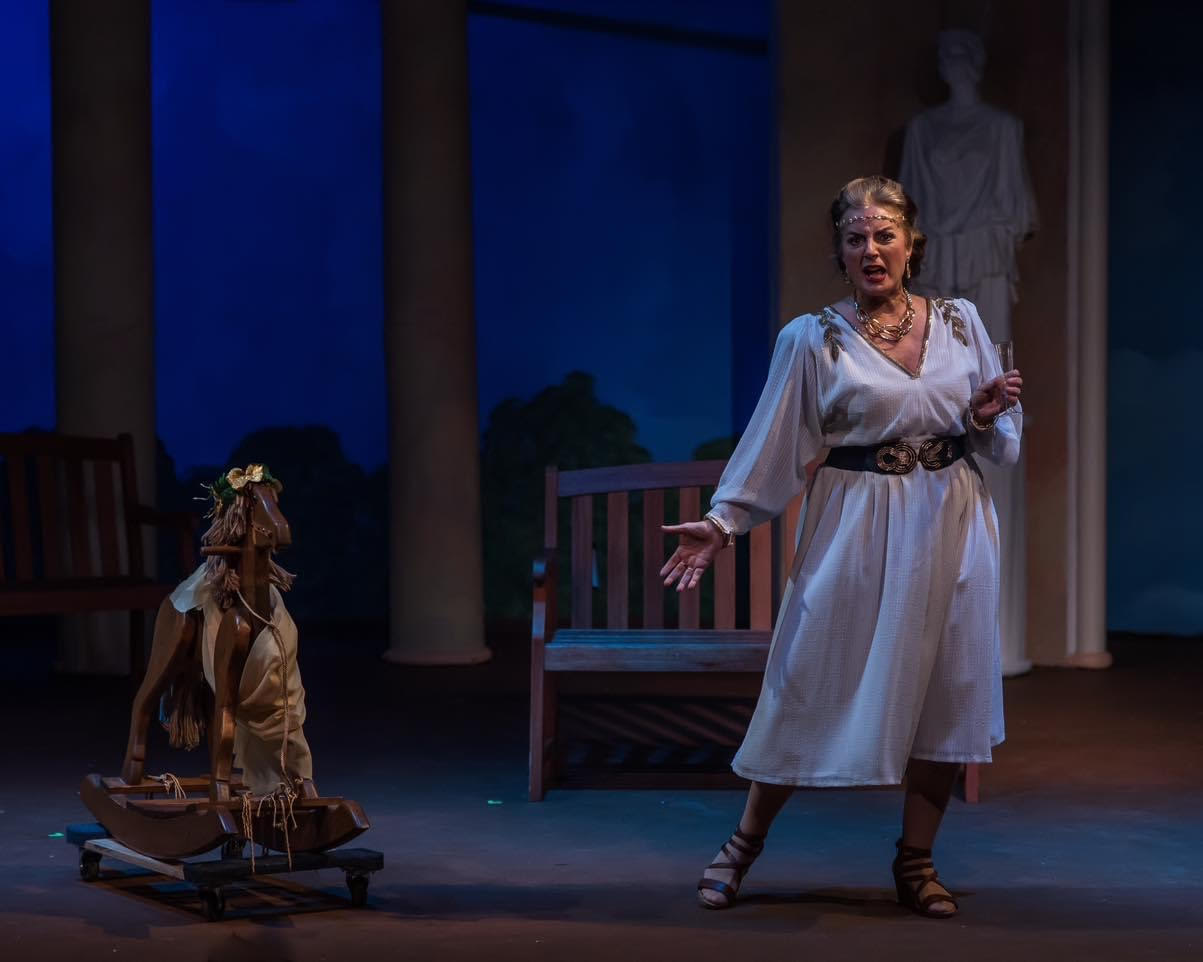
Hosted by Alora Chateaux “Burlesque in the Bluff” is a variety show set in a cabaret-type setting. Well known musical numbers from theater and films are intermingled with select comedic pieces.
Alora Chateaux commands attention. Wigged and glitzy with ample cleavage she not only introduces each act but intermingles with the audience, often interjecting hilarious ad-libs. When Alora finds a captive audience member, her creative juices produce an extremely funny, often one-sided conversation. She delivers a mock homage to strip tease with a clever removal of one glove which hysterically turns into at least a 20-foot exercise as the glove constantly grows as she tries to release it.
Rachel Lewandowski’s rendition of “I Wanna Be Evil!” is outstanding. She has a lovely voice that is combined with an astute comedic delivery.
Dante Martin brings “Just a Gigolo/I Ain’t Got Nobody” to life with good vocals and movement.
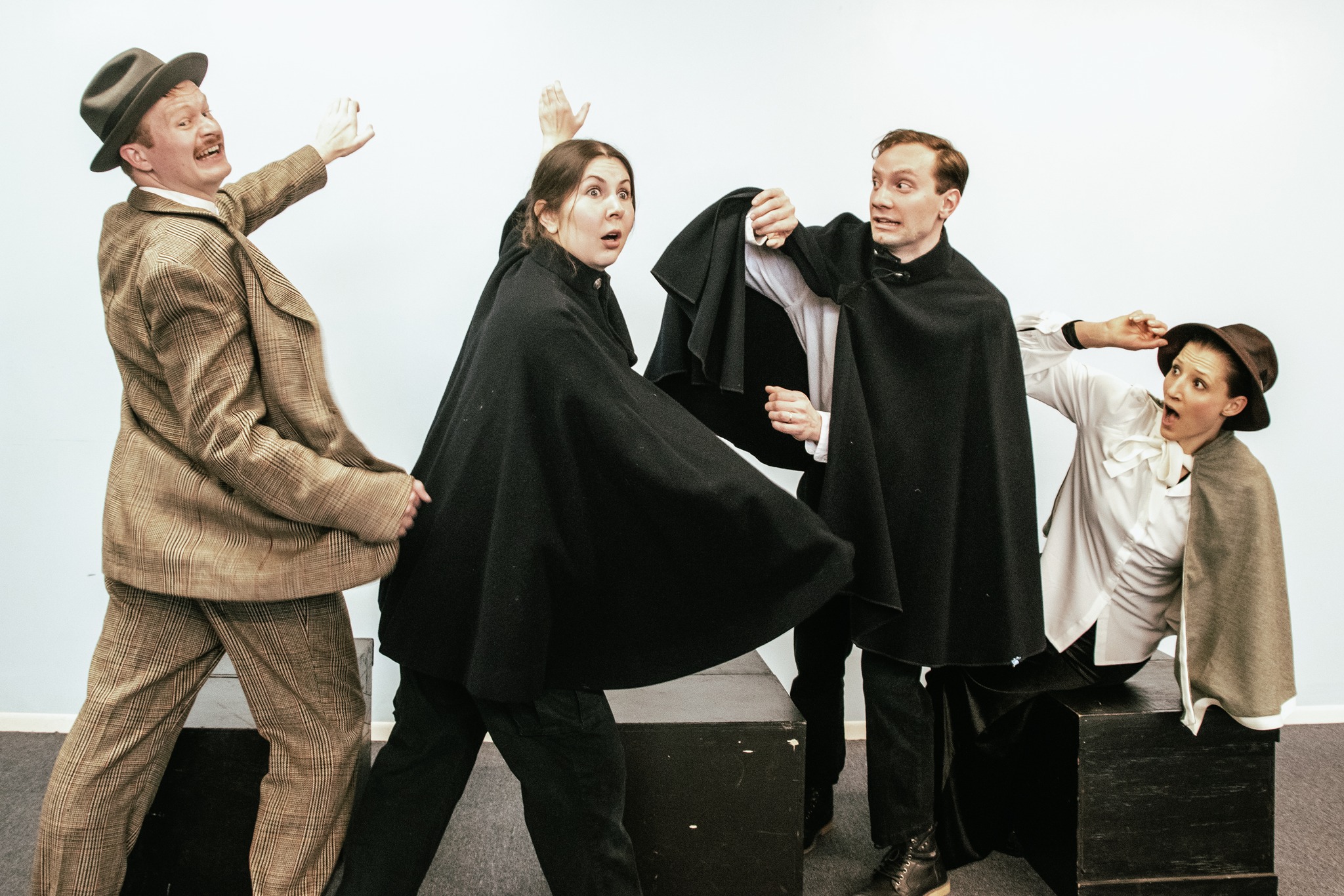
Riley Moore delivers in James Thurbers’ “The Macbeth Murder Mystery” sketch.
Keith Reis with Moore rise to the occasion in their rendering of the classic comedy routine “Who’s on First,” originally created by Abbott and Costello.
The stage is minimal with a curtain as backdrop. The theater floor is actually part of the set as some theater goers watch the production from circular tables, reinforcing the cabaret-like environment.
Cheers to the entire ensemble!
-CED
Alora Chateaux’s “Burlesque on the Bluff” is a production of Duquesne University’s Red Masquers, performed at the Genesius Theater. It runs from February 14 – February 18. For more information, click here.
As many contemplate what flower arrangements to send to their special person this Valentine’s Day, one work at this year’s 58th Carnegie International Exhibition has viewers questioning the personhood of other flora in our ecosystem. Specifically, terra0’s A tree; a corporation; a person. is a black gum tree planted on the Community College of Allegheny County (CCAC) campus, which inspired greater conversation last month between Paul Kolling and Christopher Dake-Outhet, artists involved with terra0 and Talia Heiman, one of the International’s curatorial assistants, during the Carnegie Museum of Art’s Refractions Series.
Like most works of art, A tree; a corporation; a person. began with an idea. According to Kolling, back in 2015, he and other big thinkers who eventually formed terra0, wondered how a forest or a piece of land could own itself by appropriating exploitation through third parties, gradually raising capital, and then eventually, buying the land on which the forest is located. When terra0 first began acting on their idea, they received some push back from critics who saw the project as immoral in the sense that they’d be forcing a forest to cut down its own trees and from art institutions who at the time were not interested in supporting a high-tech centered concept. So, what was meant to be a short five-month study turned into a more than five-year long project.
Installation view of terra0, “A tree; a corporation; a person (DAO #01, Black gum tree, Pittsburgh, PA)” in the 58th Carnegie International. Photo by Sean Eaton courtesy of the artists and Carnegie Museum of Art
One of the initial iterations of the idea was a test case called, Flowertokens. The test case got its name because the artists used flowers to consider what would happen when they tokenized a living commodity using blockchain technology. After placing 100 flowers under a grow rack with a camera that monitored their growth 24/7, terra0 minted 100 tokens, each one representing one of the flowers, and placed them on a digital marketplace where real people could buy and invest in these so-called, Flowertokens. This took place in 2016, but was essentially an early version of today’s NFTs, or non-fungible tokens.
After the success of Flowertokens, terra0 went on to create further iterations that eventually lead to the creation of A tree; a corporation; a person. in Pittsburgh. The goal of the artwork is to establish the personhood of this tree. Other countries and nations have recognized the rights of elements of nature, such as in New Zealand where a river was granted personhood in 2017. In the United States, corporations are entitled to certain rights and personhood as natural persons. Kolling explained that historically Western law described personhood as a way of being able to own something. With its latest artwork terra0 supposes whether through new technologies like the blockchain could allow a nonhuman entity—such as a tree—to own something.
Terra0’s a tree, a corporation, a person on the CCAC campus.
To demonstrate this, they planted the tree and with the help of a team of lawyers from the museum and the college, created a legal entity, a 501(c)(4) tax-exempt organization that owns property (i.e. the tree and the land in which it is planted) and lobbies for granting personhood on behalf of the tree. Once personhood of the tree is recognized, the 501(c)(4) will dissolve and a limited liability company (LLC) will be formed with the tree being the sole proprietor of the organization.
From Left to Right: Paul Kolling, Christopher Drake-Outhet and Talia Heiman at panel discussion.
But until then, and even after the tree achieves personhood, it will require help from human intervention. As both Kolling and Dake-Outhet pointed out somebody will have to file the tree’s taxes.
-GM
For more information about this conversation and more of the Carnegie Museum of Art’s Refraction Series check out WQED’s Artist in the World podcast of visit the following link.Learn more about Terra0 here.
Theseus (Keith Lee Grant) is preparing for his wedding day to Queen Hpppolyta (Portia) and all of the townsfolk of Athens are in a tizzy in “A Midsummer Night’s Dream in Harlem.”
P.S. Harlem is Athens. Athens is Harlem. Don’t get hung up on it.
Note: Aside from a 125th Street sign, the play isn’t physically linked to any place on the isle of Manhattan. The play, as explained by Justin Emeka in the program notes, is spiritually connected to Harlem. Think Shakespeare with a funky Afro-Caribbean vibe.
What is important is that Hermia (Saige Smith) is betrothed to Demetrius (Brende Peifer) but she’s in love with Lysandra (Amara Granderson, a gender-swapped Lysander), and poor Helena (June Alvilda Almonte) is crushing hard on Demetrius, creating a love quadrangle.
Deep in the woods (reminder: Harlem is more of a theme than a place), Oberon (Keith Lee Grant in a dual role) seeks to snatch a changeling Boy (Akinlana Lowman) away from Queen Titania (Portia, also in a dual role). The King of the Fairies enlists Puck (Jaris Owens) to aid him in his schemes to thwart Titania.
Meanwhile the Mechanicals, Quince (E. Mani Cadet), Bottom (Andre G. Brown), Flute (Harry J. Hawkins, IV) and the rest are producing “The Most Lamentable Comedy and Cruel Death of Pyramus and Thisbe” as a tribute to Theseus and the Queen of the Amazons on their impending wedding day.
When Oberon takes pity on Helena, he instructs Puck to help her by hitting Demetrius with the love potion, but he mistakes Lysandra for Demetrius and things go off the rails. The love quadrangle is mangled into a love dodecahedron, and Lysandra and Demetrius fight for Helena while Hermia is scorned by her former lover.
As Shakespeare reminds us, “The course of true love never did run smooth,” but, boy, do things get complicated!
Director Justin Ameka has tight reins on the entire affair. It is a glorious spectacle with powerful drum solos by Akinlana Lowman.
Portia’s monologues are exquisitely delivered. She is a powerful presence on stage. It’s easy to believe she is a Fairy Queen or an Amazonian warrior.
Brenden Piefer’s Demetrius is pure energy. He is a loose-limbed creature who juts and struts all over the stage. He exudes joy.
It’s easy to see why anyone would fight for Hermia’s love. Smith is radiant in the role.
Almonte’s Helena brings some strong laughs, and – unlike past productions of the play – seems much more worthy of the unfair advantage Oberon gives her.
When Demetrius and Lysandra fight for Helena’s attention, both Piefer and Granderson use every possible comedic movement in the book – and create new ones. The scene is flawlessly choreographed by Jose Perez, IV.
The Mechanicals were always meant to be hapless goons badly attempting to complete an art project, but they are wonderfully absurd under Emeka’s direction. Brown’s Bottom is a marvelous buffoon. Cadet’s Quince is – in the words of my friend Orlando Ashley – a Church Gay – one of those pious queens who could have easily been cast as a choir director in a Tyler Perry movie.
The set is a masterpiece by Anka Lupes. An African mask hangs high above the actor’s heads and it is a character unto itself.
Demeatria Boccella’s costumes are stunning, particularly on Portia (in both roles). Her choice to drape the Mechanicals in urban blue collar streetwear was inspired. It defined them in a way unlike any other version of the play before it.
The play ends with a joyous group of weddings – three couples tie the knot/ jump the broom.
“Midsummer Night’s Dream” is exuberant, a joy to behold. A brilliant bouncy bit of fun for a midwinter evening.
“Midsummer’s Night Dream in Harlem” runs through February 17th at the O’Reilly Theater, 621 Penn Avenue, Pittsburgh, PA 15222. For more information, go here.
Times are turbulent in May,1968. Martin Luther King, Jr. has just been assassinated and Robert Kennedy will meet that fate in June, 1968.
Mary (Tajionna Clinton), Buella (Janay Giles), Johnnie May (Karla C. Payne), Na (Angelique A. Strothers) and Martha (Cheryl Bates-White) are five black women who work in the kitchen of a “whites only” diner in Don Wilson Glenn’s “American Menu.”
Nationally the country is experiencing a great civil rights movement and is reeling from the assassination of Martin Luther King, Jr.
But the women are also concentrating on the happenings in their world and within their own families. A young black boy was murdered and dismembered in the neighborhood.
As they prepare food in the kitchen the women talk about their own personal situations.
Na is the unofficial boss/mom in the kitchen, although she does more talking and the occasional sleeping on the job than working.
Johnnie May constantly supports her husband, even though it’s known that he often strays from home.
Martha’s husband is in jail and she is her family’s sole support.
Mary dreams of going to nursing school and moving to California.
Since Beulla works mostly in the diner and not in the kitchen she’s often the target of gossip from the others. They are all curious about the mysterious weekend trips she takes to the annoyance of the others who want to know more.
Comedic retorts and the occasional 60’s music is interspersed to lighten the seriousness of the conversations.
Talks grow more serious as the everyday banter and concerns build. There is more talk about the boy killed earlier that morning. Discussions of their roles as comforters, responsible family supporters segue into an explosion of emotion, anger, sorrow and sometimes rage as they begin to verbalize their own personal goals and dreams.
Powerful performances from a well-balanced ensemble!
We feel Clinton’s paralyzing and obsessive fear as she deals with the boy’s murder in her neighborhood.
Giles effortlessly shows us the dichotomy of Buella’s world as the not fully trusted member of the group while attempting to play up to the diner’s white owner (only referenced but not seen).
Payne has a lot to say and says it well. She is assertive and opinionated but vulnerable.
Struthers provides comedic relief when needed but is the grown-up when tensions reach a high crescendo.
Bates-White nails Martha’s vulnerability, hopelessness and despair.
The set is wonderfully detailed and real food is prepared as the play progresses. Menu orders traverse across a squeaky rope pulley system between the main diner and the kitchen.
It’s hard to fathom how a “whites only” diner can refuse service to black patrons but employ five black women to cook and serve those white patrons. The irony and hypocrisy are stunning!
Although this is a fictionalized presentation, this kind of action was prevalent in the Jim Crow South and other states. There is still inequality today but compared to the 60’s, we have to believe that things have and will continue to improve.
“American Menu” can be presented anytime but it is especially significant to see it during Black History Month.
-CED
“American Menu” is a production of New Horizon Theater, Inc. and is performed at the Carnegie Library Auditorium in Homewood. It runs from February 3 – February 19. For more information, click here.

Playwright Heidi Schreck (Tami Dixon) tells a story about her relationship with the United States constitution in “What the Constitution Means to Me.”
On paper, “What the Constitution Means to Me” begins as a one-woman show, an autobiographical tale from the multi-hyphenate Schreck (a screenwriter for “I Love Dick,” “Billions,” and “Nurse Jackie”), but, like the constitution itself, new elements are added as it progresses.
The character of Schreck tells a story of her youth, crisscrossing America, winning speech and debate money for college at a young age. It flashes backward to a rural American Legion Hall in the middle of Washington state.
She weaves a bunch of disparate elements into her story, describing the constitution as a crucible, a cauldron filled with a variety of ingredients, forged in fire.
A stern Legionnaire (Ken Bolden) steps out to stage. Later, we learn he is an actor named Mike playing the Legionnaire. Things get very meta.
Towards the end of the show, we meet Lamees Subeir, a high school debate champion (on alternate nights the role is filled by Swati Mylarappa).
The two must then debate on whether the constitution is a document worth keeping or if it’s time to strike the whole thing down and start over. The contest is ultimately decided by an audience member who chooses between two cards, Pro and Con.
It’s a gimmick that the show didn’t need. Schreck’s writing is deeply personal story that, at times, may make your blood boil, but, alternatively, cause you to howl with laughter.
Heidi Schreck (Tami Dixon) enthusiastically describes the importance of the U.S. Constitution. Photo credit is Kristi Jan Hoover.
At one point, Heidi says, “This isn’t a tangent. There are no tangents in this show.” Ironically, it is all tangential, but it works. After all, the constitution meanders. It goes on many side trips. It’s the strength of the writing and acting that brings it into a cohesive whole.
Dixon is incredible. She commands the stage. The petite woman has big expressions. She slayed the audience with a sly look, a simple shrug, and a wink or two. While well-known locally, she is a star. The number one reason to see the show.
Bolden’s shift-change between stern Legionnaire and gender-fluid actor is awe-inspiring. They are dramatically different characters played by a tremendous talent.
Lamees does a great job as well. She is a poised, confident young woman and gives this reviewer hope for the future. Unfortunately, she is part of the gimmicky section of the show. Excising this section of the show, however, could make the show a real downer. Clearly, like the play itself, there are pros and cons.
Director Marc Masterson does a masterful job of getting stellar performances out of his cast. He doesn’t keep Dixon behind the podium too long, but moves her around the room, adding a robust energy to the play.
On the heels of Tony Ferreri’s retirement, scenic designer Sasha Schwartz has some big shoes to fill, and does it with aplomb. One look at the set, and you are instantly transported to the Legion Hall, dense with jingoistic ambiance.
Bolden’s overly decorated Legionnaire costume is another terrific sight gag, a wonderful wearable prop by costume designer Richard Paraskian.
“What the Constitution Means to Me” isn’t a perfect show, but, like the constitution itself, it is more than the sum of its parts.
Theater should entertain and make us think. Schreck’s musings on America does just that. It’s a must-see production.
-MB
“What the Constitution Means to Me” runs through February 12 at the City Theatre, 1300 Bingham Street, Pittsburgh, PA 15203. For more information, click here.
by Dr. Tiffany Raymond, PhD and Theron Raymond (4th grader)
Prime Stage fills a strategic Pittsburgh theatre gap with their Prime Sprouts series for elementary students. Much of the content for the Pittsburgh Children’s Theater Festival caters to the under 8 set. There are also abundant options for the 13+ crowd that’s more mature content ready. Prime Stage addresses this gap head on, although elementary age is more shoots than sprouts if we’re going for plant metaphors.
Series nomenclature aside, Douglas Jones’ adaptation of Tubman’s story in Harriet Tubman and The Underground Railroad makes for an impressive show. With a 45-minute running time, it engages and rightsizes without watering down history or cramming in too much. Given Tubman lived well into her nineties, culling her extraordinary life to 45 minutes is a no small feat.
Tubman’s best known for leading slaves to freedom along the Underground Railroad, and it would be easy to just focus on that rich legacy. However, Jones opens the aperture to present a multi-dimensional view of Tubman’s life and impact, exploring her participation as a nurse and spy for the Union Army.
I took my fourth-grade son with me for the target demographic perspective. Theron was aglow about the show. In fact, he observed the lighting genius of scenic designer, Alex Barnhart. Seven Moravian star lanterns dangle from the backdrop forming the Little Dipper. The 26-pointed Moravian star is traditionally symbolic of Jesus with the many points representing his radiating love and care for all humankind. Barnhart’s Moravian stars leverage heavenly representation to signify the righteousness of the slaves’ journey northward to freedom.
Lanterns mounted on fence posts sweep along the upstage perimeter and mirror the formation of the Big Dipper. Tubman never learned to read or write, but Barnhart elegantly reminds us the stars are a universally accessible map.
Harriet Tubman (Maame Danso) has the light shone on her in Prime Stage’s “Harriet Tubman and the Underground Railroad.”
Tubman was also a sharp reader of people. As Tubman, Maame Danso brings that to life. The play begins in darkness with dogs barking and shots fired. Tubman raps urgently on a door asking for help as one of her passengers was shot in the arm. The audience’s sense of confusion and uncertainty is mirrored by a Quaker woman (Anne Rematt) who answers the door and wavers. Danso expresses both urgency and assertiveness as their captors are closing in and converts the woman’s (and by extension, the audience’s) hesitancy into positive action to do the right thing.
In the play, author Sarah Bradford (also played by Anne Rematt) skillfully pitches her biography of Tubman to a publisher. The publisher (Isaac Miller) is immediately dismissive of Bradford basely solely on her gender. The book pitch moves in parallel with Tubman’s life, and two stories mutually reinforce one other. Miller also portrays a slave master. The two roles tie together the ways in which white men make assumptions and decisions that reinforce their own power while diminishing others.
Slavery, war and racial injustice are all serious. Director Linda Haston thoughtfully counterbalances with moments of levity. At one point, Tubman’s on a train about to be identified by a couple reading aloud from a reward poster, which notes Tubman is illiterate. Her companion (Sam Lothard) overhears and instructs her to pick up a newspaper. Lothard sings the message to her, tapping into a common communication tool for slaves as white slaveowners didn’t pay attention to song lyrics. The ruse works. The would-be captors immediately dismiss her; someone who can’t read wouldn’t look at the paper. Haston immediately cuts the tension. Lothard leans over with a knowing smile to rotate Tubman’s newspaper right side up.
Jones’ play reminds us reading takes many forms – from stars to songs to people. Illiteracy has a narrow definition that privileges reading and writing. Tubman lacked access to traditional education as a slave. And yet she was a skilled reader, in navigating north and reading human emotion.
-TKR
Harriet Tubman was a 26-pointed Moravian star. Her light inspired others in and beyond her time. Learn more about the woman they called Black Moses at the New Hazlett with Harriet Tubman and The Underground Railroad through January 29th. Purchase tickets online here.