Inside dish on interviews, editorials, events listings, musings from the minds of BV’s contributors, viewer mail, and other bits of fabulousness — It all goes into The Shaker, ‘Burgh Vivant’s bacchanalian bulletin board. Saddle up to the bar, and get ready for another round of what’s shakin’!
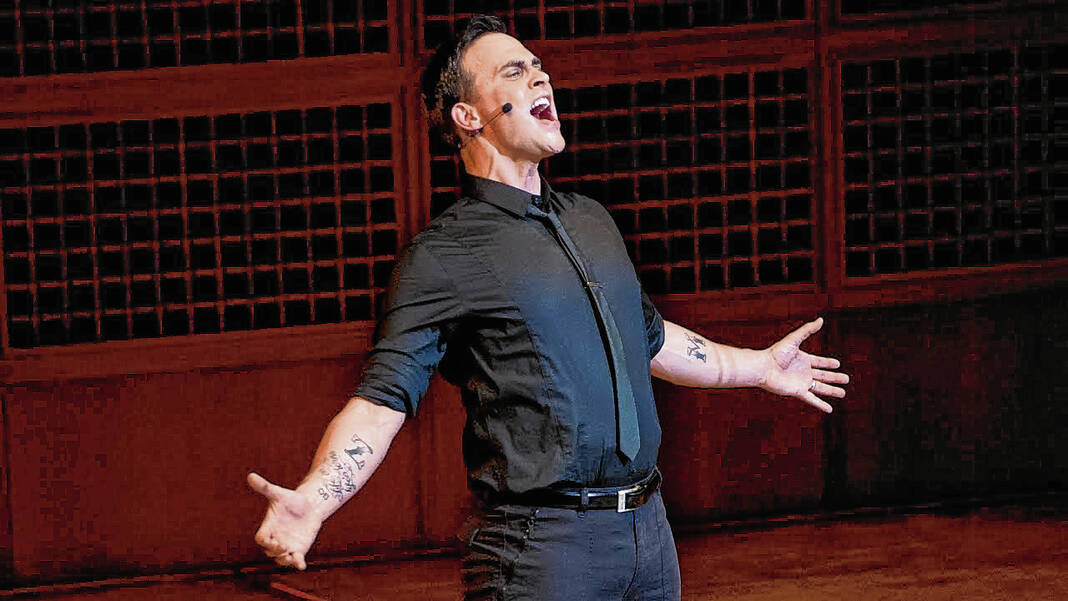
Vocalist Jessica Vosk breezed into Pittsburgh before her upcoming musical adaptation of “Beaches” on Broadway (rehearsals began the day of her show, Monday, February 16, 2026, but Vosk will join the troupe on Tuesday, February 17, 2026).
Vosk accompanied by acclaimed conductor, music director, orchestrator, composer, and arranger, Mary-Mitchell Campbell (“Mean Girls,” “Tuck Everlasting,” “Finding Neverland,” “The Prom,” and more), and musical director, actor and drummer, Rich Mecurio (drummer for “Waitress” and Van Zandt, and Little Steven and the Disciples of Soul, and the drummer on Vosk’s Christmas album, “SLEIGH.”
The Broadway singer and actress regaled the crowd at the Greer Cabaret Theatre with stories from her career in show business, delivered with delightful and charming wit.
The Broadway performer opened the show from the rear of the theater, cutting through the audience and winding her way to the stage, commenting as she went. She turned to one guest seated at a table, “Is that a cookie?”
When the patron offered her the cookie, she responded, “No. I can’t. I am in the middle of a show.”
Jessica Vosk is ready to SLEIGH!
Vosk covered songs from “Waitress,” “Beaches,” “Wicked,” and “Somewhere Over the Rainbow.”
In 2022, Vosk headlined “Get Happy: A Judy Garland Centennial Celebration” at Carnegie Hall. Her version of “Somewhere Over the Rainbow” was astonishing.
The singer even rocked a Taylor Swift song, “Treacherous,” to the delight of the audience.
Vosk received two standing O’s, and midway through the set, there was a mini-standing ovation as a smattering of the crowd rose after her rendition of “The Wizard and I.”
The Broadway star has her own Christmas album, “SLEIGH,” and you can listen to a track here.
Vosk was entertaining and engaging, and one of the best performers of a stellar season at the Greer.
-MB
The 2025-2026 Trust Cabaret continues with Eva Noblezada on March 9th, 2026, and Cheyenne Jackson on May 11, 2026. For more information and tickets, click here.
“Love Letters” follows the lives of two people who have known each other since childhood. Andrew Makepeace Ladd III (Zach Wyatt) and Melissa Gardner (Tammy Wyatt) began their journey with the written word in grade school, sending little notes to one another during class. Their correspondence didn’t get off to a smooth start. When their teacher exposed them, Ladd and Gardner were forced to repeat “I will not write personal notes in class” multiple times.
Their relationship has fluctuated over the years as they have found themselves in different parts of the world, taken different career paths, married (and divorced), and had children. But they always keep corresponding.
As time goes on, Melissa has more issues than Andrew. She is a free spirit, an artist, and one who eventually has difficulties with excessive drinking. Her emphasis on the course her art takes is as fluid as her multiple marriages.
Andrew chooses a legal career, applies himself, and takes the next logical step for him by pursuing politics. He has a successful marriage and three sons.
The hint of jealousy rises from both sides when either one announces a new love interest or marriage. One wonders how deep their attachment is. Their relationship is complex and fluctuates between love, annoyance, jealousy, concern, and sympathy.
As they grow older, many more complexities within their own worlds demand more of their attention.
Does their relationship remain the same after fifty years of correspondence? Do they continue to write to one another?
Zachary Wyatt and Tammy Wyatt perform Love Letters at Carnegie Stage. Photo credit: Ken Gargaro)
Zach’s Ladd is strait-laced. He has set his career objectives from an early age; his path is straight forward, with no deviations. His physical delivery is spot on, and he sits stick-straight as he delivers his lines. As he grows older and faces certain family issues, his composure shifts from rigid to more relaxed and casual.
Tammy shines as her delivery is the opposite of Ladd’s. She flails her arms, makes faces as she reads her correspondence from Ladd, twists her ankles, and generally moves quite a bit. Tammy’s physical gymnastics and facial expressions tell us all we need to know about Melissa. She is a free spirit and spontaneous. When she experiences failure, she becomes more remorseful and sullen.
Independently, their performances are excellent, but in tandem, they excel. They complement each other, and their timing is perfect.
Special Note: Actors Zach Wyatt and Tammy Wyatt are a married couple, and their romance, which began in 2006, included exchanging letters and notes! This play must have special meaning to them.
Note: Lonnie, the Theater Lady, mentioned that this production was the third time she had seen this play. She told me that this production was the best one she’d ever seen.
A stamp of approval for this production of “Love Letters.”
“Love Letters” was written by A. R. Gurney.
Ed and Elaine Cassidy’s set design adds a nice touch to the story. Most productions of “Love Letters” take place on a bare stage with two uninteresting tables side by side. This set design reflects each character’s background and personality, with props and colors built around their unique traits.
Excellent direction by producer/director Ken Gargaro.
-CED
“Love Letters” is produced by Ken Gargaro. Performances run from February 12th to February 21st at Carnegie Stage, 25 W. Main Street, Carnegie, PA. For tickets and additional information, click here.
Robbie Doerfler (Robert Frankenberry) assembles his best friends, Rose (Desiree Soteres) and Roger (Christopher Scott), to aid him in successfully launching a revised project, a new take on the works of Walt Whitman, in “I Hear America Singing,” a Pittsburgh-produced film, ingeniously described as a 75-minute operafilm (part of the Bardo Trilogy).
Writer/Director Daron Hagen’s “I Hear America Singing” is unusual. It’s a meta-commentary on the creative process, an operetta, a musical, and a fictional documentary.
P.S. It’s first and foremost a drama, and there is only a smattering of laughs, which keeps the film out of the “mockumentary” category.
It’s sort of “Merrily We Roll Along” in the right chronological order, but in this case, two of the friends are former lovers.
Robbie was friends with Rose and Roger when they were married, but after the divorce, Robbie distanced himself from Roger.
Hagen’s film touches on a lot of subjects; the nature of art, love (in a variety of forms), friendships, writer’s block, and more. Much of it, delivered in song.
It’s an ambitious project (the musical and the film), and Hagen is aware of the critics. Hagen voices of one of the critics, alongside Talal Jabari and Tevi Eber, in this metacommentary on art.
Jabari and Evi’s critic characters are named after Greek mythological creatures, Charon (the boatman on the river Styx), and Acheron (a river of woe and entrance to the underworld), but neither of them are seen.
Desiree Soteres (Rose), Robert Frankenberry (Robert), and Christopher Scott (Roger) sing around the piano.
Soteres has a strong singing voice. Her character of Rose is the most likable. Soteres plays Rose with a frank matter of fact-ness and down-to-Earth charm.
Frankenberry is extremely talented. His singing voice is also powerful. He oozes charisma on screen. He manages to deliver the only laugh lines in the script, with a dash of self-deprecating humor.
There are several Will-They/Won’t They moments between Rose and Roger. Maybe a few too many. It becomes hard to care about their situation-ship.
Note: I didn’t want them to get back together, Roger’s character is pretty unlikable, not just because he’s a Republican, but because he wants to impose limits on Robbie’s creativity (in a very Republican way, though).
While Scott’s Roger is annoying, he has a marvelous singing voice as well.
Hagen was Pitt’s 2007 Franz Lehar Composer-in-Residence, and he’s grown into a strong multi-hyphenate. The songs, some of which are based on America’s greatest poet, Walt Whitman, mix together with his original compositions.
Hagen could have benefitted from one more editorial pass on the script and/or the final cut. Early in the film, there is a scene in a hallway where the voices are tinny (the audio quality isn’t quite right). The scene should have been cut since it didn’t match the sound quality of the rest of the film, which is excellent.
With the rare exceptions, such as Quentin Tarantino, Christopher Nolan and Alfred Hitchcock, most films benefit when the writer and the director are two distinct individuals, having another creator help shape the work could have turned this into a masterpiece.
The cast and crew worked with Aria412, a premiere Pittsburgh institution for supporting local artists performing a variety of opera, art house, musical theater and popular tunes. “I Hear America Singing” has all of those elements.
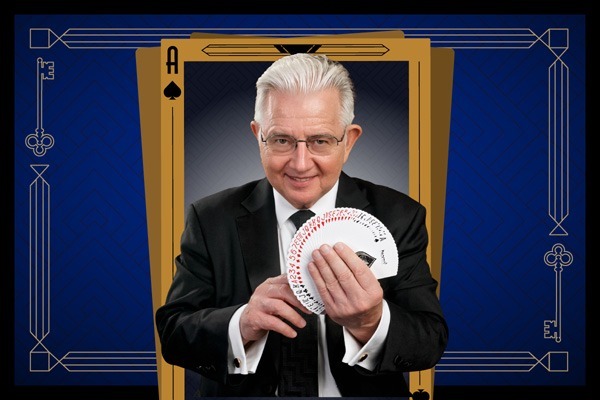
Liberty Magic continues another spellbinding season with Czech Republic magician, Ondrej Psenicka, in 52 Lovers.
As an audience member at any live magic show, particularly a venue as wonderfully intimate as Liberty Magic, you find yourself leaning in and forward. There’s the involuntary hubris of thinking you’ll somehow figure it out, glimpse that ah-ha moment the card goes up the sleeve or some small moment that will put you in the special audience of one that discerns the trick.
Ondrej Psenicka is up for the challenge, and his languorous style dares you to spot the deceit. He fooled Penn and Teller not once, not twice, but three times, so he’s comfortable with us mere mortals. Not that this stopped me from leaning in to try and figure it out. Spoiler alert – I didn’t.
Psenicka establishes a warm, approachable ambiance before his show even starts. He immediately develops audience rapport, interacting with the audience as they trickle in. He hands out packs of cards as well as single playing cards with instructions on them. We aren’t just attending a show. We are immediately welcomed as his assistants, and he makes the audience feel like essential components of his show.
Ondrej Psenicka and two of the 52.
Ondrej’s memory is phenomenally flawless. Even though he does endless shows, he never missed a name or even hesitated on one. His confidence brings the audience in as confidantes, heightening the feeling that we are all his assistants. In fact, an audience member named Jorge was running a few minutes late to join his crew, and Ondrej made him a touchstone of the show.
Psenicka’s sleight of hand is atmospheric. The cards become literal storytellers in his palms as he makes them spell messages. A camera livestreams for enhanced close-up visibility, another level to his dare. This storytelling bookends the show. The cards both foreshadow where we are going and provide a summary of where we have been.
Psenicka’s talents, however, goes beyond prestidigitation. He thoughtfully interweaves his skills as a mentalist to bring variety.
At the finale, he stands on a chair, fluidly exhibiting rope tricks. This unusual view enables a wide range of angles that invite the audience to catch him. At this point, he also takes inspiration from Teller, performing silently. This heightens the authenticity as there is no clever banter to distract and redirect us. His silence is its own electricity, the rope a kinetic waterfall in his hands.
-TKR, Ph.D.
Don’t miss the chance to see Ondrej Psenicka in 52 Lovers through March 1, 2026 at Liberty Magic (811 Liberty Avenue, Pittsburgh, PA, 15222). The show’s title is as racy as it gets, so while it’s suggested for 18+, it’s appropriate for the 12+ who are allowed. Liberty Magic also offers a Skeleton Key VIP experience to go backstage and connect with Ondrej after his show, which is well worth it. Purchase tickets online here.
Reviewed by Dr. Tiffany Knight Raymond, PhD and Theron Raymond (seventh grade)
An episode of HBO’s hit series, The Pitt, referenced Freedom House, which will undoubtedly help push this visionary service into the cultural zeitgeist. It was also an appropriate reference because every ER and show about emergency medicine is a beneficiary of Freedom House.
Freedom House started in Pittsburgh’s Hill District in 1967. It was the first ambulance service with trained paramedics. All Freedom House employees were Black, and they collectively proved out founder Dr. Peter Safar’s vision that “ordinary people can be trained to save lives at the scene.” Before Freedom House, the police or funeral homes provided hospital transport, but not emergency care.
L.E. McCullough’s inspiring new play, Freedom House: Giving Life a Second Chance, appropriately has its world premiere here in Pittsburgh with Prime Stage. McCullough fills in the incredible story of Freedom House. Director Scott P. Calhoon flawlessly executes the vision with an ensemble cast that radiates and rivets.
What’s most shocking is the play reminds us how close history is. In 2026, we don’t question the 24/7 availability of highly trained emergency medical providers who can administer to us in our homes, offices, public spaces, or wherever help may be needed. McCullough’s play unfolds a sense of awe.
At one point, Freedom House paramedics arrive on the scene and save a life, and Calhoon has the gathered bystanders rejoice and clap. As a modern-day audience member, you’re not anticipating that response. McCullough reawakens the recognition that things that become commonplace shouldn’t be less worthy of celebration, and saving a life is heroic, regardless of time period.
The set to “Freedom House.’
This prescient pairing of transit and care was the brainchild of Austrian immigrant, Dr. Safar (compellingly played by Ryan Warsing). Warsing never misses a beat in bouncing between Safar’s measured Austrian accent and the ensemble characters he plays. Safar championed the creation of an ambulance service with trained staff after two deaths that could have been prevented with prompt response and proper en route care. One was former Pittsburgh mayor and Pennsylvania governor, David L. Lawrence, who died under Safar’s care after it took 20 minutes to transport the governor 4 blocks to a hospital. The other was Safar’s own daughter who died at age 12. This situation was even more dire in Pittsburgh’s historically black Hill District. Emergency calls were often ignored, and resident needs were marginalized.
Actors rehearse for the play.
All the actors play a major role and are part of the ensemble. One of Anne Rematt’s ensemble roles is a dismissive nurse who does not want to recognize the Black paramedics-in-training as healthcare workers when they come to the hospital for clinical training. Rematt also commands the stage as Dr. Caroline, Freedom House’s fervent medical director. Her evolution from prejudiced ensemble nurse to Dr. Caroline parallels the era’s positive evolution as Freedom House closely followed the passage of the Civil Rights Act.
The most memorable scene takes place simultaneously with two sets of emergency responders. Two Black Freedom House paramedics are responding to a call from a white male executive in an office building who seems to be having a heart attack. Paramedic Dave Rayzer (proudly played by Darrin Mosley, Jr) exchanges a knowing look with his partner. Mosley’s pointed nonverbal tells you it’s not the first time these Black men have been doubted. At the same time, Dr. Caroline responds to a call from a Black household, knocking on the apartment door for access. Both sets of helpers are met with resistance from those who need them most. It’s a nuanced demonstration of the way distrust cuts in multiple directions and a reminder that prejudice prohibits progress.
Richard Morris, Jr’s ingenious set design centers on Crawford Grill where Freedom House got started. Before the show, black and white photos from the era cycle, adding texture to the story. The Crawford Grill sign arches over the set, anchoring all action in the Hill District founding location. Calhoon keeps the pacing ER steady by moving chairs from the Crawford Grill tables around the set to mimic other locations. Chairs are spaced out in a row downstage to signify a bus where Freedom House medics respond to their first call. Chairs are tightly clustered to represent the back of an ambulance, and their proximity signifies the cramped working conditions of a mini hospital on wheels.
Opening night ended with a talkback that included two original members of Freedom House. Both admitted they started as job hunters, not ground breakers. However, they quickly realized that what was happening was special. After Freedom House closed in the early 1970s, one went on to serve as an EMT for over 30 years, and most Freedom House employees launched long careers in healthcare and public service. George McCary III noted he got to “carry science into a person’s home.” McCary also answered the last call before Freedom House was dissolved, a casualty of racism as Pittsburgh’s new mayor, Peter Flaherty, refused federal funding for Freedom House. Opening night started with the reading of a proclamation by Pittsburgh’s newest mayor, Corey O’Connor, declaring January 24th Freedom House day. It was an emotional moment as history came full circle to recognize the contributions of these ordinary citizens turned global changemakers.
That’s because Freedom House was not only the first mobile emergency service in the U.S., but the world. What started in Pittsburgh’s Hill District has become a global blueprint that echoes today in every siren you hear. Come to Prime Stage and let Freedom House inspire you.
-TKR, Ph.D. & TR
Prime Stage’s production of Freedom House: Giving Life a Second Chance runs through February 1, 2026, at the New Hazlett Theater, 6 Allegheny Square East, Pittsburgh, PA 15212. Purchase tickets online here.
Malcolm Little (Edwin Green) meets John Sanford (Trey Smith-Mills) in a famous restaurant and jazz club on Nicholas Avenue in New York’s Harlem in Jonathan Norton’s “Malcolm X and Redd Foxx Washing Dishes at Jimmy’s Chicken Shack in Harlem.”
Both men became famous, but each took very divergent pathways to their success and notoriety. Malcolm Little went on to be Malcolm X, and John Elroy Sanford went on to be Redd Foxx.
While both worked as dishwashers at the restaurant, Norton gets to create the relationship from whole cloth. Take Steve Martin’s “Picasso at the Lapin Agile,” which posits that Pablo Picasso not only met but also hung out with Albert Einstein, and set it in Harlem, 1943.
There is a vein of truth that runs through the story.
In the 1940s, Foxx befriended Malcolm Little, later known as Malcolm X, a fellow dishwasher at Jimmy’s Chicken Shack in Harlem. Both men had reddish hair, so Sanford was called “Chicago Red” after his hometown and Malcolm was known as “Detroit Red.” In his autobiography, Malcolm X refers to Redd Foxx as “the funniest dishwasher on this earth.”
Norton takes a lot of liberties, drawing on Foxx’s material from stand-up and his sitcom, “Sanford and Son.” The Norman Lear show, based on the BBC “Steptoe and Son,” ran on NBC from January 14, 1972, to March 25, 1977.
Little, who is a year younger than Foxy, calls Foxy, “Pops.” There is a mention of a shop girl named Elizabeth, where Foxy creates his “I’m coming, Elizabeth,” dying bit, and Foxy crooks his hands and says, “I got the Arthur-itis.”
P.S. Even though Foxx’s lines are iconic, it’s a stretch to ask audiences to remember a show that went off the air 49 years ago.
In the story version of their lives, their friendship is a love/hate/love sort of thing. Both men save each other in different ways.
There’s a repugnant recurring gag about the kitchen sewer backing up that becomes more important by the end of the show.
While there are a lot of venomous conversations between them, there’s a very sweet ending.
From left to right: Little (Edwin Green) and Foxy (Trey Smith-Mills) work in a restaurant in NYC in “Malcolm X and Redd Foxx Washing Dishes at Jimmy’s Chicken Shack in Harlem.”
Fittingly, Green is a charismatic character. He is handsome and charming, even when his character is committing some vile deeds. He eats chicken off of discarded plates, sniffs cocaine like it’s candy, and goes to work for a local mafia don.
Smith-Mills is more than just comic relief, though he gets a lot of mileage by making silly walks, putty-like facial gestures, and other crazy contortions of his body. There is also a deepening of his character, which comes through in his superb acting.
Kimberly Powers’ scenic design is brilliant, capturing the nuances of a dingy dungeon of a Harlem kitchen in 1943. It’s all greens and creams, with silver accessories. Brodie Jasch’s props are all perfectly placed.
Director Dexter J. Singleton draws nuanced performances from two terrific actors.
While the play’s ending is poignant, it seems to sneak up on you pretty quickly, glossing over many details about both men. There’s a “greatest hits” flash forward that zips by so quickly it takes a minute to realize what’s going on. Then, it’s over.
Even though it runs only 95 minutes with no intermission, it could probably use a trim of a few scenes and an expansion of the final scenes.
If you are a fan of Foxx or X, “Malcolm X and Redd Foxx Washing Dishes at Jimmy’s Chicken Shack in Harlem” is an interesting divergence. The number one reason to go is to see two men doing some fantastic work on a well-crafted set.
-MB
“Malcolm X and Redd Foxx Washing Dishes at Jimmy’s Chicken Shack in Harlem” runs until February 8 at the City Theatre, 1300 Bingham Street, Pittsburgh, PA. For tickets and additional information, click here.
The cultural phenomenon “Wicked” returns to Pittsburgh after the hit movie, “Wicked,” and its subsequent sequel, “Wicked: For Good.” The Broadway musical tells the same story, but faster than the five hours of films.
Elphaba (Jessie Davidson. during the first half of the run), named after the “Wizard of Oz” creator L. Frank Baum (El – Fa – Ba) meets Ga-Linda/Glinda (Zoe Jensen, during the first half of the run) and the two are best frenemies. It’s a love/hate relationship.
Glinda is Pop-U-Lar. Elphaba is not. Elphie is an outcast, an outsider, and being the product of an extramarital affair and having green skin doesn’t help.
It’s not easy being green.
But here’s the hitch. Elphaba is a witch, a very talented one. Witchcraft and Wizardry professor Madame Morrible (Eileen T’Kaye) gives the shamrock-shaded student private lessons. Much to the chagrin of her roommate. This time it’s Glinda who is green with envy.
Glinda vies for Morrible’s attention, but Elphie is more interested in protecting her wheelchair-bound sister, Nessarose (Jada Temple), and advocating for animal rights, than her lessons in witchcraft and wizardry.
Side note: In the merry old land of Oz, animals can talk, but they are losing the ability. When it comes to history teachers, Dr. Dillamond (Drew McVety) might be the Greatest Of All Time, but he is a literal goat.
Glinda and Elphaba warm to one another just as Fiyero (Ethan Kirschbaum) comes to town, and the three form a love triangle shaped like Elphaba’s black hat.
Dillamond gets fired – he’s a literal and figurative scapegoat (a pun from the show), and Elphaba gets an appointment to go to the Emerald City and meet with Oz’s head honcho. She invites Glinda to tag along and soon, the two are… off to see the wizard (Blake Hammond, during the first half of the run).
Elphaba is jaded (green pun) when she learns the Wiz is a fraud, and vows to protect the animals and fight the totalitarian regime.
She also learns she is the only one who can read the grimoire (which reads a lot like the Necronomicon from “Evil Dead the Musical”). With the book in hand, Elphaba can cast powerful spells, give monkeys’ wings, and even…you may have heard…defy gravity!
Elphaba (Jessie Davidson) is ready for a fight in “Wicked.”
The show has a lot of plot, but manages to get through it quickly with a plethora of perky and hummable tunes.
Davidson had a hard task ahead of her. She has to belt it out like Idina Menzel, Cynthia Erivo and all of the other Wicked Witches who came before her. With luck, and maybe a bit of magic, she’s does a tremendous job.
Jensen is a very capable Glinda. She gets most of the laughs, playing as a ditzy witch. Her best line, “Dr. Dillamond, why can’t you just teach us history, instead of harping on the past!?!?” is delivered excellently. Her dumb blond routine is more Frankie Grande (especially on “Worst Cooks in America: Celebrity Edition”) than Ariana Grande. She plays Glinda as bold, beautiful and brainless. It’s a joyous performance.
Kirschbaum’s Fiyero is fun. He is every bit the handsome Prince Charming-type he portrays.
T’Kaye is a malevolent Madame Morrible and it’s a delight to see her relishing in the role.
Nicholas Garza plays Boq, a lovestruck munchkin who loses his heart to Glinda. He does a magnificent job with his short stint on stage. It’s not a huge role, but Garza plays it with aplomb.
Temple does a grand job as Nessarose. In the script, there is a dramatic turn with the character. She is adorable and lovable in the first act but turns into a monster in the second. Temple is almost too adorable for the second act, but levels up at the right moment.
There are a ton of Ozians, Munchkin, and flying monkeys running (and sometimes) flying around in the background, but they never overwhelm the stage. The dance arrangements by James Lynn Abbott are superb.
The sets are minimal but awe-inspiring. There are a clockwork dragon and a giant Oz Bobblehead. Chic Silber’s special effects combined with Elaine J. McCarthy’s projections are astounding.
Director Joe Mantello keeps everything moving at a quick pace, but nothing gets lost or glossed over.
When Jeffery Maguire wrote the novel on which the story is based, it seems doubtful that he intended the tale to read as allegorical as it does. Winnie Holzman’s adaptation not only holds up, but “Wicked” feels prophetic. Though it takes place in a land of magic and talking animals, the story is an allegory about “othering” and how it leads to fascism. It’s hard to not equate the doddering Wizard with the maniac in the White House, a bumbler who blames others for his problems. The Wizard, though almost cartoonish, is a much more believable and likable character.
There is something to seeing the spectacle live. The magic plays out better on stage than it does on a silver screen. There are many moments to “ooh” and “aww.” From Glinda’s mode of transportation, flying monkeys, enchanted brooms, and other effects. It has to be seen, to be experienced, in person.
If you can’t get enough magic in your life, “Wicked” is the cure.
-MB
“Wicked” runs from January 14 to February 15 at the Benedum, Penn and Seventh, Pittsburgh, PA 15222. If you would like more information, please click here.
Prime Stage Theatre Company presented the 6th Annual High School Drama Awards on January 10, 2026, at the Hillman Center for the Performing Arts at Shady Side Academy. Participating schools included Avonworth High School, Baldwin High School, Chartiers Valley High School, Deer Lakes High School, Fox Chapel High School, Hampton High School, Our Lady of the Sacred Heart High School, Pine-Richland High School, Quaker Valley High School, Shady Side Academy Senior School, Springdale Junior/Senior High School, and Thomas Jefferson High School.
It was a spectacular night for Our Lady of the Sacred Heart High School, which garnered the most awards of the evening.
Avonworth’s “Moon Over Buffalo” won for the best overall production and gained Best Actor, Paxton Masters, and Best Supporting Actress, Adalyn Burgoyne.
Emcee Matt Henderson introduced a variety of presenters, each of whom presented an award. Several local actors stepped up to the microphone to present awards, including Linda Haston, Scott Calhoon, Jocelyn Hillen, and Wali Jamal.
Elise Duckworth, winner of the Best Actress Drama Award.The Drama Award winners.
Co-founder and artistic director of Prime Stage Theatre Company handed out the top award to Avonworth’s “Moon Over Buffalo.”
Congratulations to all the winners and participants.
-MB
For more information about Prime Stage Theatre, click here.
When a group of strangers, given color-coded codenames, meet in a grand country house, Boddy Manor (based on the Tudor Close Hotel in the UK) in 1954, shark fin soup and foul play are on the menu.
Wadsworth (Adam Brett), the butler, greets each participant at the door and ushers them into the study for a cocktail. Each player is known only by their kaleidoscopic nom de guerre and is told not to share any details about their lives, but details emerge over dinner.
Mrs. White (Sarah Mackenzie Baron), Miss Scarlet (Camille Capers), Colonel Mustard (Nate Curlott), Mr. Green (TJ Lamando), Professor Plum (Kyle Yampiro), and Mrs. Peacock (Madeline Raube, decked out in full plumage) meet the unscrupulous Mr. Boddy (Joseph Dalfonso, in multiple roles). Boddy has been blackmailing each one of them. When the lights go out. Mr. Boddy is on the floor, killed by one member of the colorful contingent of ne’er-do-wells.
Wadsworth and the guests must solve the murder, but each clue leads to an additional murder. Soon, the Cook (AT Sanders), the maid, Yvette (Zoie Tannous), and a cop (Kebron Woodfin) end up murdered by various weapons, a gun, a rope, a candlestick, a lead pipe, etc.
If the murder weapons and the murderers sound familiar, you might have played the board game, “Clue,” or you may recall the eponymous 1985 movie, starring Tim Curry, Madeline Kahn, Christopher Lloyd, Martin Mull, and more.
The plot follows Jonathan Lynn’s screenplay, which was adapted from Sandy Rustin’s original material, with additional material from Hunter Foster and Eric Price. It takes a village.
Miss Scarlet (Camille Capers), Mr. Green (TJ Lamando), Mrs. Peacock (Madeline Raube), Mrs. White (Sarah Mackenzie Baron), Mr. Green (TJ Lamando), Professor Plum (Kyle Yampiro), and Colonel Mustard (Nate Curlott) in “Clue.”
There’s not much more to it. If you’ve seen the movie, you will know the play. It is very faithful to its source material.
There’s often a gripe in theater, when a stage adaptation strays far from the film it’s based on (take “Beetlejuice,” for example), but without any revisions, it’s just a rehash. There are some clever new bits, but nostalgia can only take you so far.
Also, It isn’t fair to compare Sarah Mackenzie Baron to Madeline Kahn or Adam Brett to Tim Curry, but they knew the Risk, and they might be Sorry, but that’s Life. Surely the original actors shouldn’t have a Monopoly on the roles. I suspected that they were in Trouble, but, based on the riotous response from the audience, who were laughing with gusto, creating this version wasn’t just a Trivial Pursuit.
Judging them on their own merits, Brett does a great job as Wadsworth, and Mackenzie Baron does a terrific job as Mrs. White (“The flames…the flames…on the side of my face”).
Curlott’s Colonel Mustard gets some decent laughs playing a dolt.
Lamando is superb as “Mr. Green.”
While Mr. Boddy is a minor role, Dalfonso makes up for it with panache. He also shines as a cop who plays the improv game “New Choice” with his name every time he enters a room.
Casey Hushion keeps things light and airy, like a mousse.
The bulk of the hard work of this production goes to Lee Savage’s scenic design and the stage crew that has to move all of the pieces around swiftly. It’s dizzying how quickly the set moves (and it’s such beautiful scenery).
There is something thrilling about seeing a beloved movie play out in live action yards away from your chair.
-MB
“Clue” runs until Jan. 4 at the Benedum Center, Seventh and Penn Avenue, Pittsburgh, PA 15222. For more information, click here.
The 80s were simpler times. Hair was big, greed was good, and movies were original. After a rocky start, our economy boomed, as did our space shuttles. Video games brought people together, and sometimes out of the house, instead of being used by the CIA to radicalize lonely and impressionable kids online. Long before people parroted “Yo Mama” jokes on XBOX Live, they left inappropriate three-letter initials across arcade scoreboards. That retro spirit is being revived, with a family-friendly spin, in Hobnob Theatre Co’s latest holiday production, The Nutcracker: New Game, directed by Ken Smith, now running at Butler County Community College’s Succop Theater.
Clara (Cassidy Spirk) is a Dreamcast, I mean, an outcast. She’s a girl who loves to code and spend time on “the interwebz” instead of hanging out with people she isn’t related to. Following a lovely, yet slightly cringy, evening of Christmas Eve carols and games, she finds herself the center of ridicule from the other girls at the party. This is her genesis for tinkering with a video game gifted by her Uncle Harry (Cory J. Pfahl), which pulls a Tron and transports her into a world of glitchy graphics and embattled foes. Written by Deanna Sparrow and Ken Smith, this story is chock-full of heart and humor. Replete with witty references, memorable characters, and yuletide cheer, audiences of all ages are sure to enjoy and relate to this show.
Cory J. Pfahl as The Nutcracker. Photo Credit: Karl Kobil
Featuring a rather expansive cast, most of whom pull double duty with roles, this show is teeming with talent.
Cassidy Spirk phenomenally leads the charge as Clara, the hero of this dope production.
Sarah Dailey is tremendous as the cattie Sammie/The Rat Queen, expertly ensuring her villainous turn as the latter isn’t cheesy.
Cory J. Pfahl rocks as Uncle Harry Drosselmeyer/The Nutcracker, the former being a generous musician/inventor, while the other is a Vanilla Ice-inspired tree nut connoisseur.
Casey Hoolahan adds plenty of warmth with her dual roles as the Mom/Fairy. Grant Kingston gives a heartwarming performance as Clara’s brother Fitz, while Conleth McVeigh is wonderfully corny as Clara’s holiday-obsessed father.
David McGrogan plumbs the depths of his characters, Gino/Enzo, cooking up humorous performances as the pair of them. Craig Adams delights as Grandpa/Famous 80s Video Game Character, which allows him to “waka waka” the walk and talk the talk, delivering cantankerous one-liners and the occasional jab.
Ellie Jedrzejewski skillfully alludes to the show’s source material as a featured dancer and doll. Rounding out the cast are all the young performers who give terrific performances: Willow Calvert, Carly Cousins, Corbin Federkeil, Hayden Federkeil, Reignah Federkeil, Palmer Gifford, Flora Grace, Katelyn Hankey, Lillian Moreland, Lilliana Morgan, Leilani Stagnaro, and Natalie Weyandt.
Cassidy Spirk as Clara. Photo Credit: Karl Kobil
The Nutcracker wouldn’t be complete without music. Forgoing the orchestral fare used in other versions, this production blends original songs, holiday favorites, and 8-bit reworkings of famous scores. To accomplish this, the incredible musicians Jessica Sanzotti (bandleader), Eddie Trizzino, Karen O’Donnell, and Ken Smith are enlisted. The audience even has a chance to lend their skills to the mix with a sing-along at the end.
In addition to dancing, this iteration of The Nutcracker boasts moments of Taekwondo. The last time I was so enthralled by a marriage of martial arts and eighties sensibilities, I was watching Kung Fury at a sketchy apartment in Slippery Rock. Engage Martial Arts, a local school/studio, is brought in to demonstrate impressive physical feats. Owner Leeann Cramer, program director Valerie Farester, and head instructor Evan Hartshone have devised a demonstration of astonishing athleticism that displays the skills of their young martial artists: Ryer Brennen, Ellie Feicht, Isaac Hoffman, Abigail McGrath, Lydia McGrath, Lilliana Milligan, Eloise Roman, Waylon Stewart, Wednesday Wagner, Kylee Windon, Sierra Viehmann, Aria Yost, and Georgia Yough. With nunchucks, staffs, board breaking, and everything in between, this is one of the most exciting shows you’ll see. Very reminiscent of Street Fighter and Double Dragon.
Assisting in the immersion of the onstage world are a slew of technical elements. Set and props by Ken Smith, Danyle Verzinskie, and Katie Moore transform the boards into a wholesome holiday home and, later, into a digital realm infested with rats and vaguely familiar faces who fight them. The cabinet of the arcade nutcracker game is incredibly realistic and begs onlookers to try their hand at besting the Rat Queen. Costumes by Katie Moore bring fashion and flair into the mix, decorating each character in an ensemble that evokes nostalgia. Choreographers Deanna Sparrow and Ellie Jedrzejewski have concocted dazzling routines that are so fun to perform, even inanimate characters have a go at busting a move.
Hobnob Theatre Co. once again demonstrates why it is an invaluable staple of the local scene and community. Not only have they crafted an evening of entertainment that everyone can enjoy, but they also do so while providing a tremendous opportunity for kids who are just beginning their theatrical journeys. Not to mention helping to highlight the excellent work other local businesses can do. They are a fantastic organization that puts on wonderful workshops and productions throughout the year, but really shine around Christmastime.
Succop Theater is a fantastic venue for such a production. Situated on Butler County Community College’s campus, the building is impressive, and the theater itself is even more so. Inside is a large stage that can host whatever thespians can conjure, along with plenty of seats for awed audiences to enjoy the performances.
-JS
The Nutcracker: New Game runs at Butler County Community College’s Succop Theater December 19, 20 and 21.