These Times are NOT A’Changing – a review of “Sixty-nine Seventy”

By Michael Buzzelli

                              “That’s just a little bit of History Repeating”                                            – – Shirley Bassey and the Propellerheads.

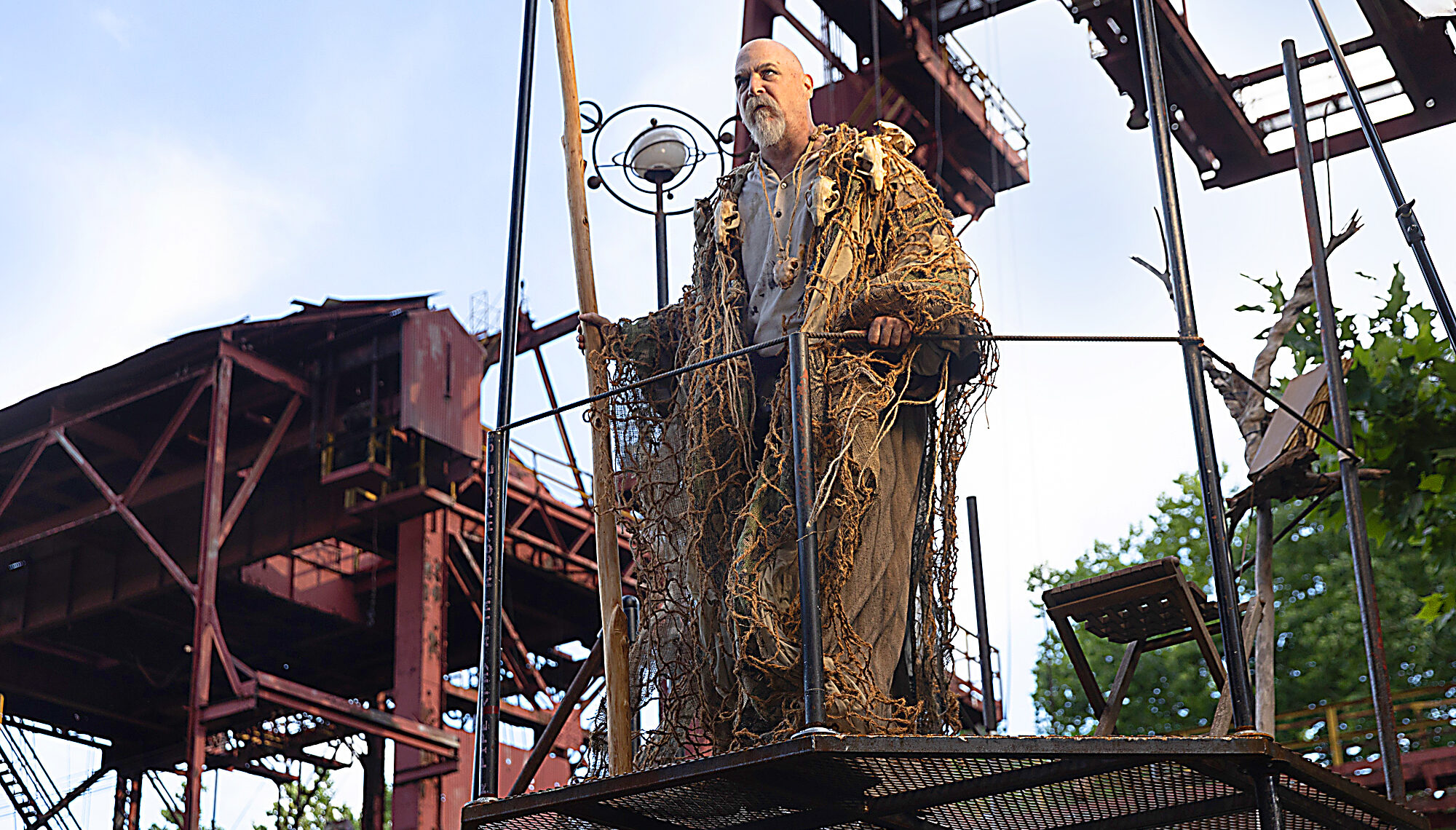
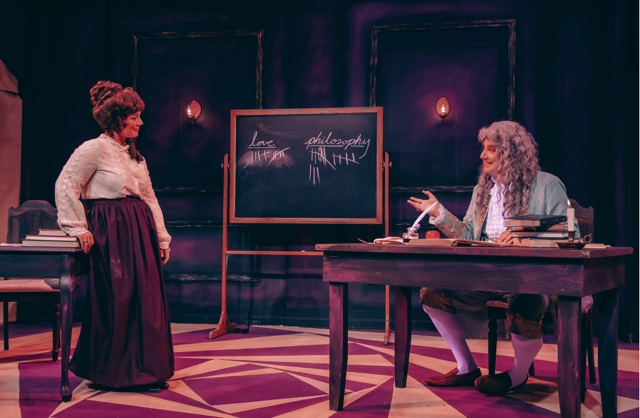
Four students, Sharon (Mal MacKenzie), Naomi (Marissa Lily), Barry (Jack Senske), and Andy (Thomas B. Andrews), struggle with their inner thoughts at Buffalo State University, during the very real and tumultuous times of 1969 and 1970 in Michael Eichler’s “Sixty-nine/ Seventy.”

Sharon, raised by conservative Presbyterian parents, rides the line between doing what’s right and what’s expected of her.

Naomi gets to school on the SEEK (Search for Education, Elevation [originally Enlightenment], and Knowledge) scholarship.

Barry is farther left than the others, protesting everything. He is filled with righteous anger, but finds time to date (no spoilers).

Andy is a fastidious townie who is looked down upon by other university students, but he finds validation for his views and forms friendships with his older peers.

The play is a series of monologues, with only a tiny bit of interaction between the actors.

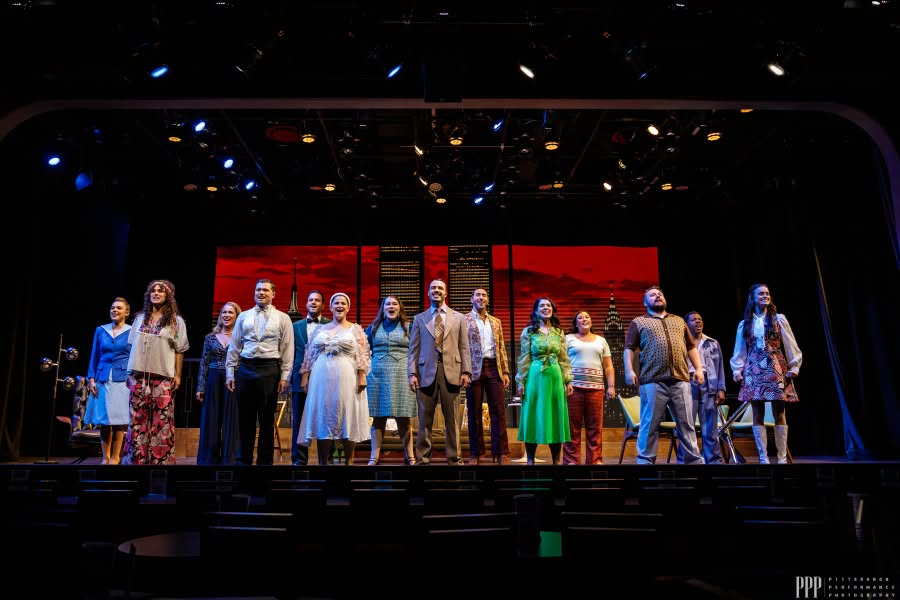
Four additional actors will take on the roles on alternative nights: Barry (Cam Webb), Naomi (Naomi Terrell), Sharon (Sarah Altomari), and Andy (Nick Grosso).

Both casts of “Sixty-nine/Seventy” with the director, associate director, and dramaturg pose for a picture.

Lily is dynamic as the young Black girl trying to find acceptance on campus. She mines every utterance for comedic gold. A well-placed eye roll and an occasional hair flip have the audience in stitches.

Andrews is an avatar of the playwright. His character is filled with anxiety, blundering through college.

MacKenzie plays a controlled character, seething with hidden passions. They are marvelous in the role.

Senske delivers his monologues with verve.

Associate Director and Scenic Designer Rob James created several risers with uncannily accurate props (somehow he procured an ancient payphone).

The play opens with four video monologues, one from each actor, filmed by Adam Morgan. There is additional interstitial material, news clips, posters, etc. News by Dustin Wickett.

Tyler Hieb, lighting designer and lighting manager, uses the lights to direct the audience around the room, shining the spotlight on the actor when they are ready to share their section of the story.

Director Alex Manalo makes terrific use of the space (the lobby of the City Theatre building), moving the actors in a whirlwind of kinetic energy (Manalo is also a gifted choreographer).

Eichler’s play resonates repeatedly with the present as the students protest an unjust war, a bloodthirsty police force, a fraudulent president, and a population of citizens who believe the lies they are told. Sound familiar?

While the play could use a trim, it’s poignant, funny, and potent. The parallels between the “Sixty-nine/ Seventy” and 2026 are eerily relevant.

Note: Proceeds from the show will benefit the University of Pittsburgh’s School of Social Work, MSW COSA (Community, Organization and Social Action) Program.

-MB

“Sixty-nine/ Seventy” runs from May 14 to May 24 in the lobby of the City Theatre, 1300 Bingham St, Pittsburgh, PA 15203. For tickets and additional information, click here


An Unexpected Delight – A review of “Pride and Prejudice”

By Lonnie the Theater Lady
  • The first indication that Kate Hamill’s ridiculously funny adaptation of “Pride and Prejudice” is unlike any other is quickly revealed in the first scene. Several couples, beautifully costumed in 19th-century attire (Declan Hines, designer), are dancing formally to classical music when the music abruptly shifts to rhythmic pop, and their dance steps become sexy, freestyle, and very informal. This scene accurately foreshadows the surprising scenes that follow.
  • The plot, characters, and themes closely mirror the original novel. Original themes, such as the importance of social status and reputation and the view that marriage is for financial security, are woven throughout this adaptation. The satirical treatment of these themes is a shocker at first, but it then leaves the audience happily anticipating the next screwball scene. One wacky scene follows the other.
  • In England, the estate, run by Mr. Bennet (Luke Hancock), can only be passed on to a male heir. He has no sons, which makes it imperative that at least one of his daughters marry a wealthy man so the estate can remain in the family. The amusing, sarcastic, droll delivery of his lines earns him well-deserved laughs and serves as the consummate counter to his wife’s lunacy.
  • Lizzie (Audrey Klein) and Mr. Darcy (Lyle Hieronymus).
  • Mrs. Bennet (Elena Fagione) is excessively obsequious, fussing over and pandering to her daughter’s prospective husbands. She cares only about the men’s social standing and finances. To call her behavior “out of control” would be a gross understatement. She’s a shouting ball of frenetic energy as she theatrically throws herself dramatically onto the sofa–upside down! So hilarious.
  • The rest of the story chronicles the daughters meeting, getting to know, and choosing their suitors.
  • Lyle Hieronymus plays one of the suitors, Mr. Darcy, with a dashing flair. They skillfully convey their character’s pride and, later, their confusion. Hieronymus a likable, engaging Mr. Darcy.
  • Audrey Klein’s Lizzy convincingly embodies a feminist who is ahead of her time and initially rejects the idea of ever marrying. Her genuine portrayal radiates her agonizing uncertainty regarding her feelings for Mr. Darcy. Her every emotion is clearly and naturally telegraphed. Well done.
  • Samantha Hawk dives fully into her role as Mary, the goth (or maybe emo) sister. Her black raccoon makeup circled eyes, and her detached, deadpan expression were wildly comical. If she’s not coughing or scratching herself, she’s startling others by stealthily approaching them from behind. She rightfully garners a boatload of laughs.
  • Carina Ianarelli is well cast as the lovable Jane. She exemplifies the beautiful, romantic, almost-perfect daughter, with sweetness and sincerity.
  • Kieran Craft is an adorable Mr. Bingley—anxious to please with the energy of a frisky, devoted puppy.
  • Asriel Barnabei plays Mr. Collins well. He often struggles to find the precise word to express himself clearly. His theatrics when speaking of Lady Catherine de Bourgh are memorable and only get more   amusing every time he says her name.
  • Everyone in the large cast leans headlong into the over-the-top crazy elements of their characters. This very strong cast has no weak links.
  • Director Nicole Zalak does a great job keeping up the rapid pace with smooth transitions between scenes. Kudos to her for giving her cast the freedom to embrace the ludicrous chaos.
  • Note: There is a moment worth mentioning. The theater is transformed into an expansive, beautiful garden when huge projections adorn the auditorium’s ceiling and walls. It is a lovely effect.
  • If you’re a Jane Austen fan or even if you’re not, you’re bound to be delighted by this madcap, offbeat, outlandish show.  It’s as if  Monty Python and Jane Austen collaborated to write and produce this play!
  • LtTL
  • Runs through May 17 at The Heritage Players. For more information and tickets, click here.

You’re a wonder…Wonder….Man – a review of Cheyenne Jackson

by Michael Buzzelli

The 2025-2026 Trust Cabaret series went out with a bang on Monday, May 11, with Broadway star Cheyenne Jackson.

The show started with an overture of sorts, a repertoire of 70s television theme songs. Songs, Jackson claimed, had molded him.  The ditties included  “Charlie’s Angels,” “Little House on the Prairie,” and, of course, “Wonder Woman.” The Grammy and Emmy-nominated actor really, really, really loved Lynda Carter’s “Wonder Woman.”

Jackson, known for his roles in “Xanadu,” “Damn Yankees,” “Once Upon A Mattress,’ and many more, is currently on Broadway in “Oh, Mary!” The congenial star spent three years on a Fox sitcom, “Call Me Kat.”

Last night, he owned the Cabaret stage (currently dressed for City Theatre’s production of “Hedwig and the Angry Inch”).

Jackson’s cabaret act was not just an act; it was a musical memoir. He shared deeply personal stories with comedic flair, belted out Broadway ballads, and sang an Elvis tune.

Note: Jackson won a Theatre World Award for his portrayal of Elvis in “All Shook Up.”

The Broadway crooner also sang an original song, “OK,” a powerful, personal tale about the moment Jackson came out to his father while watching a high school football game. The song is a poignant and moving tribute to his dad.

Cheyenne Jackson is belting out a number sans mustache.
,., A promotional image of the artist with his mustache.

There were two other tributes; one was a duet with Gavin Creel (featuring a recording of the late actor’s voice), and the other was a cute story about Jackson’s “Call Me Kat” costar, Leslie Jordan, complete with an astonishing imitation of Jordan’s distinct voice (known best for his guest-starring role on “Will & Grace” and his own one-man-show, “Like a Dog on Linoleum”).

In a moment of sheer joy, Jackson sang “That’s Life” while reading his own bad theatre reviews, which revealed rude sentiments from his harshest critics.

Note: Sadly, this review will not make the cut for his next cabaret because it is overly positive.

Jackson ended the show by belting out “I am what I am” from “La Cage.” It was, literally and figuratively, a showstopper, garnering Jackson a standing O.

The Trust Arts Cabaret series will be back next year with Jennifer Simard, CMU grad Christian Borle, Cassie Levy, Lorna Courtney, and the long-awaited Jeremy Jordan (who was bumped from this year to next because of scheduling conflicts).

-MB

Learn more about the Trust Arts Cabaret series by clicking here.


Molto Benne – a review of “Jitney”

By Michael Buzzelli

It’s 1977 in Pittsburgh’s Hill District. The stage is set for another production of August Wilson’s “Jitney,” but this version is unlike any other version you’ve seen. The play is in Italian with English supertitles. Five astonishing actors take on nine parts.

The production is a collaboration between Pittsburgh Playwrights Theatre Company, Sardegna Teatro, and La Piccionaia.

Becker (Miguel Gobbo Diaz) runs a maybe-not-completely-legal cab service in the Hill District, driving customers to the closest Giant Eagle and points beyond. In between rides, he hangs out with his fellow Jitney drivers: Turnbo (Marcos Piacentini), Youngblood (Tomiwa Samson Segun Aina), Doub, and Fielding (Fredrico Lima Roque).

It’s not a cohesive workplace.

The masculine energies clash constantly. The drivers can’t even get through a friendly game of checkers.

Turnbo, who can be an instigator, constantly picks at the volatile Youngblood, a Vietnam vet.  Fielding drinks too much. Youngblood is keeping a big secret from his girlfriend, Rena (Rosanna Sparapano).

After 20 years, Becker’s son, Booster (Piacentini again), is released from jail after serving a sentence for murder.

There is a raw, visceral appeal to the performances. If you take your eyes off the words, you can feel the emotions flowing between the actors.

Youngblood (Tomiwa Samson Segun Aina) Rena (Rosanna Sparapano) reconcile while Turnbo (Marcos Piacentini) enters.

Piacentini’s Turnbo and Booster are vastly different characters; his speech patterns, the timbre of his voice, and his every movement set them apart (not just the slight costume changes).

Five reasons to go: Miguel Gobbo Diaz, Federico Lima Roque, Rosanna
Sparapano, Tomiwa Samson Segun Aina and Marcos Piacentini.

Diaz and Piacentini’s tumultuous relationship is one of the play’s many highlights. They tear at each other mentally and spiritually. It’s powerful theater.

Sparapano is another chameleon in the show, playing Rena and Philmore. They are also very distinct. Sparapano is charismatic on stage, especially when she’s playing Rena (wearing a piled-high, vibrant yellow turban). Sparapano also gives the play a break from the machismo. Youngblood becomes vulnerable around her. It’s a decidedly different side of his personality.

Samson Segun Aina’s Youngblood is brilliant, oozing with masculine charm, a powder keg of raw emotions.

There are some English translation differences. “Put the gun UP,” instead of the more American “Put the gun DOWN.” An electronic sandwich board displays cab fares with the dollar sign after the amount, as is normal with lira or Euro, not “bucks.”

The stage is nearly barren, but director Renzo Carbonera gives us a very Pittsburgh palette. Everything is black and gold. He also fills the transitions between scenes with interstitial film footage from 70s Pittsburgh (sound and video by Filippo Cossu), along with slow-motion choreography that enhances the upcoming content moments before the actors begin their scenes.

It’s more than molte benne, it’s meravigliosa!

-MB

Jitney” runs May 8th – May 10th 2026 at the Carter Woodson Redwood Theater, inside the Madison Arts and Entertainment Center, 3401 Milwaukee Street, Pittsburgh, PA 15219. For more information, click here.

Speak Out! – A Review of “Speak”

by Claire DeMarco

Melinda Sordino (Aylee Gardner) was a typical teenager – a good student, well-liked. When she returns to high school for her first year after summer vacation, she is different.

Melinda is withdrawn and sullen, holding her arms tightly around her chest, wearing drab clothes that are obviously too big for her.  She is ridiculed and ignored by former friends and acquaintances.

It all happened after that summer party, when they were all drinking, dancing, and having fun.  Why did Aylee call the police during the party?  Why did she ruin everyone’s fun?

She wouldn’t (or couldn’t) tell them. When a tragic event affects Melinda not only personally but also how others view her, she recedes into a world without words (speech is limited to a few words at most).

Failing in school, she finds her communication through art. Art teacher Mr. Freeman (Jeff Johnston) pushes and encourages her.

New student Heather (Grace Gouwens) gravitates towards Aylee but soon abandons her for the “cool girls” (the cheerleaders).

The cast of “Speak.”

As her art continues to grow, will Aylee be able to speak out?

Note:  Although “Speak” covers a sensitive and serious subject, there are moments of scattered comic relief.

Gardner is amazing in a mostly non-speaking part.  We see her emotion in her physical stance, how she holds her arms tightly to her chest, keeping her feelings inside.  But mostly the expression in her eyes tells Aylees’s story.

Not mentioned in the review is the character named Melinda 2, played by Jacqueline Germer.  Melinda 2 is Melinda’s inner voice.  Having Melinda 2 allows us to hear and feel what Melinda herself won’t say out loud. Since Melinda doesn’t talk, Melinda 2 is an excellent way of introducing a character who can speak on Melinda’s behalf.

As her inner voice, Germer does a great job.  She pushes Melinda as often as she can to speak out, encourages her to trust people, and finally insists that she tell everyone why she called the police on that summer night.  Germer has great coordinated moves with Melinda.

Gouwens is delightful as the new student in town.  She is bubbly and talkative, and she aims to please as the new girl at school.   We see her change as she gravitates away from Melinda and sticks with the cheerleader clique.  She is manipulative and self-centered, with a sugary-sweet smile.

Anne Marie Sweeney breaks the ice in this serious production with quick, funny interpretations of several of the high school teachers.  Her movements and facial expressions are superb, especially as a totally bored, indifferent teacher.

Evan Vay’s David is the schoolmate trying to befriend Melinda.  His empathy, compassion, and support are palpable.

Balancing two different roles, Justin Mohr plays Melinda’s father and one of her high school teachers.  As her teacher, he has been a tyrant and a quasi-bully.

As an art teacher, Mr. Freeman portrays himself as supportive yet intent on urging Melinda to develop her art.

With a small role and little dialogue, Eamonn McElfresh (Andy) is the reason for Melinda’s withdrawal. He is derisive of Melinda and enjoys intimidating her.  He comes off as a real creep.

Hats off to Milana Casciani (Rachel), Sadie Karashin (Nicole), Abigail Brown (Ivy), and David Wang (Principal).

“Speak” is a well-done, thoughtful production of a serious issue that affects women as well as men.  There are no graphic scenes of sexual violence nor obscene language.  It is a play worth seeing, told in a thoughtful, sensitive way.

Original theme song written by Carla Bianco.

Special notice to Scenic Designer Jules Malice and direction by Dana Hardy Bingham.

“Speak” was adapted for the stage by Tammy Ryan and is based on the novel of the same name by Laurie Halso Anderson.

On opening night, Laurie Halso Anderson talked back with the audience, relaying her own experiences as a rape victim.  It took her many years to be able to SPEAK about her experience.

-CED


“Speak” runs from May 1st to May 10th at the
New Hazlett Theater, 6 Allegheny Square E, Pittsburgh, PA 15212—production, by Prime Stage Theatre. For tickets and additional information, click here


iPhones Need Not Apply – Review of “Dial M for Murder”

by Claire DeMarco

Tony Wendice (Ross Kobelak) married Margot Wendice (Elizabeth Glyptis) and soon after the wedding discovered that she had an affair with Maxine Hadley (Chelsea Davis).  Tony is not demoralized by this knowledge since he only married Margot for her money.  He’s been planning to kill Margot for some time anyway.  Cocky and calculating, he plans what he believes is “the perfect crime”.

Of course, he won’t commit the deed himself but engages an old college acquaintance, Lesgate (Adam Merulli) to do it.  Tony has been following Lesgate and uncovers his questionable past.  Lesgate is weak and Tony is able to blackmail him into killing Margot.

Even though Margot’s affair with Maxine was brief and over, Maxine continues to be part of her life.  She is a successful crime writer and Tony is her publicist.  Maxine is outspoken, articulate and sophisticated. Margot is rather naïve and gullible.  Tony thinks she should be an easy target.

“Dial M for Murder” is an open mystery!  We know Tony’s plans immediately.  The suggested murderer is also identified.  All of Tony’s precise, detailed plotting is in place. He won’t be home when the murder occurs.  Lesgate has explicit instructions on how and when the action should occur.  Margot will be home alone!

Maxine Hadley (Chelsea Davis) has a drink with Margot Wendice (Elizabeth Glyptis) before they head to the theater. Photo Credit: Hawk Photography.

But even the best plans fail!  Somebody is murdered that night, and it isn’t Margot.

Sly Tony is not deterred by the outcome. He subtly and deviously slants incriminating evidence towards Margot, ensuring that key clues and innuendoes suggest that she did not kill him in self- defense. It was murder!

Enter Inspector Hubbard (Tom Protulipac).  He has been a detective for some time, and he is thorough as he attempts to unravel this homicide and who did it.  Hubbard seems to fluctuate between both suspects in his thorough investigation.

Come and see this well-done production of a classic to find out “whodunnit.”

The bad guy was so good!  Kobelak is both witty and delightfully charming depending on who’s the focus of his attention.  He easily changes his delivery to control and blackmail as he taps Lesgate as the potential murderer.

Davis is captivating as Margot’s former lover and friend.  She is a class act – witty, sharp and dynamic with facial expressions and stances that emphasize her outward, confident nature.

As the naïve, gentle Margot, Glyptis has the most dramatic change in character as the quiet wife who segues into a more troubled, emotional, angry person caught in a web of deceit.

Merulli’s tough guy demeanor changes as his corrupt lifestyle and former crimes are exposed by Tony.  His meanness returns as he takes delight in telling Margot that he’s been paid to kill her.

Protulipac plays Inspector Hubbard as both a quirky character, somewhat reminiscent of TV character, Columbo, and an aggressive detective.  Convincing as a bit eccentric, his interrogations are thought provoking.

Shout outs to:

  • Dialect Coach Lisa Ann Goldsmith
  • Scenic Designer Aria Dietrich
  • Director Tal Kroser

“Dial M for Murder” was adapted by Jeffrey Hatcher from the original play written by Frederick Knott.

-CED

“Dial M for Murder” is a production of Little Lake Theatre Company.  Performances run from April 30th to May 17th at Little Lake Theatre, 500 Lakeside Drive, Canonsburg, PA. 15317. For more information, click here.


Andalusia 15222 – A Review of Duende: A Flamenco Journey

By Timothy Ruppert

After a memorably hectic few days during which the 2026 NFL draft attracted thousands of people to the downtown area, Pittsburgh needed to catch its breath—and then Duende: A Flamenco Journey took the city’s breath away.

Presented at the Original Pittsburgh Winery, Duende: A Flamenco Journey inaugurated Flamenco Pittsburgh’s second season with a stellar seventy-five-minutes of artistic virtuosity, an evening of music and movement that left no heart (or toe) unmoved. This season-launching show epitomized what the word duende promises: heat, passion, a dynamic enchantment rendered as the artist engages human emotions without compromise. Naturally, achieving such intensity demands exceptional skill, élan, and vision—and the performers of Duende: A Flamenco Journey possess talents that elicit magic. From the opening Sevillanas to the closing tangos, these artists astonished. Vocalist Alfonso Cid sings from the heart of the world, capturing the depth, breadth, and scope of the feelings that he finds there with a studied spontaneity as eminently fitted to capturing nuance as to articulating universal emotional experiences. Ricardo Marlow’s guitar proved brilliantly companionate with Cid’s haunting voice. Marlow plays beautifully, and his contributions to the success of Duende: A Flamenco Journey are nothing less than inestimable. Together, singer and guitarist achieved so thoroughly lovely a collaboration that one felt somehow in two places at once, as if Penn Avenue, for just past an hour, were also Andalusia—a strange and unforgettable effect.

The show’s dancers, whether solo or in ensemble, may also lay claim to unforgettability. Featured artist Edwin Aparicio performed his solos de baile with the precision of a surgeon who moonlights as a watchmaker. Within the framework of Cid’s vocals and Marlow’s playing, Aparicio’s dancing unremittingly awed the attendees lucky enough to witness the joyful intricacy and intricate joyfulness of this superb performer’s art. Valentina Beltrán created just as electric an atmosphere during her solo appearance later in the show, exhibiting grace and charisma with every flawlessly executed step. And while Aparicio and Beltrán shone like supernovas, Artistic Director Carolina Loyola-Garcia and the ensemble performers, including Abha Bais, Susan Englert, Rachel Klipa, and Athicha Muthitacharoen dazzled as well. Especially praiseworthy was the performance of the baile a palo seco, during which the dancers create rhythms through foot movement, hand clapping, and stick tapping. The immensely gifted artists of Duende: A Flamenco Journey together created an incomparable experience, bringing stories of celebration, anger, lament, and affirmation to life with unique beauty and distinct power.

In an event that lit the flame for the company’s new season, Flamenco Pittsburgh mystified the eye, mesmerized the ear, and revivified the spirit fatigued by days of closed streets, interminable queues, and absurd parking rates (the like of which I doubt Franz Kafka at his best could have imagined). With the spotlight just fading on the draft festivities, the real show took place at the Original Pittsburgh Winery as Flamenco Pittsburgh, a group to watch for in future, presented its exceptional Duende: A Flamenco Journey.

-TR

For further information on Flamenco Pittsburgh and their current season, please visit www.flamencopittsburgh.org or contact susan@flamencopittsburgh.org.


Murder, Mayhem, & Mirth – A Review of The Musical Comedy Murders of 1940

By Timothy Ruppert

When a play features a cowled maniac committing a murder within the first two minutes, one gets the impression quickly that the evening will not tiptoe forward either in rendering suspense or in escalating the stakes. The Stage Door Slasher is loose in Westchester County, and a profound blizzard makes it impossible for the spirited cast of The Musical Comedy Murders of 1940 to escape the killer. Stopping the Slasher becomes even more sinister a task given the labyrinthine layout of the mansion owned by Elsa Von Grossenknueten (Katy Chmura); with a hidden passage behind every bookcase, Frau Grossenknueten’s estate provides as welcome a site for peril as anywhere you may visit in an Agatha Christie work. And the Slasher has plans for a busy night.

A mirthful love letter to old Broadway (with Xs and Os for Golden-Age Hollywood as well), John Bishop’s charmingly parodic play opens South Park Theatre’s 2026 mainstage season with a delightful production that finds every moment of fun in Bishop’s nimble, allusive script. Helga Terre’s incisive direction allows the delightful ensemble to explore the piece’s humor without losing the thread of the mystery at the show’s heart. Along with Terre’s guidance, Chmura’s fight choreography merits praise for enhancing the physical comedy without abandoning a sense of menace entirely, as in the scene when the Slasher pursues the wisecracking Eddie McCuen (Mike Hamilla) with a blade sharp enough to pierce a copy of Melville’s Moby-Dick (literally). As theatre makers portraying theatre makers, the cast performs together smoothly, and their collaborative efforts create a cogent illusion. Led by Hamilla and Madison Bosler as the intrepid Nikki Crandall, the actors are vivacious to a person. A new show from the musical-writing team of Roger Hopewell (Eric Leslie) and Bernice Roth (Misty Challingsworth) occasions the fateful gathering that brings, along with Eddie and Nikki, the long-winded director Ken (Joe Eberle), the saccharine producer Marjorie (Naomi Grodin), and the Irish baritone Patrick (Bob Rak) to within inches of the Slasher’s knife. NYPD officer Michael Kelly (Dewayne Curry), Benoit Blanc-style accent at the ready, is present to investigate, and housemaid Helsa Wenzel (Adrien-Sophia Curry) proves invaluable to keeping the energy high.

The cast of “The Musical Comedy Murders of 1940.” Photo credit: Carina Iannarelli

Like the ensemble, the behind-the-scenes creative team contributes immensely to transporting us through time and space to prewar New York. Lilly Brown’s costuming impresses, as do Matt Lisiak’s sound design and Sabrina Hykes-Davis’s work as technical director, with the lighting package especially noteworthy. Amy Farber deserves congratulations for a wonderfully realized set that evokes the era while functioning flawlessly as the nexus of a palatial home devilishly devised by a World War One spymaster.

One need not be a student of the period, though, to enjoy South Park Theatre’s The Musical Comedy Murders of 1940. This group’s collective alacrity makes the best of individual talents, and the result is a terrifically entertaining visit to the past—beware the Stage Door Slasher!

*Please note that all name spellings were taken from the biographical section of the playbill.

-TR

“The Musical Comedy Murders of 1940” plays through Sunday, May 9, at South Park Theatre, located at the corner of Brownsville Road and Corrigan Drive, South Park Township, PA 15129Visit here or call South Park Theatre at 412-831-8552 for tickets.

The Last One You’d Expect – a review of “A Gentleman’s Guide to Love and Murder”

By Michael Buzzelli

Why are all the D’Ysquiths dying?

Monty D’Ysquith Navarro (Noah Koons), eighth in line for the title of Earl of Highhurst, wants to tell you why the D’Ysquith’s are dying. He’s been murdering them to gain the lordship in “A Gentleman’s Guide to Love and Murder,” emphasis on the murder.

When Miss Shingle (Joyce Miller) tells Monty about his lineage, the near destitute young man decides to work his way up to a higher station by knocking off his royal relatives to capture the castle. To fuel the flames of his murderous mind, his girlfriend, Sibella (Delaney Molnar), a pretty in pink narcissist, rejects him because of the size of his wallet.

Monty meets one D’Ysquith after another (almost all of them played by John Herrmann), and each member meets their end, except for Phoebe (Hannah Garry, one of the few D’Ysquiths NOT played by John Herrmann). Phoebe, who is not in line for the title, agrees to marry Monty.

He goes about kissing and killing cousins. Meanwhile, Sibella, now unsatisfied with her dull husband, begins an affair with Monty.

From left to right: One of the D’Ysquith cousins (John Herrmann) takes an…um…instant liking…to his newly revealed relative, Monty (Noah Koons).

Koons, a newcomer to the OSP (Old Schoolhouse Players), does a fantastic job as the plotting protagonist. With the sheer force of his charm, he keeps the murdering Monty sympathetic. The audience roots for him as he offs his rich relations.

Garry hits some high notes as Phoebe. She can belt with the best of them.

Molnar gets a few solo songs, which she handles with aplomb.

“A Gentleman’s Guide to Love and Murder” is a showcase for Herrmann, who plays a wide range of crazy characters, the D’Ysquiths, including Reverend Lord Ezekial, Asquith Jr., Henry, Lady Hyacinth, Major Lord Bartholomew, Lady Salome, Earl Lord Adalbert, Lord Asquith Sr., and Chauncey.

Herrmann’s Lady Hyacinth is part Harvey Korman’s Mother Marcus (in the Carol Burnett sketch, “As the Stomach Turns), and part Dame Edna.

The orchestra, conducted by Music Director Ruth Ann Fox, does an amazing job with the melodies, synching marvelously with the singers. Shout out to Scot Harvey on drums, who also provided a drum roll during the 50/50 raffle at intermission (the raffles are an added incentive to drive out to Hickory, PA).

Choreographer Chelsea Contino Eicher creates some fun movements for the cast. During the dance scenes, keep your eye on Jeffrey LaPorte, his small gestures are precise, and he mines each movement for comedy. He embraces all of the wackiness of the show with verve.

There is a plethora of costume changes in “A Gentleman’s Guide to Love and Murder,” especially for Herrmann. Cindy Berg and Briana Gamret Ryan decorate the cast with an amazing array of costumes. Berg pulled double duty as costume and set designer, creating castles with cardboard and plywood. It’s an impressive feat.

Director Michael Van Newkirk manages to garner some great performances out of his cast. OSP is becoming a proving ground for community theater, a great place to get a start on local stages.

“A Gentleman’s Guide to Love and Murder” is a fun distraction from the woes of the world. It has a pretty happy ending, unless you’re a D’Ysquith.

-MB

“A Gentleman’s Guide to Love and Murder” runs to May 3 at the Bud Allison Memorial Auditorium at Mount Pleasant Community Center, 20 Wabash Ave, Hickory, PA 15340. For tickets or additional information, click here

Quite a Captivating Capsized Crew—A Review of Disaster!

By: Joseph Szalinski

Tragedy is perfect fodder for drama and comedy, depending on what you find funny. As the saying goes, humor is in the eye of the hurricane. In an era when misfortune is earnestly exploited for entertainment by podcasts and the like, why not yuck it up when luck sucks? Never forget that such an approach will garner a fair share of challengers who will explode in fits of rage, shaking like Californian fault lines, though. However, if you’re someone who gets their jollies from acts of God, you’ll enjoy Butler Musical Theatre Guild’s production of Disaster!, directed by Patrick Erkman, now running at the William A. Lehnerd Performance Hall & Production Center in Butler, PA.

Created and conceived by Seth Rudetsky and Jack Plotnick, Disaster follows a colorful cast of characters aboard a floating casino that’s caught in the crossfire of a couple of calamities. The stranded lot onboard must band together to survive, suffering several setbacks, singing all the while. There’s romance, suspense, and a plethora of clever references. Irwin Allen would’ve loved it.

Much like the Cocoanut Grove, the cast is on fire! Phillip Ball is phenomenal as Professor Ted Scheider, the brainiac whose warnings go unheeded. What else are scientists for? Ball is not only equipped with great delivery but also impressive physicality. His fancy footwork on the balance beam is commendable. Contrasting Scheider’s morality is the sleazy casino owner, Tony Delvecchio, who oozes through scenes in his greasy glory, portrayed tremendously by Jerry Johnston.

Caught in the middle is the delightful Heather Check as Jackie Noelle, a lonely lounge singer and single mother who only wants what’s best for her family. And her love life. Liliana Morgan fantastically flip-flops between siblings Ben and Lisa. Despite the demanding task of playing two characters, Morgan does so with ease. The scene where the siblings sing a song with their mother is side-splitting. Katy Wayne and Bill Fisher delight as the dynamic duo of Shirly and Maury, respectively. They can perfectly balance sincerity and comedy, eliciting empathy one moment and laughter the next. Shirley is even plagued by an unusual condition, which Wayne leans into with gusto. Adding to the madcap campiness are a slew of other characters. Marianne Wilson, an ambitious reporter, is brilliantly brought to life by Sarah Dailey. Cory Pfahl goes all in as Marianne Wilson’s former beau, Chad, the woebegone waiter who sings his heart out. Liam Kilbourn terrifically tags along as Chad’s coworker and friend, Scott. Sister Mary Downy, a guitar-playing nun with a penchant for slot machines, is splendidly depicted by Tammy Erkman. Shelly Spataro is a trip as Levora Verona, dog-toting disco star who’s lost her shine. Rounding out the cast as Casino Guest and Staff are Sue Ann Aiken, Liam Kilbourn, Jim Klein, Rebekah Klein, Denise Johnston, Barb “BJ” Osche, RoAnn Romeo, and Liza Wick. Performances are heightened by the choreography of Patrick Erkman and Jade Klamer.

Cast rehearsal photo: From left to right: Tammy Erkman, Katy Wayne and Bill Fisher.This show wouldn’t be what it is without its soundtrack. Assisting the cast’s vocal stylings is an array of instrumentalists. Jessica Sanzotti and Ken Smith lead the band as music directors and keyboardists. The remainder of the outfit is comprised of bassist Marina Smith, drummer Karen O’Donnell, guitarist Joel DeMary, trombonist Jake Smith, and trumpeter Delaney Hindman. They are a ceaseless force sonically supplementing the onstage shenanigans.

Technical elements of this production are on point, with Barb “BJ” Osche overseeing things as technical director. Patrick Erkman. Erkman and Osche have designed a spectacular set, enlisting Tammy Erkman, David Halin, Jerry Johnston, Chip Marra, Vince Sanzotti, Eric Snyder, and Katy and Rachel Wayne to help with set construction and painting. Complementing the set are all the props, courtesy of Terri Cammisa and Gloria Lewandrowski. While they are employed ingeniously throughout the entirety of the show, there’s a scene near the beginning of the second act that is really gut-busting.

Costumes by Patrick Erkman and Lois Eury make things even groovier, with Tony’s security guard, Jake, having an exceptional get-up. Illuminating the stage is light operator Eric Snyder, who designed the lighting alongside Glen Bittner and Patrick Erkman. Rick McClean and Cole Trieste lend their talents as spotlight operators. Aside from his duties as a performer, Philip Ball managed sound design, peppered with sound effects masterminded by Mallory Lohnes and executed by sound operator Carl Floyd. Of course, all of this couldn’t operate as smoothly without the assistance of the running crew, comprised of Tracy Boyle, Bethany Kennedy, Barb “BJ” Osche, Rachel Rastall, and Lee Sparks.

William A. Lehnerd Performance Hall & Production Center is quite a quaint venue to see a play. Even though physical space is limited throughout the building, it doesn’t quell any decisions to stage expansive and ambitious events. Situated in the beautifully wooded Butler Memorial Park, it is a space worth visiting, even if parking can be a bit tricky.

Butler MTG is a wonderful company. While they have a monopoly on musicals in the area, aside from the occasional Hobnob production, they offer a selection of shows that can stand up to any staged elsewhere in Pittsburgh. Always a joy to attend, their shows demonstrate meticulous attention to detail that can only be executed by those totally in love with what they do. Featuring female-forward fare, the remainder of their season is set to be as entertaining as years past.

-JS

Disaster! continues its run April 24th, and 25th at the William A. Lehnerd Performance Hall & Production Center in Butler, PA.

css.php