
Hooked on Phonics – a review of “My Fair Lady”

by Michael Buzzelli

Down and out Eliza Doolittle (Anette Barrios-Torres) becomes a guinea pig in an experiment concocted by Professor Henry Higgins (Jonathan Grunert) and his colleague, Colonel Hugh Pickering (John Adkison) in the Lerner and Loewe classic musical, “My Fair Lady.”

The show is based on George Bernard Shaw’s “Pygmalion,” which is based on a Greek myth of a Cypriot sculptor who carves a beautiful woman out of ivory, and falls in love with his own creation.

Higgins believes he can turn a sow’s ear into a silk purse with the power of proper pronunciation (say that three times fast). He invites Eliza into his home, where he begins to teach her phonetics. She spends the majority of her days reading and enunciating her vowels.

His experiment is a success! But, like Pygmalion, Higgins falls in love with his creation.

Eliza, however, is now more uncertain about her future than ever, finding no place to fit in, and runs off with Freddy Eynsford-Hill (Nathan Haltiwanger), a young man who has been mooning after Eliza since he first met her.

Eliza confides in Henry’s mother (Becky Saunders) in her atrium. When Henry goes to tell his mom that Eliza has fled, he finds her there and the two have an epic confrontation. It’s one of the many will-they-or-won’t-they moments that keeps you on the edge of your seat (skip the liquids, this show is three-hours long).

Side note: There’s a subplot with Eliza’s father, Alfred (Michael Hagarty) and his cronies, Harry (Nicholas Carroll) and Jamie (Ryan Farham)  that has very little to do with the main story, but has some of the best songs. “With a Little Bit of Luck” and “Get me to the Church on time” are completely superfluous to the plot, but are absolute highlights of the show.
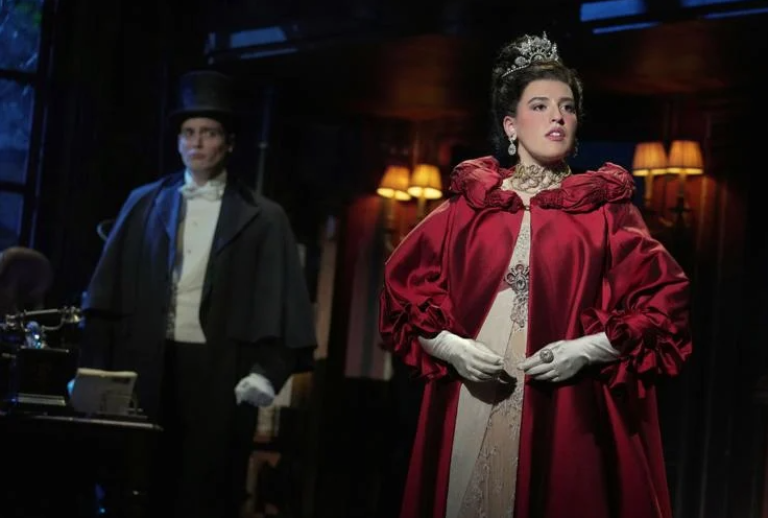
Henry Higgins (Jonathan Grunert) gets ready to take Eliza Doolittle (Anette Barris-Torres) to the Embassy Ball.
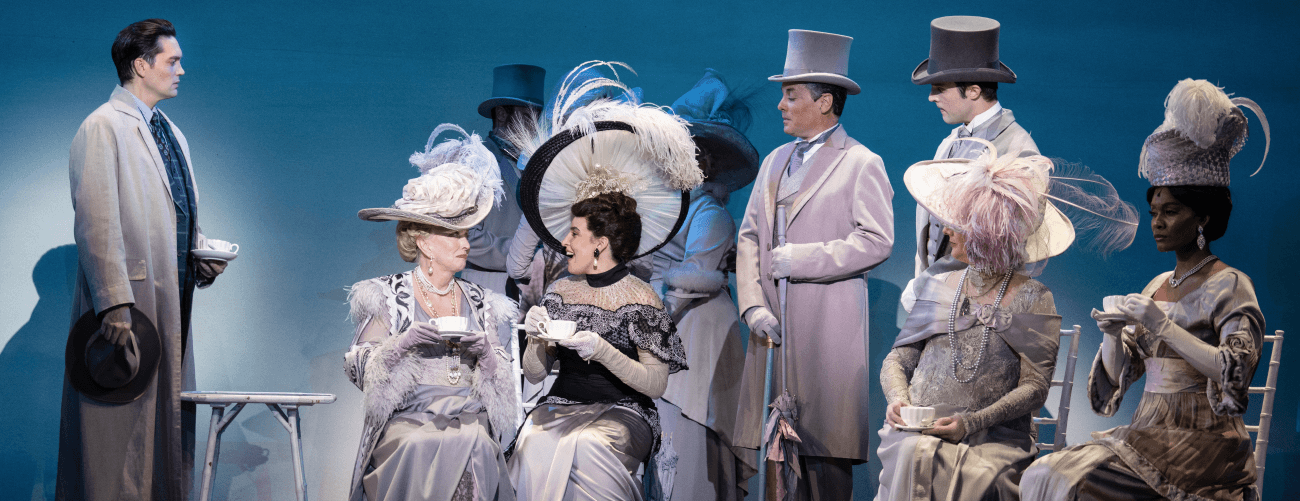
Higgins takes Doolittle out for a spin in her first event with high society, a horse race.

Barrios-Torres is an amazing Eliza. She has an incredible vocal instrument, and she is lovely…er…”loverly.”

Adkison’s Pickering is a total joy. He plays the man with an effete allure. Its hard to nail nuance when you’re playing to the back row, but, somehow, Adkison manages it.

Hegarty is marvelous as the drunken lout of a father. He gets to perform two of best numbers in the show. “Get me to the Church on time” is a glorious tribute to excess. It’s a showstopper.

Haltiwanger’s “On the Street Where You Live” is a masterpiece.  Haltiwanger is a delightful Freddy. He is handsome, poised and a masterful singer. Let’s hope the character falls in love again.

Higgins’s mother is the kindest of high society matriarchs. The antitheses of the Dowager Countess of Grantham, Lady Violet Crawley. Saunders plays her to perfection.

Additional show highlights include Christopher Isolano as the wickedly funny Professor Zoltan Karpathy, and Maeghin Mueller’s Mrs. Pearce.

Let’s face it, Professor Henry Higgins is a disagreeable fellow, Frasier and Niles Crane (“Frasier”),  Charles Emerson Winchester, III (“M*A*S*H*”) with a touch of Oscar the Grouch (“Sesame Street”) rolled into one. He treats Eliza like his prize pig at the county fair.  Grunert plays him comically broad, but seems to lack the charm he needs to win her back. The writing is partially to blame here. The chauvinism doesn’t age well. In every other way, there is a beautiful timelessness to the production.

Fantastic sets by Michael Yeargan matched with flawless costumes by Catherine Zuber.

Special shout out to sound designers Marc Salzberg and Beth Lake. On opening night there wasn’t one glitch or popped P.  The sound was crisp and clear and it sounded like we were in the Higgins household.

Valentine’s Day is fast approaching. Fall in love all over again at “My Fair Lady.”

-MB

“My Fair Lady” runs from January 30th to February 4th at the Benedum Center, 237 Seventh Street, between Penn and Liberty, downtown Pittsburgh, PA 15222. For more information, click here. 

A Strange Maze to Navigate – A Review of Crave

By: Joseph Szalinski

As much as theatre echoes the tried and true, as rehearsing is paramount in mounting productions, it can also be an art form full of experimentation. And I don’t just mean improv. Works that challenge not only the mores of society, but also the art form itself, are equally powerful and important, in addition to being difficult to helm. This makes ELSEWHERE Theatre Company’s rendition of the late Sarah Kane’s play, Crave, now running at Carnegie Stage, much more remarkable.

Katy Chmura directs this particular production, bringing the infamous show to life in tandem with a terrific cast and crew. Kane’s scripts have always been controversial, usually on account of violence, but her last two works, of which Crave is one, drew attention for the subject matter while also because of their unorthodoxy. There’s no story, per se, aside from some brief narratives that are shared randomly. Even the dialogue is without much, if any, context, leaving the delivery and intonation almost totally up to the actors and Chmura. Despite traditional theatre’s ability of being able to demonstrate a director’s abilities more clearly, abstract art is still reflective of their talent and style, and this production bears Chmura’s influence.

In keeping with the unusual approaches this play warrants, there are two casts for this show, which makes for an interesting dynamic. Unfortunately, this review only covers the first cast used, which consists of A (Joe York), B (Samantha Hawk), C (Jamie Rafacz), and M (Kauleen Cloutier), characters who are then portrayed by Amanda Weber, Marisa Rose Postava, Abbie Siecinski, and Harper York, respectively. It takes a special kind of thespian to tackle a role like these. Memorizing one’s own lines in the correct order would be hard enough, let alone having to remember them in relation to the equally random lines from one’s castmates, requires a great deal of skill, and deserves commendation, especially considering the reprehensible character(s) one plays, or at least characters who discuss a multitude of reprehensible things. It’s no small feat. Another strength of the cast is their physicality, whether that’s their coordination as a group, moving in dizzying trajectories or contorting their bodies into odd postures to better elicit a response from a line or expression.

Even for being a production that relies heavily on its cast and director, the crew as just as invaluable, as they are with everything else. The stage is simple: a perimeter of lights fencing off stations of varying heights for the performers to stand on and move around. While an uncomplicated setting can allow greater accessibly, which would attract more interest in staging said show, a more basic arrangement can serve as a gauge of the technical brilliance of a company too. Working within constrictions and embracing the minimalistic elements of this show are crucial in delivering a production that stands out. Lighting and sound were also done sparingly and tastefully, elevating the performance(s). The technical aspects of the production really helped bring audiences into the world being realized onstage.

Weird theatre is important, not just for theatre itself, but also for the artistic communities and artists in the area weird theatre is done in. It’s a great change-up from an oversaturation of overdone staples, musical or otherwise. Discussions are spurred; uncomfortable ideas are mulled over; we get to exist in uncommon emotional states. Theatre is more than just escapist entertainment, it’s an experience, a way to confront the awful parts of life, and Crave most definitely echoes this.

-JS

For more information, click here.


The High School Drama Award Winners are announced


By Michael Buzzelli

On January 29, the Prime Stage Theatre company filled the New Hazlett Theater with kids competing for the High School Drama Awards.

Monteze Freeland, who credited his start in theater to Prime Stage, hosted the event. Local luminaries, who handed out awards, included Scenic Designer, Tony Ferrier; Saturday Light Brigade’s Larry Berger; Playwright Gab Cody; Playwright and actor Matt Henderson; Theatrical Power Couple, Daina Griffith and Dan Krell; Post-Gazette’s Performer of the Year, Wali Jamal; and Prime Stage co-founder Wayne Brinda, among others.

Several schools competed for the Best Drama Award. They were Avonworth High School, Carlynton High School, Our Lady of the Sacred Heart High School, North Allegheny Intermediate High School, Thomas Jefferson High School, Shady Side Academy Senior School, Pine-Richland High School, Deer Lakes High School, Quaker Valley High School, Penn Hills High School, Hampton High School, and Fox Chapel High School.

Throughout the ceremony, several high school’s performed scenes from their nominated shows.

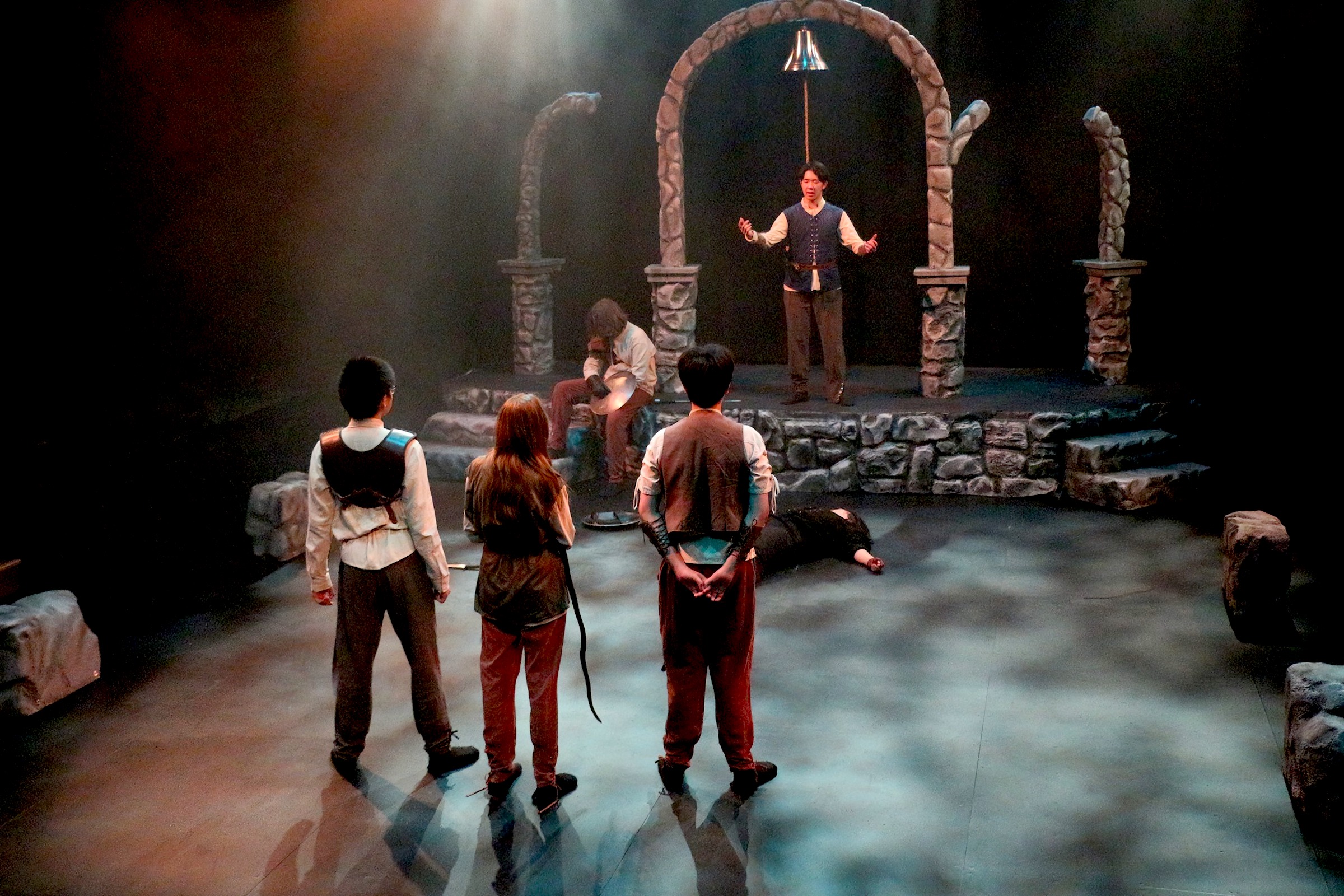
A scene from Shady Side Academy Senior School’s production of “Macbeth.”


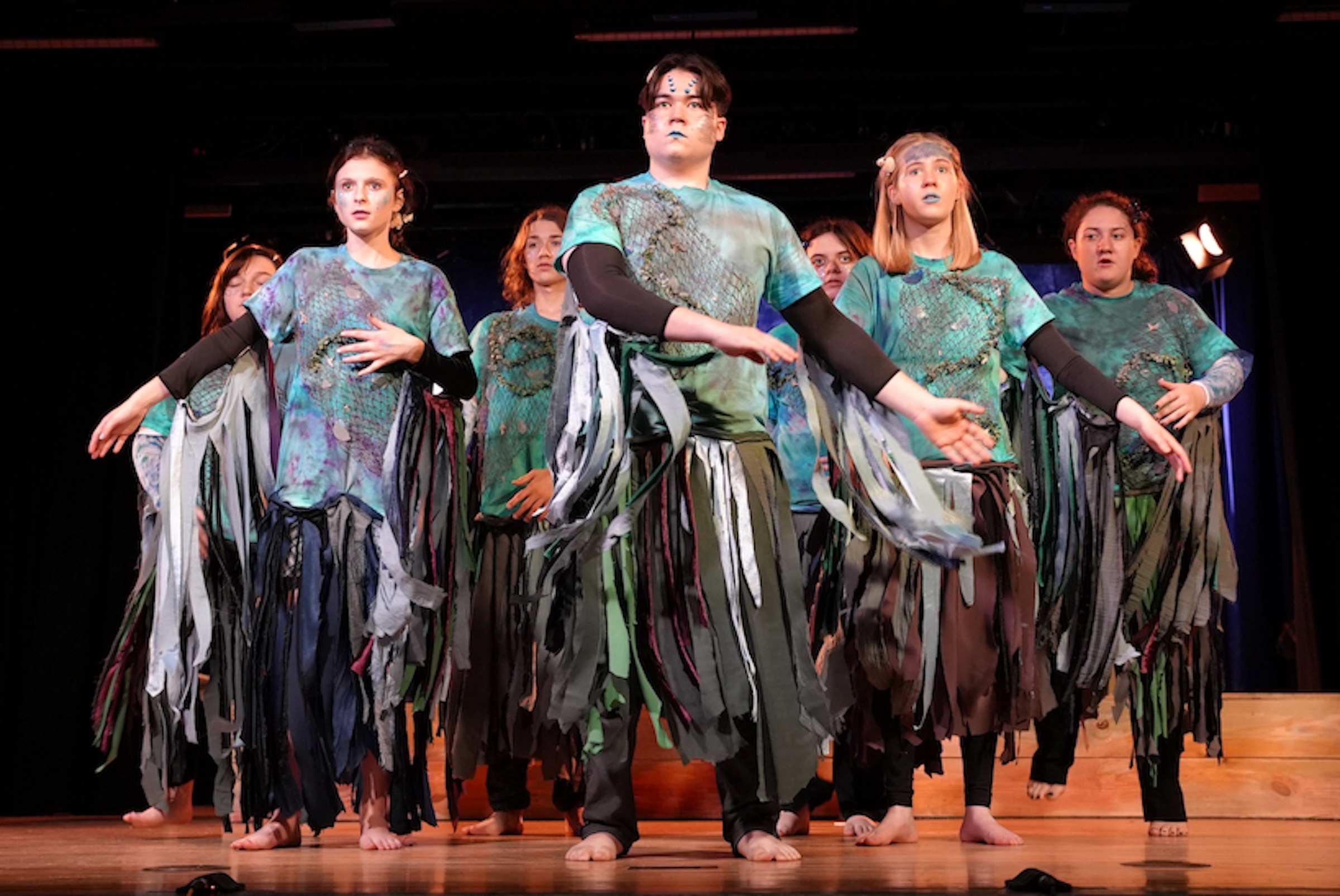
A scene from Our Lady of the Sacred Heart’s production of “We Are the Sea.”

The winners are:

Best Overall Production: Shady Side Academy Senior School for Macbeth in “Macbeth.”

Best Actor: Lincoln Marshal from Fox Chapel Area High School for Sheridan Whiteside in “The Man Who Came to Dinner.”

Best Actress: Jay Zhu from Shady Side Academy Senior School for Macbeth in  “Macbeth.”

Best Supporting Actor: Gavin Windows from Deer Lakes High School for Brett in “Winter Break.”

Best Supporting Actress: Elise Schaeffer from Deer Lakes High School for A.J. in “Winter Break.”

Best Student Director: Kiley Vande Geest & Andrew Kaehly for Hampton High School’s production of “Puffs.”

Best Student Stage Manager: Alec Mahathey  & Madeline Potts for Thomas Jefferson High School’s production of “Trap.”

Best Student Scenic Design and/or Fabrication: Jacob Baker, Margaret Sager & Lily Stalewski for Hampton High School’s production of “Puffs.”

Best Student Lighting Design and/or operation: Brandy Bandik for Thomas Jefferson High School’s production of “Trap.” Bandik also took the award for Best Student Use of Creative Special Effects.

Best Student Makeup Design and/or Application: Marena Miller for Our Lady of the Sacred Heart’s production of “We are the Sea.”

Best Student Sound Design and/or Operation: Laren Mutmanksy & Jeremy Thompson for Thomas Jefferson High School’s production of “Trap.”

Best Student Backstage Run Crew: Alexander Bi, Sam Davidheiser& Ada Lin for Shady Side Academy’s “Macbeth.”

Best Student Poster Design or Fabrication: Kaylee Dunham for Fox Chapel High School’s production of “The Man Who Came to Dinner.”


For more information about the Drama Awards, please click here.

Barbara Luderowski: She’s Better Known For the Things She Did At the Mattress Factory

By Gina McKlveen

Last Friday, the Mattress Factory opened up its doors to the public to celebrate the birthday of its founder, Barbara Luderowski, who passed away in 2018 at her residence on the top floor of the six-story building she turned into North Side’s premier contemporary art museum.

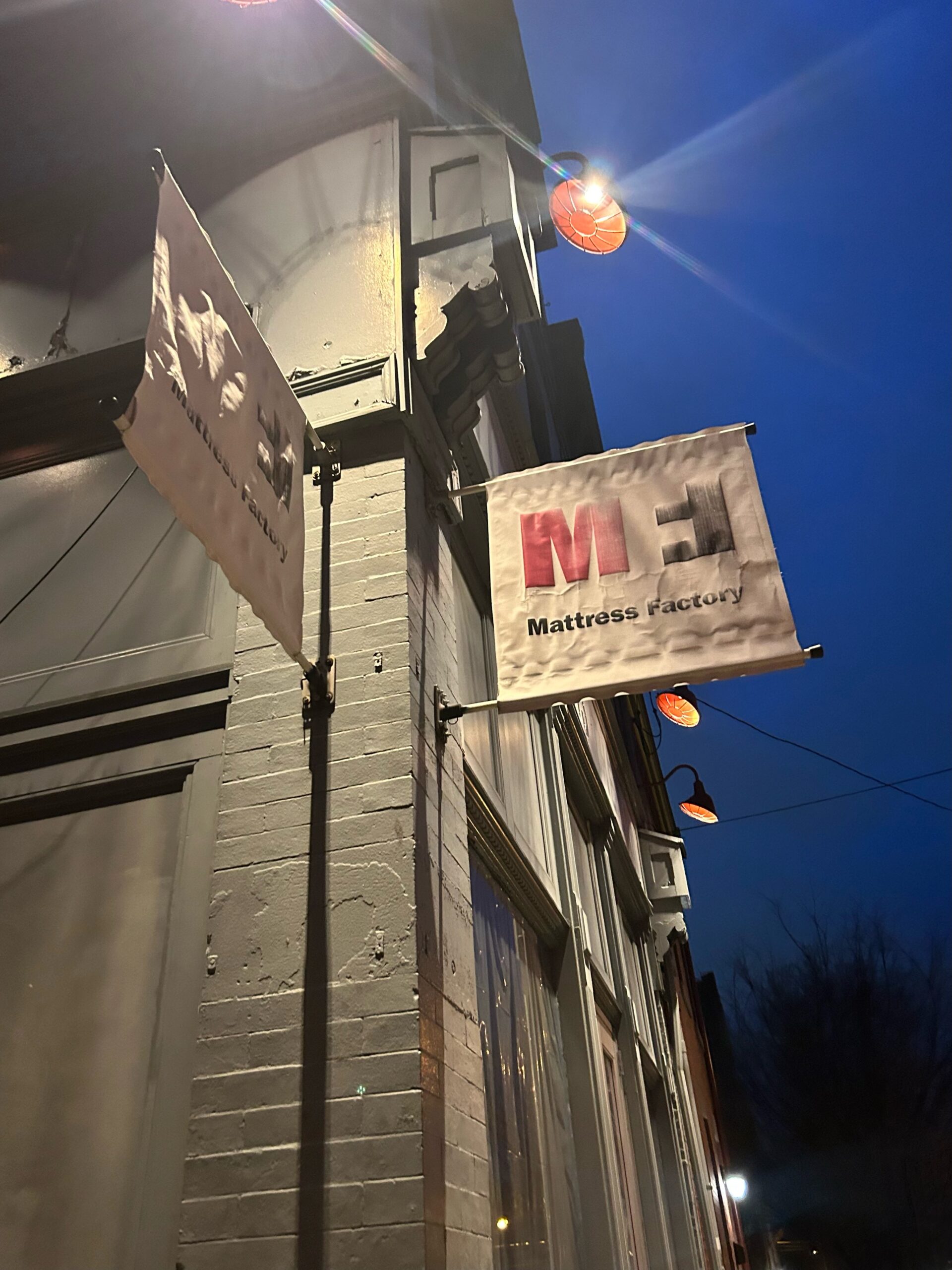
The Mattress Factory nestled in the Mexican War Streets on Pittsburgh’s North Side.

Luderowski was introduced to Pittsburgh first as a student at Carnegie’s Institute of Technology, now Carnegie Mellon University, though she completed her formal education at Cranbrook Academy of Art in Michigan, where she remained until the early 1970s. Working primarily as an architect and designer in those days, Luderowski returned to Pittsburgh to pitch a public works project, but ended up catching an interest in the city’s North Side community. Insistent on contributing to this community and effectuating its culture, Luderowski packed up her Michigan life and headed east, eventually landing the old Stearns & Foster Mattress Firm building as her joint residence and studio space.

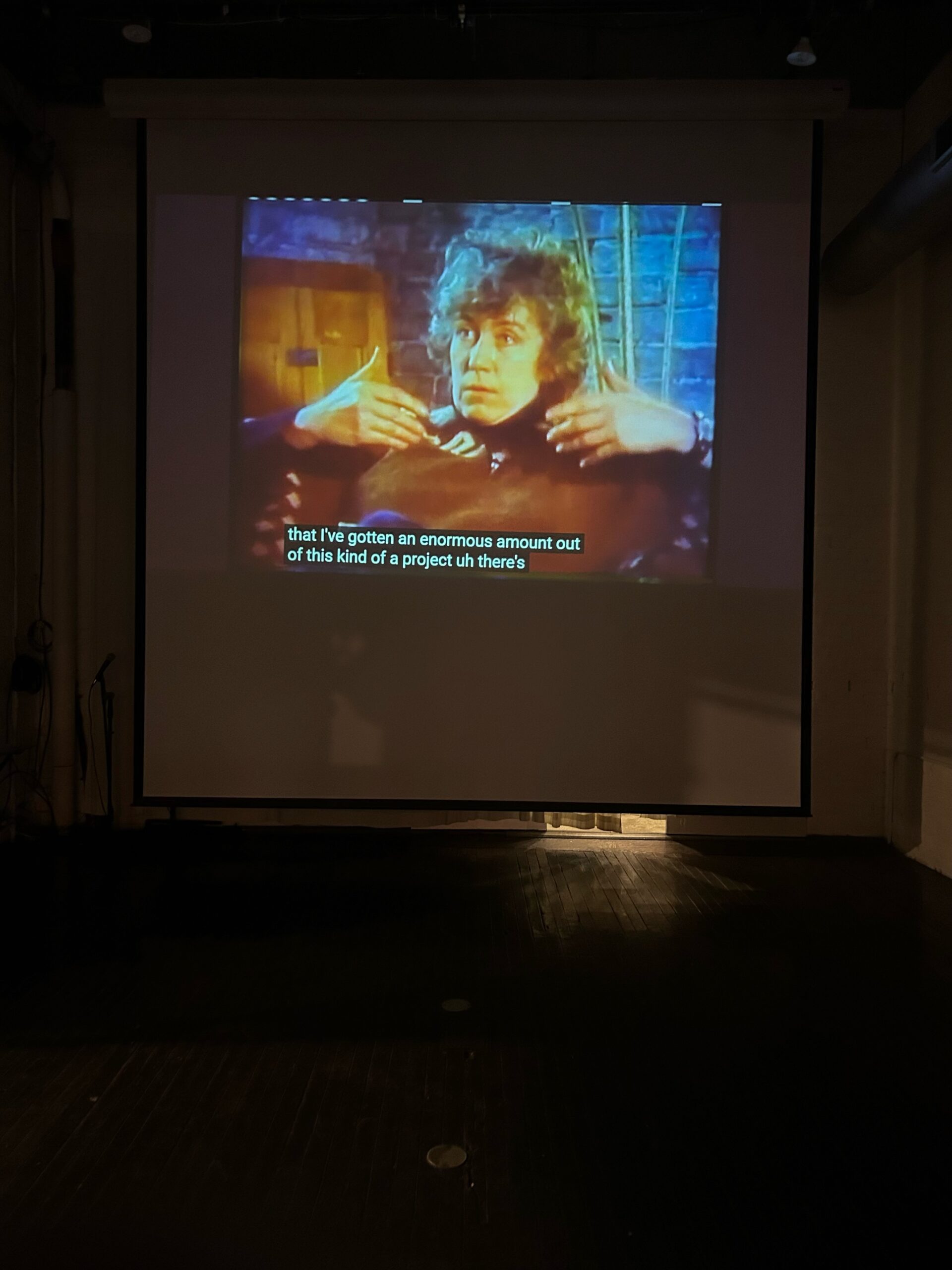
Barbara Luderowski talks about the Mattress Factory.

In her lifetime, Luderowski frequently pushed back on the idea of being a visionary; however, she undoubtedly had a clear vision for the Mattress Factory from conception to present day. As a special exhibit for the founder’s birthday, the Mattress Factory replayed a video of Luderowski explaining the museum’s significance to Pittsburgh’s North Side. In the founder’s own words, she described her goal as making “a building that housed creative people of different disciplines” and though many nay-sayers suggested, “Pittsburgh is a rotten city…not for creatives,” she emphasized that “creative people are drawn here based on the energy put out” by the museum.

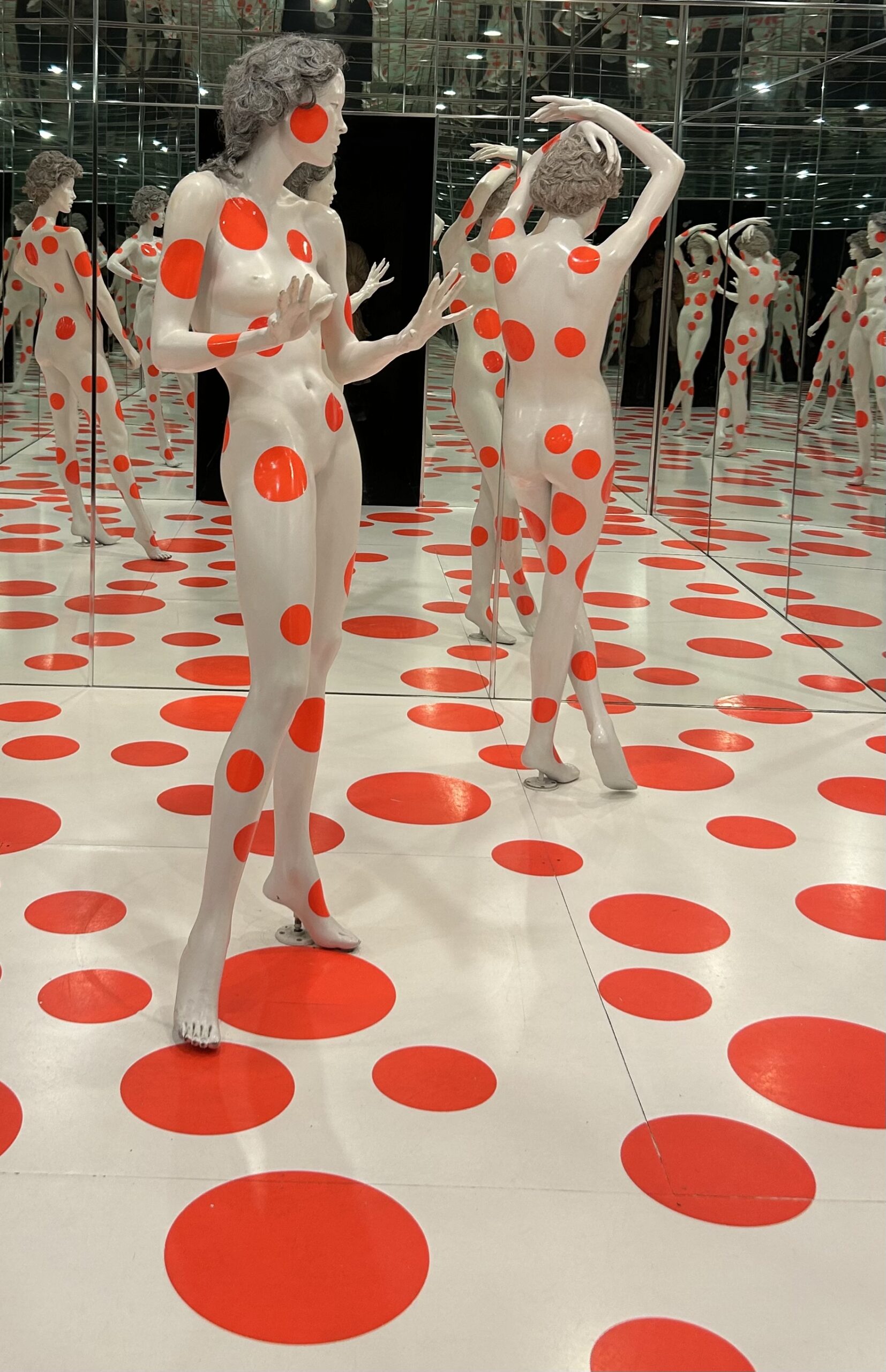
The Mattress Factory’s most famous exhibit, Yayoi Kusama’s 1996 mirrored room “Repetitive Vision.”

To this day, the Mattress Factory has done just that, touting over 55,000 annual visitors, generating close to one million in earned income, and exhibiting upwards of 500 artists across various disciplines, nationalities, and backgrounds since its founding just shy of 40 years ago. Two of the museum’s most notable exhibiting artists Yayoi Kusama and James Turrell, each have iconic works displayed on the museum’s third and second floors respectively, and are part of the permanent collection. The energy Luderowski first envisioned for this space filled up an abandoned corporate relic and transformed it into an artistic playground that surpassed the interior walls and has extended to annex buildings scattered about the North Side neighborhood, translating this small community into a large community within an even bigger community.

“Catso, Red,” by James Turrell.

Luderowski’s own work as an artist was similarly inspired by the city of Pittsburgh. She once compared her work as a sculptor to the typography of Pittsburgh, referencing how the city “interlocks little pieces that fit together and go on hills” almost like a puzzle. More than likely that same sentiment developed her interlocutory or interdisciplinary approach to the Mattress Factory, which is much less like a formal art gallery with rigid rules and more so a place where visitors are encouraged to break from convention and metaphorically jump on the mattress.

-GM

Not to be confused with The Original Mattress Factory, the Mattress Factory, art museum, is located at 509 Jacksonia Street in Pittsburgh’s North Side, and is open Thursday through Sunday from 11:00 AM to 6:00 PM and from 11:00 AM to 8:00 PM on every Wednesday.

This Time She Said No – a Review of “Rosa Parks and the Montgomery Bus Boycott!”

]

By Claire DeMarco

It was a day like any other as Rosa Parks (Chelsea Davis) waited for the bus ride home after working all day.  She knew the routine and the rules on how she had to enter the bus.  Access required from the side door, not the front door.  Proceed to the back of the bus for the section titled “For Colored Only.” As an additional affront if there were more whites than available seats in the front of the bus, blacks in the back of the bus had to vacate their seats.

Rosa had seen this scenario many times before and had been a victim of it previously.  On this ordinary bus ride home, a white passenger required a seat.  Bus driver (Ken Lutz) ordered Rosa and three other passengers to vacate their seats.  Three people obliged.

But on December 1, 1955 in Montgomery, Alabama Rosa Parks said no!

Rosa was arrested.  Attorney Edgar Nixon (Nick Page) defended her and through his vision the Montgomery Bus Boycott started a few days after her arrest.  The boycott affected thousands of blacks as busing in Montgomery was their main means of transportation and many walked to work instead of riding the buses.

Many other civil rights activists and organizations also existed at this time and Rosa herself had been involved in civil rights initiatives prior to the boycott.  It was Edgar Nixon and a little-known minister (at the time) named Martin Luther King Jr. (Jake Moon) who pulled their resources together to coalesce around the boycott, elevating it and the hideous rules associated with segregation to national attention. Virginia Durr (Rebecca L. Godlove), a white anti-segregationist and Rosa acquaintance provided additional support.

The non-violent boycott went on for over a year and ended in a Supreme Court ruling that segregation on the Montgomery bus system was unconstitutional.

Rosa Parks’ story didn’t end with the Montgomery Bus Boycott.  Her activism continued throughout her life.

Rosa Parks (Chelsea Davis) with the real Rosa Parks in the background.

Davis shows the many sides of Rosa Parks. She is poised but determined. Always with a hat, gloves and the ever-present purse, Davis captures the dignity, grace and subtle strength of Rosa Parks.

Godlove is the empathetic Virginia Durr, a white southern woman who fully supports the anti-segregation movement.  She plays Durr as an outspoken, charismatic character, unconcerned what her southern neighbors think of her.

Dallas provides comedy relief as the aged Sister Rogers.  Leaning on her cane, shawl over her shoulders and eyes squinting to see a few inches in front of her, all her feelings erupt in a sassy and funny explosion of pent-up anger.

Moon does a great job as Martin Luther King Jr., emulating his cadence and speech mannerisms.

As part of the ensemble Lutz plays a myriad of roles and easily transitions from the segregationist bus driver to the supportive Pastor who encourages and lends voice to the Montgomery Bus Boycott.

Page is strong as Nixon, the civil rights activist whose influence helped in the implementation of the Montgomery Bus Boycott.

Ensemble actor Ameriah Fisher is effective as the youthful Claudette Colvin, member of the boycott effort.  She is also easily convincing as a mature Coretta Scott King.

Note:  There was a religious component to the Montgomery Bus Boycott and interspersed among the production are hymns and spirituals like “Amazing Grace” and “This Little Light of Mine” sung by the actors.

The set consists of several lined-up kitchen chairs specific to the time period.  The chairs are used for the bus scene and as the area where many meetings occur.   A round table front of stage serves as another center of activity during the boycott.

This is a wonderful production of “Rosa Parks and the Montgomery Bus Boycott”.  There is so much more to learn about Rosa Parks after her involvement in the boycott.  She is truly an American hero and icon.

Excellent music selection and direction by Music Director Toni Schlemmer.

Kudos to Director Linda Haston.  When asked why Rosa’s story is so important, Haston replied that “People who think they know the story, don’t!  It’s more than just the bus.”

-CED

“Rosa Parks and the Montgomery Bus Boycott” runs from January 19 – 28 at the New Hazlett Center for Performing Arts, 6 Allegheny Square, Pittsburgh, PA 15212.  For more information click here.

He brought me flahrs- a review of “South Side Stories”

By Michael Buzzelli

Tami Dixon portrays a plethora of characters in “South Side Stories Revisited.” Whether you’re in the Flats or on the Slopes, or just an occasional South Sider, Dixon has recognizable characters spinning yarns about the colorful Pittsburgh neighborhood.

If you’ve seen “South Side Stories,” a decade (gulp!) ago, you should know that “South Side Stories Revisited” is a much different collection of stories than the original, much like the difference between a pierogi stuffed with sauerkraut, or a pierogi filled with potato, jalapeno and cheese.

P.S. There was an editorial decision made to use the more conventional Mrs. T’s spelling of pierogi and not the frequently seen on South Side church sign spelling, “pyrohi/pyrohy.”

The playwright/actor goes back out into the streets and speaks with members of the community. Some praise the neighborhood, others malign it.

Dixon makes the point that the South Side is not the same place it was ten years ago. It is not. In the last ten years, poisonous forces rolled into the neighborhood like an evil fog, Trump, COVID, gun violence. A new America arose after 45, and Dixon doesn’t shy away from making a political stand.

The playwright dives deep into the recent conflicts and controversy surrounding the beloved ‘hood. The added conflict and darkness add more depth and meaning to the subject.

Speaking of controversy, Dixon sings an ode to the mysterious and spooky South Side Burger King, the seediest of seedy (and we’re not talking sesame seed buns). It’s a veritable flame-broiled fever dream of a song, but it’s hilarious (because it’s true).

Tami Dixon hangs out in the iconic Pittsburgh neighborhood, the South Side.
Tami Dixon on stage in “South Side Stories.”

Dixon has always been a remarkable talent, but she is at an entirely new level here.  Her character work is brilliant, turning from one accent to another, creating dialogue between different and disparate characters.

It should be noted that she worked with Sheila McKenna as her dialect coach. Yinz should know that both should now be considered experts in the much-maligned Pittsburghese.

David Pohl’s projection design is brilliant. He sets up quirky cartoon bits foreshadowing the upcoming character turns.

Kudos to DIxon and director Matt M. Morrow for finding the deepest, scariest parts of the South Side and putting them on full display.

Because MLK Day just passed, Dixon reminds us that “Darkness cannot drive out darkness. Only the light can do that,” and she has shone a light where it is needed most.

Sad Side Note: Stepping into the City Theatre so recently after the death of the Director of Development Dianne Duursma is a sad cloud hanging over the space. She was always a bright, shining bundle of joy at every premiere. She will be fondly remembered and always missed.

Fun Side Note: The lobby space was decorated with tiny folding chairs on each of the metal tables to delight patrons sipping cocktails waiting for the doors to open.

The show is a brisk 80 minutes but manages to cover a lot of ground, from Station Square to Arlington Heights.

“South Side Stories Revisited” is a must-see play for anyone in Southwestern Pennsylvania, or frankly, for anyone who has made the trek down Carson Street (sober or otherwise). To say more would spoil this magnificent piece of theater.

-MB

“South Side Stories” runs until February 18th, 2024. For more information, click here.

Wright Man, Wrong Time? – a (Re)View of The Westmoreland’s Frank Lloyd Wright’s Southwestern Pennsylvania

 By Gina McKlveen

Typically, art museums taut the very prized and pristine artworks in their collection or on exhibition that were materialized during the life of an artist, displayed to the viewing public in the most tangible form. Hardly ever, if at all, do art museums give its featured artists or its visitors a view of what artworks were not realized over the course of an artist’s lifetime. However, for the past three months, The Westmoreland Museum of American Art has dared to envision what could have been had Frank Lloyd Wright’s unrealized designs for the City of Pittsburgh and greater Southwestern Pennsylvania region been accomplished. 

Frank Lloyd Wright’s architectural legacy stretches across the country, east to west, from the Guggenheim Museum in New York City to the Marin County Civic Center in Northern California. The famed late architect is likely best known throughout Pennsylvania and the world for his daring design at Fallingwater, a vacation home located approximately 70 miles outside of Pittsburgh proper, made especially for the prominent Kaufmann family, of the former Kaufmann Department Store along Fifth Ave in Downtown. In part, The Westmoreland’s recent Wright exhibit acknowledges the architect’s accomplishments like Fallingwater, but focuses primarily on those plans that failed to reach beyond the drafting page.

Lining the walls of the Westmoreland’s Wright exhibit, hung traditional drawings in frames, precisely drawn to scale in sepia ink and pencil on tracing paper, depicting the residential, commercial and civic architectural plans drafted by Wright from the 1930s through the 1950s. Simultaneously, mounted on the walls next to Wright’s old yet futuristic-looking drawings were flat screens playing hyper-realistic animated films created by Skyline Ink Animators + Illustrators, an Oklahoma-based company founded by husband and wife, Brian Eyerman and Lu Eyerman, that immersed the audience in a vision of what could have been, imagining what a 1950s Pittsburgh would look like had Wright’s projects been built. Likewise, 3-D models of Wright’s designs stood atop pedestals throughout the gallery, giving viewers a sculpturesque-360-view of Wright’s 2-D designs. Combinations of old and new in such close proximity contributed to the exhibit’s overarching themes of time and space.

The unrealized projects themselves included a Civic Center at Point Park (1947), a self-service garage for Kaufmann’s Department Store (1949), the Point View Residences designed for the Edgar J. Kaufmann Charitable Trust (1952), the Rhododendron Chapel (1952), and a gate lodge for the Fallingwater grounds (1941). The Westmoreland Wright exhibit concentrated on the architect’s first three unrealized projects, while the latter two designs were featured in further detail at Fallingwater’s Speyer Gallery. A large theater stretching the expanse of The Westmoreland’s Cantilever Gallery played an expanded film of the three unrealized Pittsburgh designs, which quite literally transported its viewers into a mid-20th century version of Pittsburgh, where Wright’s designs completely altered the Downtown, Mount Washington, and Point Park areas that Pittsburghers know today. Along the streets the video accurately depicts 1940s-style cars parked along Smithfield and Forbes and inside Wright’s self-service garage; the iconic red incline descended Mount Washington as Wright’s Point View Residences protruded from the hillside into the sky; and finally, as the Allegheny and Monongahela rivers converged into the Ohio a view of Wright’s Civic Center at both day and night was a reminder that the only constant in our world is change.

Yet, a quick leaf through the gallery’s visitors book revealed that most of the general public, although inspired, was relieved that these designs did not actuate, especially at Point Park, favoring instead the City of Pittsburgh’s commitment to securing green spaces over Wright’s proposed Civic Center. However, this viewer was intrigued by the possibility, or rather the potential, that Pittsburgh had and continues to have, should it give space to artists to imagine, create, and contribute to the landscape of the city. Further, this exhibit raised larger, more curious questions about the artist through the artworks that he did not create. Was Wright the right man to redesign the city of Pittsburgh, but just caught in the wrong time? If Wright had access to modern-day technologies like drones, artificial intelligence, virtual reality, and 3-D printing would these projects have been realized in his time? Or were there greater politics at play that prevented Wright’s plans from taking their place in Pittsburgh?

Wright or wrong, we will never know. We can only imagine.

To learn more about The Westmoreland’s Frank Lloyd Wright exhibit listen and watch the virtual presentation with the museum’s Chief Curator, Jeremiah William McCarthy and Fallingwater’s Senior Director of Preservation and Collections, Scott Perkins, along with Skyline Ink Animators.

-GM

The Westmorland is located at 221 N Main Street in Greensburg PA with hours of operation Wednesday through Sunday from 10:00 AM until 5:00 PM.  For more information, click here. 

Ta-Ra-Ra Boom-De-Ay – a review of “Three Sisters”

\

By Michael Buzzelli

In Vyacheslav Ivanov’s poem, “Moscow,” he writes:

“Lingering in azure, the clouds
Grow heavy with languid moisture.
The drooping birches show white,
And the river trails along below.”

It’s almost as if Ivanov wrote the poem for the Prozorova’s, the rich Russian aristocrats exiled to a provincial garrison town in the hinterlands of Russia in Anton Chekov’s “Three Sisters.”

Olga (Reighan Bean, alternating with Paulina Bradley) Masha (Addison Keys), Irina (Santina Traficante, alternating with Chloe Gorman) and their brother Andrei (Jay Zhu) occupy an estate with tenants and military troops.

Masha is unhappily married to Fyodor Ilyich Kulygin (Santosh Sooriamurthi).

When Aleksandr Ignatyevich Vershinin (Tyler Guinto-Brody), also unhappily married, comes to town, he and Masha form an intense bond (wink, wink, nudge, nudge).

In the first act, the girls yearn for a bigger life, a return to Moscow, and, oddly, the long to be productive, to be of service.

In the second act, life for the three sisters and their brother changes drastically. They are weighed down with ponderous jobs, duties and family obligations.  The three sisters are disappointed in Andrei. Instead of becoming a professor in Moscow, he has settled into his life with his unpopular shrew of a wife, Natasha (Bri Thel), who has taken over the household, bearing heirs for Andrei.

Even though Natasha is busy raising Bobik and Sofia, she’s having an affair behind Andrei’s back.  No one gets what they want in “Three Sisters,” and, even though there’s humor, it all ends unhappily ever after.

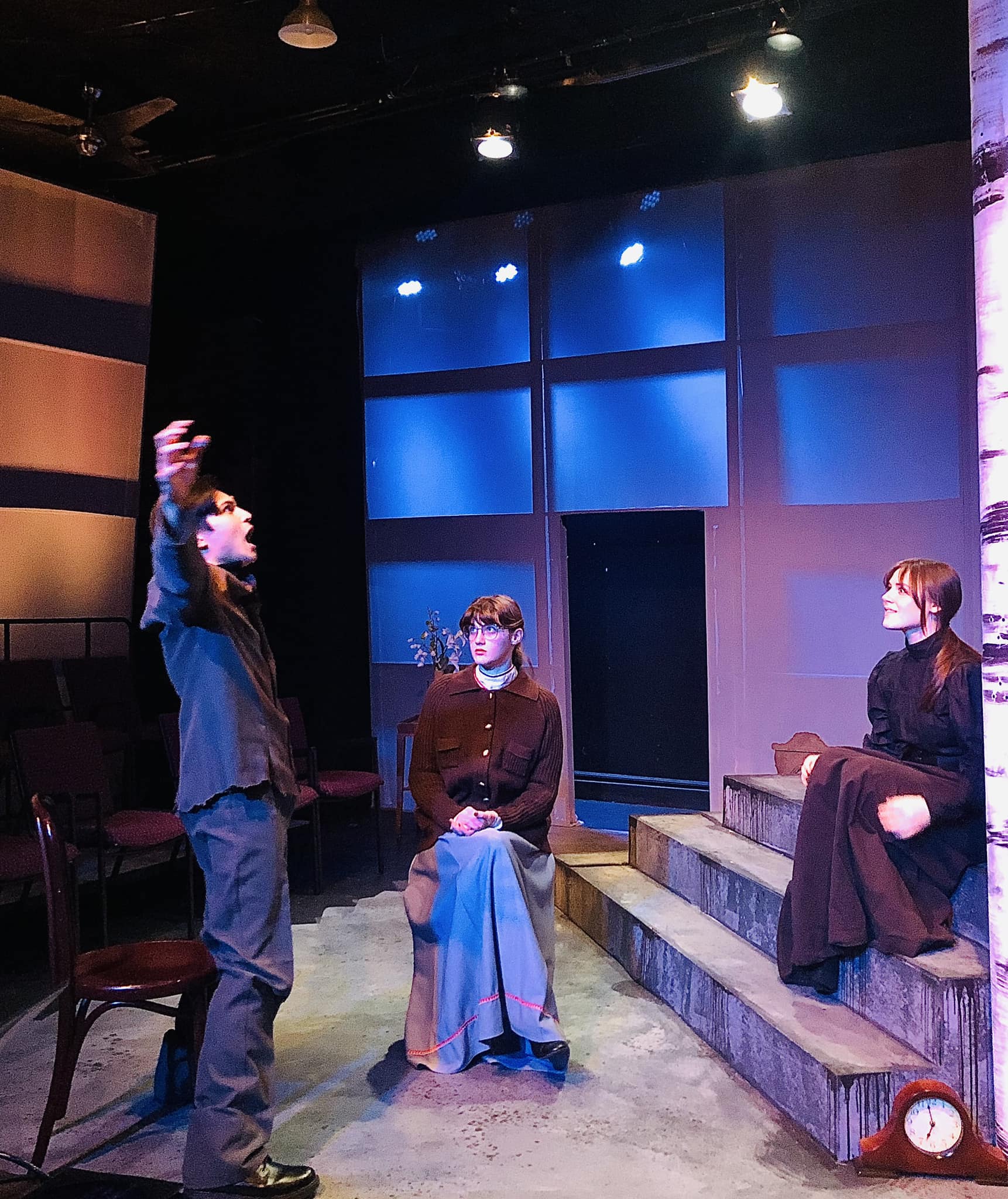
Aleksandr Ignatyevich Vershinin (Tyler Guinto-Brody) dramatically recounts a story to two of the Three Sisters, Olga (Reighn Olga) and Masha (Addison Keys),) Masha (Addison Keys),

The Collective, a new theater company founded by Michael Campayno, uses a new adaptation by actor and playwright Tracy Letts (“August: Osage County,” “Superior Donuts,” etc.). It’s a breezier, lighter version, but rife with internal (and eternal) suffering, a Russian “Gilmore Girls” with three fast-talking siblings. The Chicago Tribune called the adaptation, “Zestier and more colloquial.” It’s perfect fodder for the Collective’s first outing.  

The cast, many of them are students of Griffith Coaching Acting Studio (the director’s own acting academy), is excellent, particularly the three sisters. Bean, Keys and Traficante are marvelous choices. At different points in the show your allegiances shift from one sister to the next, and, since it was so expertly cast, it’s easy to root for all of them.

Guinto-Brody’s Vershinin is a charmer. It’s easy to see Masha falling for the “Lovesick Major.” He has poise and gravitas every time he takes to the stage.

Poor Kulygin. Sooriamurthi plays him as joyful, even though is character is a pitiable mess of a cuckolded schoolteacher, wringing the humor out of the scenario. Each time he says, “Where’s Masha?” it’s side-splittingly hilarious.

Callum Williams who plays Staff Captain Vassily Vasilyevich Solyony is only in a few scenes, but the actor is terrific. He has a naturalistic style.

There is no waste in a Chekov play. Derisive jibes and biting barbs wound, ricochet and wound again, like bitter bon mot boomerangs.

Tucker Topel’s set, like Ivanov’s poem, is filled with birch trees. It’s a lovely touch, but sometimes it’s hard to see the actors through the forest of stark white trees with burnished black swatches.

Daina Griffith directs a fast-paced version of a Russian classic. It’s energetic and enthusiastic.

Side note: The play runs concurrently with an all-female production of “Jesus Christ Superstar” and “Gutenberg! The Musical.” Check the site for dates and times.

The Collective has come out of seemingly nowhere, but it has an ambitious and impressive schedule of shows. Bravo and Brava.

-MB

“Three Sisters” runs until January 21. If you have a particular performer you want to see in the show, consult the show’s schedule and get tickets here. 

Yes, SHE is a Superstar – a Review of “Jesus Christ Superstar”

By Claire DeMarco

“Jesus Christ Superstar” is loosely based on the Gospels and the well-known story that details the life and times of Jesus Christ (Paulina Bradley) from his adulthood up to His death and resurrection. Although the characters coincide with those portrayed in the Bible, there is more of an emphasis on Judas (Bella McKivigan) and Mary (Emma Zelesnak) and their relation to Jesus. Judas is a tormented soul who appears to have a love/hate relationship with Jesus. We
see Mary as the supportive friend with a suggestion that the relationship might be more than casual.

Bradley’s portrayal of Jesus is multi-dimensional. It is often her facial expressions that convey her emotions. She is both tender and caring but shows anger when confronted by zealots. Ultimately, she is forgiving. Her emotions are highlighted in “Look at All My Trials and Tribulations.”

One sees the pathos in McKivigan’s portrayal of Judas as her mixed feelings about Jesus eventually destroys her. Her nuanced attitude towards Jesus is expressed in the songs she sings. Especially poignant is “Damned for All Time/Blood Money.”

Jesus Christ (Paulina Bradley) speaks to Her apostles.

Zelesnak’s rendition of “I Don’t Know How to Love Him” is superb. She easily and believably conveys her love and support for Jesus.

As the wicked Pilate, McHugh is convincing as she berates and physically abuses Jesus.

Shout out to fellow cast members Cara Vereb, Piper Redford, Santina Traficante, Sophia Burik, Keira Mosklaa, Natalie Koenig and Gray Wagner. Job well done.

Note: This is a great production of a well-known musical portrayed by an all-female identifying cast. It is especially gratifying to see this group of highly talented high school and GAP year students successfully tackling these roles.

They are part of The Collective, a pre-professional theater training academy.

Check out their website at wearethecollectivepgh.com for more
details on this innovative program.

The set is minimal with an elevated platform above the stage. There are no set pieces on stage and any props (like microphones on stands) are brought in by the actors themselves. The stage and surroundings are various shades of gray.

Costumes are not period specific but reflect modern day clothing.
Excellent Direction by Artistic Director Michael Campayno.

Note: Depending on the date, some actors’ roles are performed by other members of the cast.

-CED

“Jesus Christ Superstar” is a production of The Collective. Performances at Carnegie Stage in Carnegie, PA run from January 11 through January 21.
For more information, click here.

Forever Young – a review of “Girl From the North Country”

by Michael Buzzelli

Things are sad in Duluth, Minnesota in 1934, and getting sadder for the Laine family in Conor McPherson’s haunting “Girl From the North Country.”

Dr. Walker(Alan Ariano) steps up to the microphone and narrates the tale of the Laine family and their guests. It’s a brooding Irish playwright’s version of “Our Town.”  Dr. Walker’s exposition is completely unnecessary, and while Aiano is very talented, his character is superfluous. His final summation at the end of the play is somewhere between maudlin and a real bummer.

Let’s get back to the Laine’s. The patriarch Gene (Ben Biggers) is running a dilapidated boarding home (think AirBnB with three square meals), and caring for his wife Elizabeth (Jennifer Blood), who is suffering from some sort of vague mental illness. Gene’s son, Nick (John Schiappa), is a drunken writer (Hemmingway without a publisher) and his adopted Black daughter Marianne (Sharaé  Moultrie) is pregnant.

It’s already a lot, but their boarders have their problems, too.

Mr. Burke (David Benoit) and Mrs. Burke (Jill Van Velzer) are caring for their mentally challenged son, Elias (Aidan Wharton).  The lovely widow, Mrs. Neilsen (Carla Woods) is waiting for her husband’s inheritance but has eyes for Gene.

More trouble comes to town when Mr. Scott (Matt Manuel) and the unscrupulous Reverend Marlowe (Jeremy Webb) arrive into town.

All Conor McPherson projects (“Shining City,” “The Birds,” “The Seafarer” etc.) can be described as haunting, but in “Girl From North Country” the playwright turns to the jukebox and presses all the Bob Dylan buttons (taking all the quarters).

Marianne (Sharaé Moultrie) and Joe Scott (Matt Manuel) in the “Girl from North Country.” Photo Credit: Evan Zimmerman)

“The Girl From North Country” is the meat in between “Mrs. Doubtfire” and “My Fair Lady,” an unlikely combination for a sandwich. The play is brooding and atmospheric. It tackles issues such as unwed pregnancy, blackmail, bribery, murder, and mental illness. Unlike, “Mrs. Doubtfire” and the upcoming “My Fair Lady,” this story is not family-friendly.

“Girl From the North Country” would seem to make a better play than a musical. Perhaps even a PG-13 miniseries on Netflix or Max. It does have some grand music, though. It would be worth saving the musical numbers just to keep Woods and company singing “Pressing On,” an absolute showstopper (right where the show actually stops).

Keep your eye on Carla Woods. She was phenomenal.

While there are a ton of characters, every actor gets their moment in the sun. The actual sun never shines in this gloomy part of Duluth, except when Wharton’s Elias dresses in a white linen suit and sings his heart out toward the end of the second act.

Blood’s Elizabeth gives a heartrending performance as a woman in anguish but lights up the room when she sings. She also gets some of the best lines zinging straight to the truth in the most uncomfortable ways.

Manuel is charismatic and oozing charm all over the stage, and he sings magnificently.

The women team up for a few songs and they are all excellently rendered.

Webb’s Marlowe is deliciously evil. You will want to walk up on stage and smack him with a shovel. He’s terrifying and annoying, an unwelcome stranger with a pitch-black secret.

Conor McPherson loves a good ghost story, and there is an element of a ghost story here when Elizabeth proclaims, “I hear the cries of the girl in the hole.” In “Girl From the North Country,” every character is sort of a ghost marching toward their inevitable doom, but here they are alive, vibrant and filled with song. They will be, pardon the pun, forever young.

If you’re looking for something off-the-beaten-path, and you’re tired of the slap-happy silliness of the traditional musical, or you simply love the music of Bob Dylan, “Girl From the North Country” is the show for you.

-MB

“Girl From the North Country” runs from January 9 to 14 at the Benedum Center, Penn Avenue, and Seventh Street, Pittsburgh, PA 15222. For more information, click here.

css.php