By Dr. Tiffany Raymond, PhD and Theron Raymond (5th grader)
Stage 62 continues its 62nd season with kid-friendly musicals based on comics as they “cat-apult” from Garfield to Snoopy with “You’re a Good Man Charlie Brown”. The musical is based on Charles Schultz’s “Peanuts” comic strip with book, music and lyrics by Clark Gesner.
As aptly stated by my 5th grade co-reviewer, this play is “like branches of the same size on a tree.” The play is more a series of interconnected vignettes than a cohesive narrative. Stage 62 keeps it lively, but because of the play’s episodic nature and lack of plot, it does feel long at two hours.
The 16 songs provide the connective thread. Musicals typically have the book written by one person and music and lyrics by another. Gesner is credited with all three roles in the creation of Charlie Brown, and music and lyrics were clearly his strength.
The music is captivating thanks to a live 5-piece band. Brandon Marzke channels Beethoven-loving piano virtuoso Schroeder. Marzke’s “playing” is perfectly timed with live accompaniment from pianist Matt Brown. Quinn Patrick Shannon elegantly balances the roles of director and choreographer. Schroeder champions the creation of a Beethoven Day in a song of the same name, which culminates with him getting on top of the piano to sing with his friends gathered round him. Lighting designer Garth Schafer thoughtfully dims the lights to intensify the mood. Shannon captures the palpable reality of music as a unifying force for community, and Marzke makes it feel sacred.
Chris Martin’s giant props of huge yellow pencils and oversized baseball mitts are ingenious. These visual anchors drive empathy by reminding us kids are consistently navigating a world made for grown-ups. Charlie Brown (Joe Kosha) is forced to go on tiptoe to peek into a giant mailbox, heightening the tension of whether he’ll be rewarded in finding a valentine.
Andrew Mours steals the show as the indomitable beagle Snoopy. He doesn’t speak when humans are present, but his nonverbals sing. When Lucy (Julia Kreutzer) demands that Charlie Brown answer a survey about her, Snoopy reflects what Charlie Brown is tentative to say for fear of retribution. Lucy asks if her personality is A.) forceful B.) pleasing or C.) objectionable. Shannon has Mours fiercely exaggerate his affirmative nodding for both A.) and C). In this way, Snoopy can boldly say what others fear and reflects the common human sentiment as under duress, Charlie Brown cautiously responds with A.) and another human chooses C.
Chris Russell is vibrant and energetic in the role of Linus with his exuberant thumb-sucking and omnipresent blanket, which gets its own song. As a sibling, he’s honest with his tempestuous sister, Lucy. He immediately answers 95 when she inquires about her crabbiness on a scale of 1-100. She immediately smacks him, affirming Charlie Brown was right to be cautious in his reply.
Mackenzie Heidenreich captures the spirited Sally. She particularly shines as she sings “My New Philosophy.” Sally roundrobins through different philosophies to find one that fits her, reminding us of the way kids cycle through fads and philosophies as they figure out who they are.
Charlie Brown is more boy than man, and while he is good, his goodness often seems unreciprocated. His loneliness and depression are touchstones. The play starts with an airing of the grievances. Each of the four kids talk about Charlie Brown’s faults with Lucy reminding us Charlie has “failure face.” The content feels like a campaign for mental health awareness and intervention. Kosha tries to make himself small during the school lunch period. Charlie Brown hunches alone over his brownbag lunch and sighs that he only has “2,863 more lunches to go.” His isolation is a daily event for him (and so many others). These little heart-wrenching moments remind us we all have the opportunity to look around, identify those who are struggling, and help them feel a little less alone and more included. We can all be better people.
Stage 62’s production of “You’re a Good Man Charlie Brown” runs through April 28, 2024 at the Andrew Carnegie Free Library & Music Hall in Carnegie, PA.
Stage Warp Productions, partnering with the ACLU made the courageous decision to produce the Ian Wooldridge adaption of The George Orwell 1944 classic novel, “Animal Farm”. This allegory rich play highlights the dangers of communism, revolution, class divide, lust for power, propaganda and the use of religion to pacify the masses. All are chillingly close parallels to today’s political climate in the U.S.
Opening the play, Major (Andrew Nesky) gives a heartfelt, idealistic, dying speech in which he convinces the animals on Manor Farm that their lives would be so much better if they were to stage a revolution and overthrow the farm’s owner. Nesky delivers his speech so convincingly that I was ready to join the revolution along with the animals! They form their own governing body where “All animals are equal”. (Unfortunately, after the successful revolution, it is learned that, “All animals are equal, but some animals are more equal.”) The more unequal the animals become, the more the ruling pigs rewrite their story.
We don’t have to look outside the U.S. to see how politicians manipulate and rewrite the narrative. At the end of the play, Nesky as Mr. Pilkington, uses his character’s smarmy charm to hoodwink the pigs in power, to do his bidding. His smooth delivery of the character Pilkington could melt butter.
This frightening, topical, relevant political (not so funny) satire, leaves one with an unsettled feeling. It reminds us that those who control the narrative are the winners. Thus, it promotes dialogue, social discourse and potential change. And, after all, isn’t that the true measure of success in live theater?
Napoleon (Sam Lander), the new bovine leader of the animals transforms from a somewhat timid pig to a despot who lets others carry out the dirty work that he takes credit for. Landers clearly transforms in front of our eyes.
Squealer (Jess Uhler) relishes her role as the liaison between Napoleon and the other animals. She is convincing as she soothes, cajoles, manipulates and spreads propaganda to the other animals. Her performance is nuanced, effective and charismatic.
Moses/Minimus (Jason Burke) gives impressive performances in both of his small roles. His quiet vulnerability and sincerity are a pleasing foil to the boisterous hysterics of some of the other characters. He delivers with a calm dignity.
Overall, the large cast does a good job of appearing animal like. This is accomplished through the use of subtle costume features; wearing animal ears, pig snouts, etc. Their animal sounds and body movements were smooth enough so as to not distract and blatant enough to be convincing.
Kudos to co-directors Stephanie Swift and Caroline Lapinski.
“Animal Farm” runs through April 27, Stage Warp Productions, at Carnegie Stage.
Sam Phillips (Tommy McDowell), head of Sun Records in Memphis, Tennessee narrates the origin of the famous jam session that became known as the Million Dollar Quartet. Incorporated into this musical event is the history of each of the four artists, their relationship to Phillips and Sun Records.
Carl Perkins (Jon Rohlf) schedules a recording session. Phillips invites relative newcomer, Jerry Lee Lewis (Taylor Isaac Gray) to add some piano magic to the recording. Lewis is a relative unknown nationally at this time.
Elvis Presley (Collin Yates), formerly with Sun Records and now with RCA arrives with his girlfriend, Dyanne (Rachel Rosenbush). His visit is strictly social.
Johnny Cash’s (Allen Law) visit to Sun Records actually has to do with contractual issues.
An informal spontaneous jam session begins with a blend of different musical types! From rock n’ roll to country to gospel, they sing them all, each artist contributing their style to the mix!
This is a wonderful production of the 2010 Tony-nominated musical based on an impromptu jam session later known as the Million Dollar Quartet. It’s energetic, fun and nostalgic.
Note: This informal jam session occurred on December 4, 1956 at Sun Records in Memphis, Tennessee when Elvis Presley, Jerry Lee Lewis, Carl Perkins and Johnny Cash all happened to be at the record company at the same time.
Note: Unplanned, spontaneous events often prove to be the most remembered. A special thanks goes to the late Jack Clement, the recording engineer on duty that day. Clement remembers thinking “I think I’d be remiss not to record this”. Thankfully he did!
Gray’s performance is phenomenal. His comedic timing and physical movements as the oddball country boy Lewis are spot on. His piano playing is superb and he is able to tickle those keys sitting down, standing up and/or backwards. He even hit some chords with his butt, but only occasionally. Gray captivated the audience with his rendition of “Great Balls of Fire”.
Gyrating across the stage, Yates captures the essence of Presley in his movements (even to standing on his toes) while singing “Long Tall Sally” and “Hound Dog”. His realistic impersonation of Elvis is not overdone.
Rohlf as Perkins is serious as he is at the studio to record and is not enthusiastic on being forced to use newcomer Lewis as part of the recording. As the jam begins, he softens and becomes an integral part of the quartet.
Law’s characterization of Cash is serious. One can see the turmoil in his face as he dreads telling Phillips that he’s leaving Sun Records. His songs like “Folsom Prison Blues” and “Sixteen Tons” highlight his troublesome past.
In addition to great singing voices, Rohlf, Law, Gray and Yates are also expert musicians.
As the boss at Sun Records, McDowell is convincing as the man in charge, looking for new talent, retaining current talent while at the same time relating to his artists on a personal level.
Rosenbush delivers great renditions of “Fever” and “I Hear You Knockin’”.
Kudos to Justin Bendel as Brother Jay and Mike Lucchetti as Fluke for their superb musicianship.
Scenic Designer Tucker Topel created a realistic set that reflects a studio in the 1950’s.
Shout out to Director Tim Seib.
Excellent Musical Direction by Dr. Francesca Tortorello, D.M.A.
Book by Colin Escott and Floyd Mutrux.
Original concept and direction by Floyd Mutrux.
-CED
“Million Dollar Quartet” is a production of Pittsburgh Musical Theater. Performances run from April 18 through May 12 at the Gargaro Theater, 327 South Main Street in Pittsburgh’s West End.
After having seen “Dinah” when Pittsburgh Playwrights produced it about nine years ago, I wondered if it were possible for the show to be any better this time around. To my delight, although hard to imagine, yes, it is even better!
This biographical music review written by prolific Pittsburgh playwright (more than 27 produced plays and musicals), Ernest McCarty, provides some insight into Dinah Washington’s controversial life and her propensity for entering into numerous marriages. Her philosophy, “I’m going to keep getting married until I get it right.” Ruth Lee Jones first married at the age of seventeen (before she changed her name to Dinah Washington). One of the life events the show highlights is her struggle to keep her weight down with the aid of diet pills that affect her moods, and which are eventually blamed for her untimely death at the age of 39 . Being a perfectionist about her music is another of her qualities that is featured in the series of vignettes that tell parts of her story.
The show opens dramatically as Dinah (Delana Flowers) dressed in a gorgeous white satin gown with a fluffy white boa draped around her neck, glides onto the stage, perched on an ornate white throne. Several of her husbands (wearing numbered placards that identify their sequential place in her numerous marriages) circle her on the stage. That scene foreshadows the elegant, shimmering, stunning costumes that Flowers wears in each costume change.
Flowers is a magical, versatile vocalist. She sings nearly thirty numbers, all to perfection. Dinah dubbed herself: “The Queen of the Blues”‘ And, Flowers rendition of the bluesy number “Baby Get Lost” might have just earned her the title, “Princess of the Blues'”. Wonderful! Flowers is warm, elegant and relaxed on stage, with the bearing of a diva. Flowers like Dinah, shows a wide range of versatility of musical styles. Not only does she sing expertly but she is an accomplished actor, as well.
Her gospel duet with Willa “Katy” Cotten, “His Eye is on the Sparrow” was Cotten’s opportunity to belt it out from way down –and she does, to the delight of the audience. Her powerful, rich voice is a joy. Coupled with Flowers vocals, this number is a standout. Cotten also shines as one of the “Dinah-mites”, (Cotten and Cheryl El-Walker) backup singers to Flowers for a couple of lighthearted numbers reminiscent of the background singers of the 50’s and 60’s. A gleeful performance by both Walker and Cotten as backups!
Brook Benton (Les Howard) has several duets with Flowers, the most well-known of which is “Baby You Got What It Takes”. And, this duo truly does “Got What It Takes”. Howard exudes a charm and sweetness as Benton. The affection between the two characters is authentic and heartwarming.
The rest of the cast features many well-known accomplished Pittsburgh favorites. They all deliver with polish.
The band is a remarkable group of musicians. Pittsburgh icon Roger Humphries on drums dazzles at intermission, with a rhythmic drum solo. Tony Campbell on sax, is a wizard—his sax laughs, cries, talks, sings and wails. The band is completed with Dwayne Fulton (Minister of Music and Fine Arts at Mt. Ararat) on keyboard, and Dwayne Dolphin (formerly with Wynton Marsalis’s band) on upright bass. This band, loaded with individual talent enhanced by their unity, enriches this theatrical experience. They are out of this world–extraordinary.
Director Mark Southers triumphs with this showpiece performed in a lovely cabaret setting. “Dinah” is a sensation that is not to be missed.
Runs through April 28, Pittsburgh Playwrights Theater, Madison Arts Center, 3401 Milwaukee Street
As I braved the inclement weather conditions, driving through torrential rain –over water covered streets strewn with debris, one thought was repeatedly running through my mind, “This show better be worth it!” Was the harrowing drive to Little Lake Theater “worth it”? Absolutely, emphatically, YES!
Little Lake Theater’s Matilda based on the Roald Dahl 1988 children’s novel is splashy, glorious production. It tells the story of Matilda, a brilliant little girl, with the gift of telekinesis. She is treated very poorly by her parents who ridicule her for reading, among many other things. Her school headmistress Miss Trunchbull is equally cruel to her. Fortunately, her teacher, Miss Honey recognizes Matilda’s genius level of intelligence and does her best to enhance her education.
Opening night had the talented Sloane Peterson playing the title roll, Matilda. (Closing cast has Laurel Denk in that role) Sloane is a pint-sized powerhouse packed with gallon sized charm. Her energy surges as she flawlessly delivers her numerous lines. Seeing such a dynamic performance in one so young is truly remarkable. Her vocals are sweetly and emotionally delivered. (There are a couple of times that the live band overplays her voice but I’m sure that will be addressed in future shows) I look forward to seeing her on stage again. Amazing performance.
Miss Trunchbull (Travis Myers-Arrigoni) is a raging bull of a headmistress with the just right amount of over-the-top ridiculous cruelty. Her treatment of the students follows the school’s motto to the letter. “Bambinatum est magitum” translates to, “Children are maggots”. She frequently refers to the children as maggots or worms among other insulting terms! Myers-Arrigoni gets a lot of laughs as he relishes his role and throws himself into it like a whirling tornado. Such fun to watch him enthusiastically rave on! The antagonist that you love to hate.
Mr. Wormwood, (Nathan Hough) gets a huge share of the many laughs. His caricature like portrayal is chock full of well-timed facial expressions and body posturings. He is so hilarious that one doesn’t even care that he’s a dishonest con artist! He’s a comedic natural.
Mrs. Wormwood (Cait Crawley) is equally entertaining. Her portrayal of the narcissistic mother is wonderfully wacky. She fluidly slides into different moods with each costume change. Arresting versatility.
Miss Honey (Audrey Chester) Matilda’s caring teacher has a beautiful sweet singing voice. She is able to project kindness and concern convincingly. Her conflict about obeying school rules and doing what is right for Matilda is acted with a real poignancy. She makes all of us want to be better people.
The entire cast, too many to mention, is skillful and clearly enjoying themselves!
And, the children–the huge cast of children who make up the chorus are truly extraordinary. They harmonize beautifully. “When I Grow Up” is a beautiful blending of their voices. (Kudos to the music director, Holly Jones) In every dance number, they are in synch to a remarkable degree! Well done! (Choreographer, Christine Pittman)
The costumes (Sylvia Sims-Linkish) are flamboyant, colorful, and sometimes humorous. There are multiple costume changes–each of which add to the mood and tone of the show. Mr. Wormwood’s garish plaid pants, brightly colored sport jacket and ruffled shirt are humorous and well matched to his sleazy personality. The glitzy ballroom gowns are gorgeous and a contrast to the austere children’s school uniforms, Rudolpho’s (Jordan Mastele) flamenco costume is a perfect accent to the humor he brings to his character..
Kudos to the directors, Kathy Hawk and Jeff Johnston (assistant) for their wonderful use of the actors’ talents, and for never passing up an opportunity to get a laugh. And, most of all, for their ability to wrangle that many children into a cohesive unit. (Kathy Hawk is a public school teacher– that surely explains her skills with organizing and motivating children.)
In order to prevent angering Miss Trunchbull (she just might call you a maggot) you all need to rush to see this extravagant, entertaining, high energy romp at Little Lake Theater.
Note: It’s not just a children’s show (although the children love it), it’s sophisticated enough that adults will enjoy it, too.
You know trouble is brewing when two friends take on alternate identities using the same name!
Jack Worthing (Paul “Paulie” Deo, Jr.), is a gentleman and landowner with multiple responsibilities, including the guardianship of his niece Cecily (Alex Manalo). Tired of the social constraints of this environment, Jack creates a new identify called Ernest in another town where he can live more freely. He can behave or misbehave, whatever suits his fancy. He explains his absences on weekends by pretending that Ernest is his troubled brother who needs his supervision. As Ernest he falls in love with Gwendolen (Veronica Del Cerro), daughter of Lady Bracknell (David Ryan Smith).
One of “Ernest’s” weekend friends is Algernon Moncrieff (Dylan Marquis Meyers), nephew of Lady Bracknell. After an extensive time period, Algernon confronts Ernest after discovering his duplicity. Algernon queries Jack. Algernon’s interest is piqued when Jack tells him about Cecily. Algernon also has an alternate identity as Bunbury, an invalid he creates in order to avoid anything that he deems annoying.
Independent of one another, Jack decides to kill off Ernest now that the charade is uncovered while Algernon decides to visit Jack as his “brother” Ernest. One of the main reasons for his visit is a chance to meet Cecily.
Mistaken identities, miscues, misunderstandings and mayhem take over as this 1890’s version of a modern soap opera unravels.
Transitioning easily between both characters, Deo is believable as the socially upright Jack and the less than upright Ernest. He has great delivery and timing, whether it’s comedic or dramatic.
Meyers plays Algernon as the rich, spoiled, capricious nephew of Lady Bracknell. He is able to camouflage (when necessary) a sense of compassion in a character who is self-centered, spoiled and lacks purpose. He uses mannerisms and carriage to heighten this perception.
Sashaying gracefully across the stage, towering Smith is the epitome of a snobbish grand society dame with a need and no constraints to insult anyone. Facial, hand and body movements highlight Bracknell’s persona.
Del Cerro’s Gwendolen captures the upper-class socialite who never fails to speak her mind about etiquette and protocol to anyone she deems needs to hear it. She easily softens as she joins forces with Cecily over the “who really is Ernest dilemma”.
Manalo is convincing as the naïve but determined Cecily, intent on marrying Algernon after she is enticed by Jack’s stories about his wayward brother. Her imagination drives her to the point of creating situations and scenarios that haven’t happened (yet).
Susan M. Lynskey as Miss Prism, Cecily’s school mistress and Joseph McGranaghan as Canon Chasuble, both professing their celibacy and uprightness around each other, are excellent as their facial expressions, general demeanor and word innuendoes indicate quite the opposite.
Each cast member compliments one another. Their timing, physical movements, facial expressions are well-balanced.
Oscar Wilde’s “The Importance of Being Earnest” was written in the late 1890’s, satirizing the social conventions of Victorian society. It was witty and clever then and it’s witty and clever today.
Pittsburgh Public’s production of this “wildely” popular treasure is brilliantly executed.
The set is minimal but elegant with a few chairs and tables moved around as the scenes change. Elements added to the backdrop also suggest location moves.
Hugh Hanson’s costume designs are spectacular.
Excellent direction and adaptation by Jenny Koons.
“The Importance of Being Earnest” was written by Oscar Wilde.
-CED
“The Importance of Being Earnest” is a production of Pittsburgh Public Theater. Performances run from March 27 through April 14 at the O’Reilly Theater.
Bloomfield’s not the place I typically go to consult wise, Eastern-European beings that exist beyond time. That’s usually up in Polish Hill. But everyone’s favorite Slavic sage, Baba Yaga, is hosting a Q&A in Pittsburgh’s Little Italy. Held at the Irma Freeman Center for Imagination, “Ask Baba Yaga” is an adaptation-of-sorts of the 2017 book by Taisia Kitaiskaia (with permission from the author) from Uncumber Theatrics.
Billed as a “staged reading (among other things),” this production boasts plenty of puppetry, masterminded by Emily Schubert, Ayne Terceira, and Frank McDade, with the titular old-world oracle being the most notable technical marvel. Equally beautiful and bizarre, the odd detail in its design would even beg Diogenes to behold. Operated by a revolving assembly of puppeteers/readers (D.T. Burns, Nicole Gallagher, Courtney Jenkins, Abigail Lis-Perlis, Liz Roberts, Emily Schubert, Ayne Terceira), and voiced by Lori Howsare, the imposing creature looms ominously while she doles out advice to the curious crew/cast as they bang on typewriters and make their inquiries. There are also skeleton puppets that complement Baba Yaga’s responses with their own movements and mannerisms, manipulated by a variety of puppeteers as well. In addition to the puppets, human performers take the stage in shifts, typically accompanied by a prop and/or a particular physicality as they cross in front of the audience.
This production occasionally becomes immersive every so often, following a “change of the season,” when the floor is open to anyone daring enough to ask a question. Every audience is different, and one can expect things from the profound to the profane and everything in between. People desperate for truth will readily volunteer; sillier folk will be goaded by an awkward silence. Either way, Baba Yaga responds with a pre-written response that is then selected and read at random, forcing those there to justify the response or reject it.
The Irma Freeman Center for Imagination is a wonderful venue for the arts. Not only is it already near some cultural staples, but it’s also part of a community that cherishes creativity. The pairing of an art gallery with a stage fosters an environment that is conducive to innovative thought and expression. Theatre can only benefit by the embracing of unconventional spaces and unconventional projects.
Uncumber Theatrics is a bold, cutting-edge theatre company that puts on unique and mesmerizing productions. While a show like this is atypical in that it eschews narrative and the like, it is a reminder of what the medium of live theatre is capable of. By indulging the audience’s questions, an experience beyond mere entertainment is shared.
“Ask Baba Yaga” continues its run at the Irma Freeman Center for Imagination in Bloomfield March 28-30
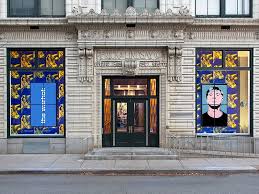
When visitors step off Sandusky Street and enter The Andy Warhol Museum, they are instantly greeted by an industrial-esque entrance hall, complete with high ceilings, exposed pipes, studio lights, metal chairs, and high top-tables, and of course, Andy Warhol’s iconic red couch from his Factory. This location was the meeting space for my recent sit-down conversation with The Andy Warhol Museum Arts Educator, Chuck Pearson, about all things Andy, the aesthetics, the artist, the artwork, and the atmosphere.
The Aesthetics
“This building, actually, this is the old Frick & Lindsay building,” Pearson stated.
“[It] was built in 1911. This was an industrial warehouse for many years during Pittsburgh’s steel era. Back in the 70s and 80s it was a music store. And then it was empty for a period of time. That of course is when the [Andy Warhol] Foundation and the Carnegie [Institute] came together, got this building, and then refit it to be the [Andy Warhol] Museum.
“It’s interesting, if you walk through this Museum and look at its structure, you’ll see that the warehouse kind of aesthetics are still in play…It’s kind of an homage to Pittsburgh’s industrial heritage, but it’s also an homage to Andy’s ‘Factory’ and being a commercial artist and having that commercial side to him.”
The Artist
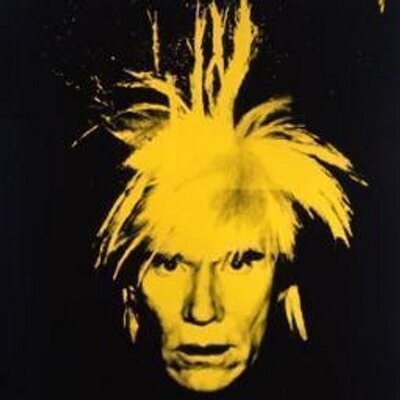
Although Warhol grew up in Pittsburgh and attended college at Carnegie Tech, now known as Carnegie Mellon University, majoring there in what today may be described as ‘Graphic Design,’ after graduating in 1949 he moved to New York City.
“Back when he graduated college in 1949, Pittsburgh was still very much an industrial city. It didn’t have the same kind of cultural and artistic aspects that it has today. Back then, a Pittsburgh boy wanting to be an artist, you want to go to a place where art was thriving. At that point, New York City was the big place.
“It’s kind of ironic that even though Warhol came from blue collar roots, that Steel City background and such, when he left Pittsburgh in 1949, after he graduated college and went to New York, he did not come back to Pittsburgh very much at all. There was kind of a distance he put between himself and Pittsburgh. I don’t think he wanted to be identified with Pittsburgh necessarily. He wanted the New York scene that’s what he wanted to be identified with.”
“Even though he did make an effort to kind of distance himself from his Pittsburgh upbringing in many ways, in some ways he could never really escape it.”
One such example of Warhol’s inability to escape his Pittsburgh industrial roots was his New York studio, aptly coined ‘The Factory’ for the amount of work, specifically the artists’ silk-screen prints which were produced there almost in conveyor-belt, industry-like speed and fashion.
“There’s strong [Pittsburgh] influence in [The Factory],” said Pearson.
“Not only was [The Factory] a place to hang out and party and have fun, it was also an actual working studio.”
“The Factory, also known as his ‘Silver Factory’ was a studio, a place where he and others did art, did screen printing, made films, not only was it that but it also became some sort of a social hub. It became a place in New York where people could go to hang out, to party, to network, to make connections with other people, and it was especially valuable when members of the LGBTQ community didn’t have a lot of safe places to go to, that became one of those safe places. It became a place where a lot of people who maybe would not have normally had opportunities to get into art, to get into media, to get into shows, to do all of these sort of things. The Factory gave them an opportunity for that.
“It attracted crowds across a whole spectrum of people. Members of The Rolling Stones went there to party. The Velvet Underground, Nico, but a lot of the people who worked with Andy and kind of became a part of his circle, were a part of that Factory scene,” Pearson continued.
“The Factory went through a few different addresses over the years. It didn’t stay in the same place. Over the course of his career, in early 1964, for the next 20 years it would go through a few different places there, but all Manhattan—all the same general area.”
The Artwork
Like his Factory, Warhol’s work also moved across several iterations, styles, mediums, and expressions throughout his career.
“He spent a lot of time in the 1960s doing film, screen prints of actors and celebrities, but as he got into his commissioned portraits era in the 1970s…he moved into a period of abstract work.”
Pearson recognized, “What you’ll notice with Andy’s abstraction is sometimes it will be coupled with very realistic pieces.”
“Even when he was a commercial artist, part of what got him his success as a commercial artist was his style of commercial art was so different from what other people were doing. Most industrial artwork at that time was very ‘Norman Rockwell-ish.’ That was the norm, that was the standard, the people in post-WWII conservative America were using for commercial and professional art. Andy was not ‘Norman Rockwell-ish.’ His style of realistic expression was quite different. I think that carries over into his abstract era and his experiment with color trying to find those kind of blends.”
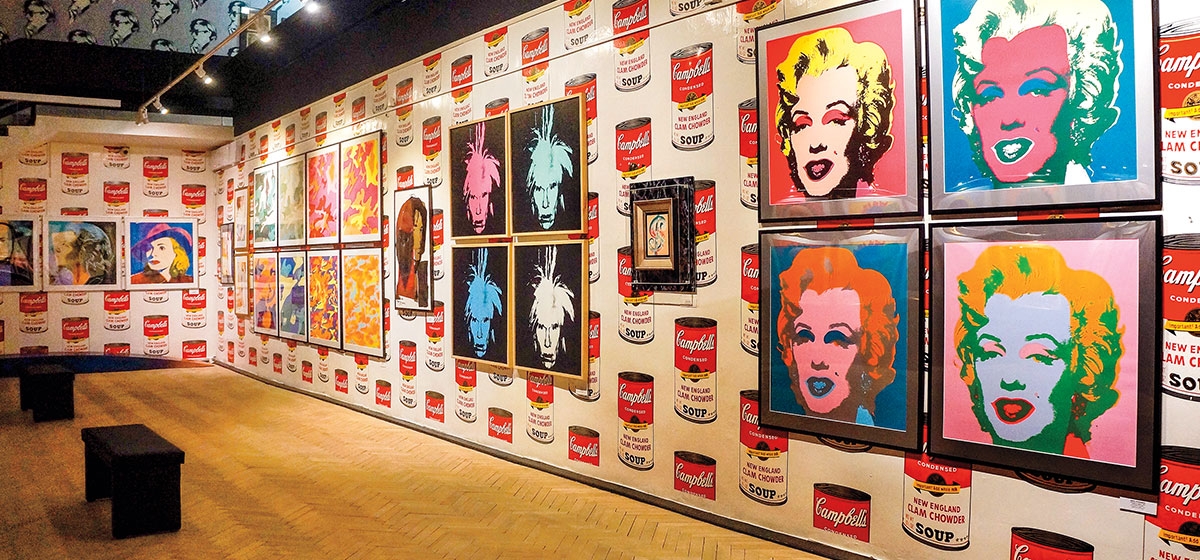
Some of Warhol’s most well-known works, like his silk-screen portraits of Marilyn Monroe, are on view at The Andy Warhol Museum. As an Arts Educator, Pearson offered a knowledgeable perspective on these iconic prints, sharing insights on the artists’ technique and timing.
“A lot of what Andy was trying to accomplish with his different series, particularly of like pop portraits [of] celebrities, was exploring through color different moods and aspects of a celebrity. The one we have upstairs of Marilyn that’s a 1967 series. The prominent feature of that, of course, is the hot pink lips and the earrings.
“Well, timing is kind of interesting in that…He did that in 1967. Well, what was going on in 1967? Summer of Love, Monterey Pop Festival, hippie movement, Haight Ashbury. And I’m thinking well maybe, but there’s also some darker backgrounds in that piece as well, but there’s that hot pink. Was he perhaps going with the contrast of the flower power movement of the Summer of Love verses also all the other stuff that was going around that the time, too. Because what else was happening? America was embroiling in the Vietnam War, the Civil Rights Movement, and such. There was a lot of light and dark going on in America. You see a lot of that contrast with many of his pieces.
“…through color the artist, Andy, is able to explore those different shades of Marilyn. And he did that with a lot of his different celebrities and pop portraits, and of course the power of screen print process.”
The Atmosphere
Continuing Warhol’s legacy of silk-screen printing process is not limited to the artworks displayed at the Museum. In fact, the Museum operates a ‘factory’ in the downstairs portion of the building which is an actual hands-on studio that visitors can participate and create artwork in, very much like Warhol’s own Factory.
This initiative is just one of the many outreach programs and projects that the Museum participates in to adhere to its mission of promoting the arts here in Pittsburgh.
Pearson noted, “The Warhol Museum is the centerpiece of the Pop District, which for last couple years has been trying to sort of create and artistic, cultural center point here on the North Shore to invite local artists to participate [in].”
Pearson also emphasized the Museums many extra-curricular activities outside the Museum’s regular business operations, “Like the Warhol Academy, youth programs, being very much in tune with the LGBTQ community here, of course that’s a part of Andy’s legacy also and wanting to provide opportunities for inclusion… We do outreach programs to schools, to shelters, to organizations, libraries. We have opportunities for schools and other organizations to do workshops here on site. We operate the print lounge, which is a part of the Pop District. It’s kind of a larger working space to be able to do projects.”
The Museum is also expanding its reach in the coming years with a brand-new structure expected to be completed in 2026 that will mirror the part of Warhol’s Factory that was known for its social activities, hosting parties, and attracting crowds like artists, actors, and musicians.
Based on Pearson’s experience with the Museum, he stated, “People love to use the Warhol for all sorts of venues and events. With the new facility, it’s mainly going to be devoted to special event venue space [for] functions and concerts, to help attract awareness to what’s going on here.”
In the next few months, the Andy Warhol Museum will celebrate its 30th anniversary since its founding.
“The Museum opened in 1994. It has been a point of cultural and artistic interest and attraction for all of those years. Especially in a time, back in 1994, when Pittsburgh was struggling to…keep afloat, and to try to find ways to keep the city going once the whole industrial aspect of the city died. But there’s been a lot of efforts in recent years to build up Pittsburgh in terms of being a progressive and 21st century city, and bringing in arts and culture has been a major part of that. The whole cultural district downtown, the Carnegie museums, all of this, the Heinz, you know tried to help to bring a renewed sense of life to Pittsburgh, which has been very successfully done. The Warhol Museum was coming in at time when that was starting to happen, so there was opportunity.”
Those opportunities have only multiplied over the years. Starting May 18, 2024, visitors will have an opportunity to see the work of artist, KAWS, in collaboration and conversation with some of Warhol’s darker themes around death and disaster. More information on this upcoming exhibit can be found here: https://www.warhol.org/exhibition/kaws-warhol/
Chuck Pearson is a California native who relocated to Pittsburgh in June 2022 after teaching high school English for many years. A published author, Pearson’s writing credits include the Once Upon A Realm fantasy novel series (written as C.J. Pearson) and theFate, Chance, and Choices trilogy (written under a pen name, Ariel Archer). For the past year and a half, he has worked at the Andy Warhol Museum as a Gallery Associate and Arts Educator.
Oscar Wilde’s known for many things. Being dead is one of them. But his legacy lives on in the form of productions of his plays, ham-fisted references to books people only read the Spark Notes of in high school, and lost Jim Morrison fans at the Père Lachaise Cemetery. The first example is why I mention the expired socialite, because director/co-set designer Duane Peters is helming a rendition of “The Importance of Being Earnest” for Hobnob Theatre Company at Hobnob Studio Theatre in Butler, PA.
A classic tale of an artist and a paint—wait, no, wrong story. Ah, yes. A classic tale of mix-ups, nominative determinism, and cucumber sandwiches. Well, maybe not the last one. Seems they’re all gone. Drat.
Daniel Williams does double duty as Jack/Earnest Worthing and also as the production’s “unofficial accent consultant,” being the only cast member from “across the pond,” as it were. And I don’t mean Lake Arthur. His comedic chops, which are the highlight of his performance, are paired perfectly with those of Justin Anderson as Algernon Moncrieff, who fully embraces the bunburyist’s silliness and physicality. The scene with the cigarette case is awfully amusing.
Countering the bumbling men are Gwendolyn Fairfax (Deanna Sparrow), Cecily Cardew (Sarah Altomari), Lady Augusta Bracknell (Gail Suhr), and Miss Laetitia Prism (Amy Dittman). Sparrow and Altomari brilliantly wield sincerity in tandem with their comedic sensibilities, enabling them to have terrific chemistry in scenes together or with other actors. Suhr stokes the fires of conflict with her vexatious performance, lending a necessary intensity to the narrative. Dittman delivers a delightful portrayal as a tutor who just so happens to be infamously forgetful.
The cast also features Jud Stewart as Dr. Frederick Chasuble, Dean Weiland as Lane, and Jeff Myers as Merriman. The latter two serve Algernon and Jack, respectively. Their shared strength is being able to do so much with so little. A handful of words at certain times or some sort of simple action gets a lot of laughs. Likewise, Chasuble’s presence peppers the play with plenty of humor, which Stewart hilariously executes.
In addition to many wonderful performances, this production also showcases a great deal of technical talent. The costuming, overseen by Wynee Jenkins, David Halin, and producer Elizabeth Smith, is impeccable. Every character is adorned with an outfit that not only telegraphs their social standing and the like, but also elements of their personalities. The set, though minimal, helps immerse audiences into the world/time period, with the revolving wall piece being especially ingenious. All of this is complemented by skillful lighting and sound design by the other co-set designer, Ken Smith.
Hobnob dazzles with their inaugural production at their new home. While a great show is good in and of itself, it’s even better that this is but the beginning of a slew of shows planned for the year. And it’s not just public domain plays like they built their initial reputation on, but also original works, improv comedy nights, and all manner of live performances they can cram into their cozy space. It’s exciting what Hobnob has planned, and how it’ll not only benefit the immediate community, but the overall Greater Pittsburgh theatre scene as well.
“The Importance of Being Earnest” continues its run March 21-24 at Hobnob Studio Theatre in Butler, PA
New York City boasts a population of 8.8 million people and around the same number of songs and plays about it. While NYC’s definitive anthem came out in 1994, sorry Jay Z, that didn’t stop Pulitzer Prize and Tony Award Winners, Tom Kitt and Brian Yorkey from throwing their hats in the respective ring with “If/Then”, a production that still gets billed as new ten years later. Did you hear about that new app, Instagram? A decade after its run on Broadway, this show is wonderfully revitalized by director Olivia Hartle and the other dedicated folks at Riverfront Theater Company.
Elizabeth (Kate Aiello) moves back to the concrete jungle after becoming disillusioned with Arizona. I’ve been there, girl. Upon moving back, she decides to get coffee with her new neighbor, Kate (Amanda Anne Leight) and her former lover, Lucas (Mike Good). They decide that the city-planner formerly known as Elizabeth needs a new name. A totally necessary change and not one done to make the splintered stories easier to follow. Kate wants to rename her “Liz,” and spirit her off to see a guy playing acoustic guitar in the park. Lucas strongly suggests that she goes by “Beth” because the guy who definitely owned multiple unironic Che Guevera t-shirts thinks she should present herself “more professionally,” and says she should meet up with him and his fellow protestors the following day. This is where the story and her identities diverge. Are we sure that there was only caffeine in that coffee?
Along the way, we meet many more characters like love-interest, Josh (Sam Brooks), a doctor and former soldier who would’ve made a good character on M.A.S.H.; Stephen (Michael Leahy), Elizabeth’s boss; Anne (Katie Springer), Kate’s girlfriend; David (Surya Ravindran), a pediatrician who causes Lucas to become a sellout by dating him; Elena (Maria Perez), a new employee in the city-planning office; as well as scores of other denizens of the sprawling metropolis who everyone seems so surprised have actual thoughts and feelings and lives of their own that there are songs about it. Did everybody drink the psychedelic coffee and gain some newfound empathy?
Writing aside, this particular production showcases wonderful performances, especially during the musical numbers, which also feature amazing choreography and are backed by awesome live musicians. Props to Caitlin Dobronz and Michael Meketa Sanchez, respectively. While each song is memorable, the two standouts happen to be Elizabeth’s “What the F**k,” a somewhat comedic meditation on circumstance, and “Hey Kid,” Josh’s touching ode to his imminent fatherhood.
Musicals are not just huge undertakings in regard to cast, but also for the crew. This show is no exception. It’s equally ambitious as it is marvelous, with dedicated crew members bringing this world to life with impeccable set design, costuming, props, sound, lighting, and even a little video. The one thing to be mindful of, though, with the stage: if you have long legs, make sure you get there early enough to snag a seat in the second row, or else you’ll feel awkward and in the way.
RTC is a marvelous company with a gorgeous space and an incredible season planned. I’m certain that anyone fortunate enough to see this musical will return to see the other incredible shows to come.
“If/Then” continues its run at the Allegheny RiverTrail Park in Aspinwall, PA March 21-23.